How Much Money Would Americans Make If All Income Was Equally Distributed?
Breaking down the numbers

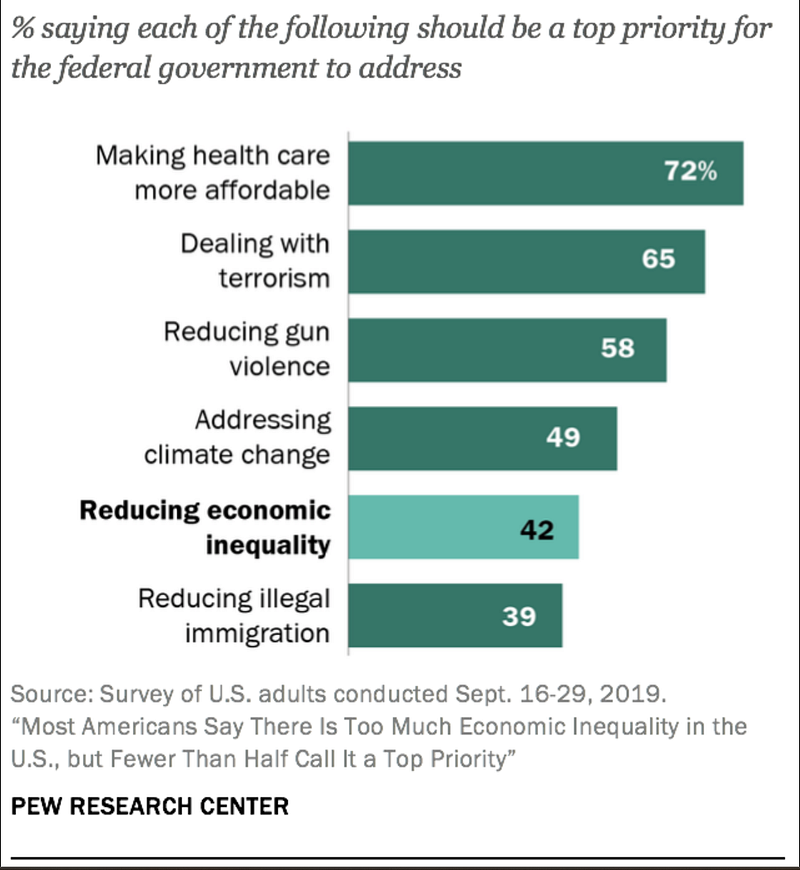
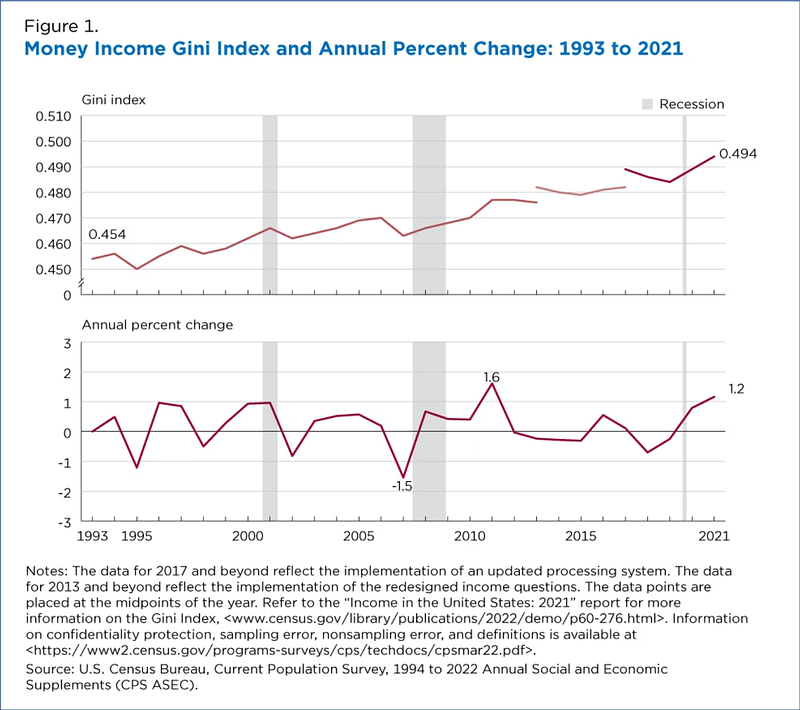
A large percentage of Americans favor a reduction in income inequality. In 2020, a survey by Pew Research found that 42% of Americans said that reducing income inequality should be a top priority of the federal government. During the pandemic, income inequality was once again on the rise in the United States. The top 1% of earners now hold more wealth than ever before. These numbers, combined with a recent uptick in major strikes and worker concerns, have put income inequality at the forefront once again.
But what does complete income equality actually look like? If the government woke up tomorrow and said that all wealth would be equally distributed, what would the numbers show?
Total Income Equality
The total gross domestic product (GDP) of the United States was $23.32 trillion in 2022. The total adult population of the United States is about 258 million people. Under complete income equality, each American adult would make $90,387 per year. For some of you, that is going to sound like a dream come true. For others, that number simply won’t cut it. That would make the take home pay for a two income household $180,775 per year, which looks a lot better.
However, if you take out taxes, the numbers start to come back down again. The average net income tax in the United States is 24.9%.
After taxes, equal income would be $67,880 for a single adult and $135,762 for a household per year.
No one would make a penny more or a penny less under true income equality. A McDonald’s cashier would make the same amount of money per year as Elon Musk.
Total Wealth Equality
When you look at total wealth equality, the numbers will look better or worse depending on your view of wealth and current economic status. There is a lot of wealth concentrated in the hands of very few people. Companies, corporations, and legacy families hold extreme amounts of wealth. The estimated total wealth in the United States equals roughly $135 trillion.
If that wealth was redistributed to every adult American it would equal $523,255. The average couple would then have a net worth of $1,046,511. We would all be millionaires. However, that amount of money is not enough to retire with. In some markets, it is not even enough money to buy a house. Buying a new SUV or truck would slash your total wealth by 10%.
It would still take over five years to accrue that amount of wealth with straight equal income, with zero expenses.
Again, some people would jump for joy at the idea of having a net worth of over $500,000 but others are going to cringe at the prospect.
Two Primary Issues With Complete Income Equality
Income inequality is such a difficult problem to tackle because there are no easy solutions. There are two major problems with the idea of total income equality.
- How do you keep the income equal year over year?
- How do you motivate people to do unappealing jobs without monetary incentives?
Once you start down the path of income (or wealth) equality, you have to put systems in place to ensure that no one accumulates any more money than anyone else. If you do not put such a system in place, the wealth is going to start to naturally drift, as it does now, into the hands of certain people over others. Any additional income accidentally accrued would have to be seized and redistributed. That is a daunting task and one that would rankle a lot of people. (Heck, most people gripe about their taxes in society now.)
Second, how do you get people to do jobs that traditionally pay less or more without variable pay? There are two examples here. First are menial yet critical jobs like public sanitation, teaching, nursing, food preparation, and elder care. Would someone flip burgers for a living if they didn’t have to? Is anyone’s life passion to give sponge baths to the elderly? For some people, the answer is yes, but for many people, it is no. If your needs were completely met due to a balanced and equal economy, would you go and dig graves for a living?
The second example is of a high level manager. Anyone who has held a middle or upper management job knows how frustrating and difficult it can be. People often suck. Customers are tough. The hours are long. The days can be boring. Would you take on the job of managing a boring corporate block without bonuses or increased pay? Why manage McDonald’s and take on all of the responsibility it entails if you are making the same as the fry cook?
Without good answers to these questions, the ideal of income equality becomes tarnished. These are the types of questions people have been asking for centuries, and the answers have been few and far between. There are two solutions we have seen in the 20th century. The capitalist solution says that people get to pick their jobs (to a point), but they don’t get equal income. The communist solution said that people did not get to pick their jobs, but everyone got paid the same. There are serious problems with both of those approaches.
Conclusion
So what is the verdict? Would you sign on to complete income equality based on these numbers? If you factor children into the equation, these numbers fall by another 30%. Would these numbers give you a boost or drag you down? If you are reading this and saying to yourself this wouldn’t work, but we still need more income equality, does that mean more “equality” for me but not for thee?
When you look at the same calculations for the global population, they are even starker. The average person would only make about $15,000 per year if income was equally distributed across the entire planet.