avatarChowa Sekai

Summary

The article discusses the dynamic nature of global money supply, emphasizing the digital creation of money by banks through loans, rather than physical printing.

Abstract

The total amount of money in the world is constantly fluctuating, increasing with the issuance of bank loans and decreasing with their repayment. Contrary to outdated references to "printing" money, the modern process is digital, with the majority of money existing as binary data on servers. When banks issue loans, they essentially add numbers to accounts without any physical printing involved. This simple act of money creation is not widely understood, yet it is openly documented and accessible information. The article suggests that acknowledging this reality could shift public perception of money. Despite the complexity of macroeconomics, the basic mechanism of money creation by private banks is straightforward. The article concludes with a reflection on the insatiable nature of capitalism, where the concept of "enough" is seen as undesirable.

Opinions

  • The creation of money is simpler than the banking system leads people to believe.
  • The term "printing" money is outdated and misleading in the digital age.
  • The ease with which banks can create money digitally might seem too straightforward or unbelievable to some.
  • There is an implication that the banking system prefers to keep the process of money creation obscured from public understanding.
  • The article challenges readers to accept the reality of digital money creation and to question the underlying macroeconomic principles.
  • The author suggests that the financial sector, which is involved in this process, does not produce tangible wealth or goods.
  • There is a critical view of capitalism's endless pursuit of more, highlighting that it's never considered "enough."

MONEY | LIFE LESSONS | PERSONAL DEVELOPMENT

How Much Money Is There, Really?

Nobody knows exactly. Not even the creators. Not enough.
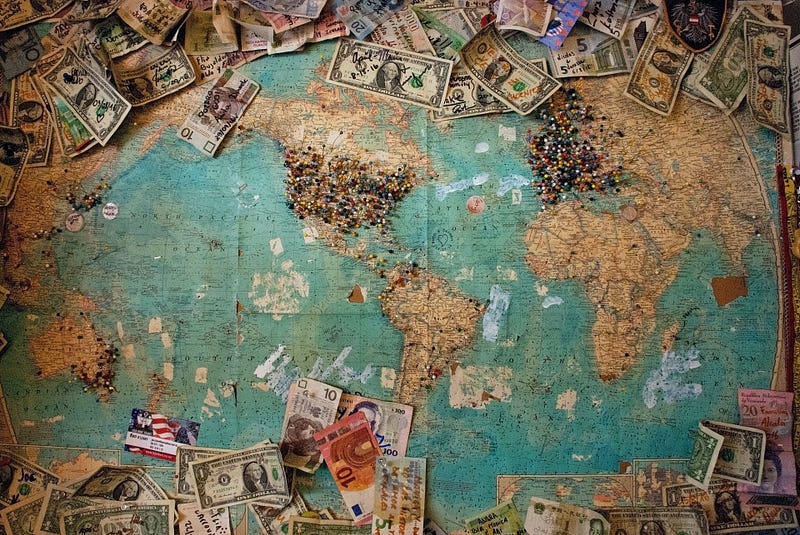
Photo by Christine Roy on Unsplash

The total amount of money in the world is increasing and decreasing every second. When a loan is issued from a bank anywhere in the world, money supply increases. When a loan is paid back, money supply decreases.

Economic handbooks, professors, media outlets, and other sources of information still refer to “printing” when there is an increase in money supply. But in a modern digital world, there is no printing involved anymore, unless replacements for some worn-out bank notes.

About 90–97% of the money is found digitally in binary numbers of 0s and 1s on the servers, so no printing press is going to start printing, but instead private banks just give out more loans — adding just numbers to accounts in their servers.

Imagine what would happen and how it would change people’s thinking about money when the news would start saying: “Today the banks added 1,000,000,000,000 units of money into the economy — just with pressing 13 keyboard keys + ENTER.”

Wonderful. Refreshing.

Too easy or even unbelievable? That’s how it’s done. Accept it. And it’s no secret either, you can read about it and search for it freely.

I did.

Of course the macroeconomics behind how money globally works is a bit more difficult to grasp, but the creation of money is way more simple than the “creators” of it in the banking system would like you to know.

And don’t you dare start to question, doubt, or do much thinking about it.

“Enough. Enough is the dirtiest word in capitalism.”

— Michael Moore —

But how much money is there? At the end it really doesn’t matter as long as it is never enough.

Photo by Rux Centea on Unsplash

Curious to find out what is Financial Sector?

or how is money created?

Money
Monetary System
Creators
Banks
Banking
Recommended from ReadMedium