avatarFernando Lopes

Summary

The author reflects on their personal savings achievements in the first quarter of 2019, emphasizing the importance of tracking expenses and setting financial goals.

Abstract

In the first quarter of 2019, the author achieved significant savings, with March being particularly successful due to a performance-based bonus. They emphasize the importance of knowing one's regular monthly spending to effectively redirect any extra income into savings or investments. The author has set a high benchmark for future savings with an average monthly saving of $4331.92 for the quarter. They advocate for the practice of tracking financials monthly to gain visibility and control over personal finance, and they plan to extend this tracking to additional income streams. The author invites readers to share their savings goals and suggests other related articles for those interested in personal finance and investment strategies.

Opinions

  • The author believes that budgeting and tracking expenses are crucial for improving one's savings rate.
  • They consider a bonus as separate from regular income and plan its allocation in advance for savings.
  • The author values the visibility gained from regular financial tracking and considers it essential for financial improvement.
  • They set ambitious financial goals and use past performance as a benchmark for future savings.
  • The author encourages the development of multiple income streams and shares their perspective on investment options like blockchain and ETFs.
  • They practice what they preach by making financial tracking a monthly ritual, demonstrating a commitment to personal financial management.
  • The author is not a financial advisor but promotes the idea of doing thorough research when making investment decisions.

How Much Did I Save In 1Q 2019?

Photo by Christian Dubovan on Unsplash

March was a great month of my savings. In other articles, I already discussed the importance of tracking your expenses in order to improve your savings rate.

It is also important to know how much you would spend on a regular month, so any extra income can be redirected to your savings/investments.

March for me means a bonus. I do not consider it as a part of my salary due to the fact that is based on the company performance and can be at any time put on hold if things go south. Knowing beforehand that I would be entitled to a bonus for 2019, I immediately planned how much of it I would save here:

Being in April 2019, I thought it was time for a quarter review. As an investor, you keep hearing about earning results so why not apply it to my financial results?

Let’s check my quarter saving results:

January: $1689,23 February: $3029,34 March: $8277,20
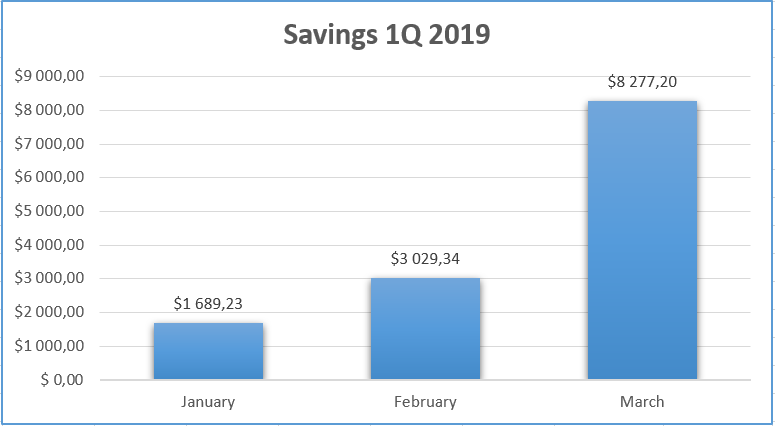
I am aware that March is a special month and it makes the graph look pretty nice. So let’s focus on the average saved amount per month which is $4331,92. This value will be the reference for the next quarter and I know it will be hard to beat, but we must set goals.

“You cannot improve what you don’t track…”

Therefore from 2019, I started to seriously track all my financials. By seriously I mean I make it a monthly ritual. Yes, it takes time to compile everything but I do like the visibility I have on my personal finance.

It started with my savings. As I am also building extra income streams, I will start to track these as well.

How much are you saving each month? Share your goal with me in the comments below.

If you like my content, please check my other stories:

Disclaimer: I am not a financial advisor. Always do your own research when investing.

Money
Personal Finance
Life Lessons
Personal Development
Finance
Recommended from ReadMedium