
How Mini Used Psychology to Conquer America
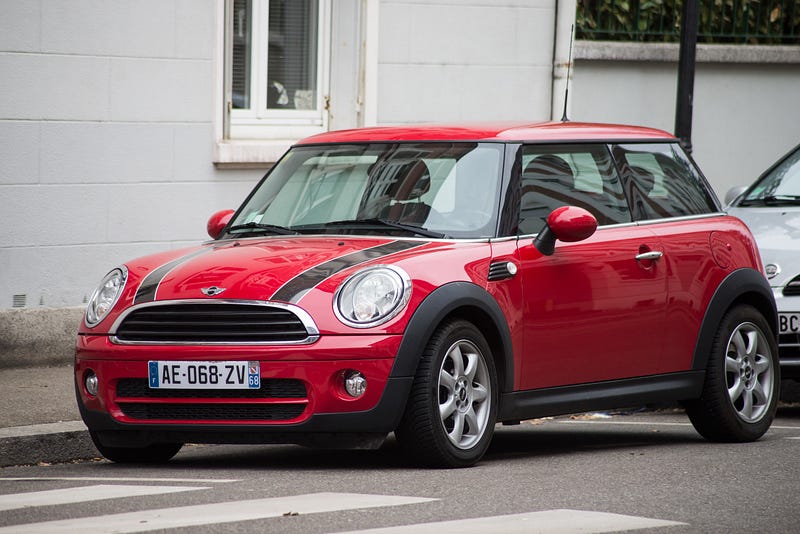
How did the Mini go from being a post-war budget saver to one of the most beloved cars on Earth?
It’s not as fast as a Lamborghini or as sexy as a Ferrari.
It’s not as tough as a Jeep or as fancy as a Mercedes.
But, unsurprisingly, Mini (and their owners, BMW) are masters of marketing psychology.
The Little British Car That Could
Created in 1957, the Mini was built to be a tiny car that could go a long way on just a little bit of gas (or petrol, as the Brits say).
Post-World War II British car makers were designing bigger cars, but were forced to reconsider the size of their cars when the Suez Crisis unfolded in the Middle East and Europe.
Just like the recent war in Ukraine pushed the price of fuel to a breaking point, the Suez Crisis made it impossible for the still-recovering British economy to grow…
Because no one could afford gas to go anywhere.
Seeing the writing on the wall, Sir Leonard Lord of the Morris Car Company tasked his top engineer to build a small car that could carry four adults, with a low price and even better fuel economy.
The Mini was born.

The Mini became a cultural icon in Britain and a symbol of the “swinging 60s” in London.
And when racing legend John Cooper got his hands on it in 1961, his “Mini Cooper” became a powerful force on the rally racing circuit.
The Mini was sold in a limited number in the US, but was pulled out of the market in 1978 due to slow sales and tight design regulations regarding size and weight.
Fast forward to the year 2001, and the Mini was finally ready to come back to the United States.
There was just one problem:
The American automotive market was dominated by a “bigger is better” mentality.
An underdog from the start, Mini had to use some clever marketing psychology to break through in a market ruled by cars like the Ford F150.
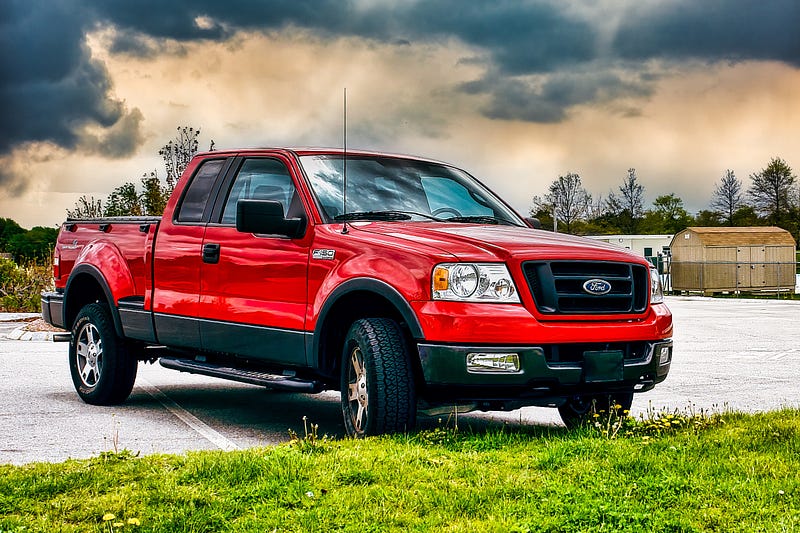
How Mini Used Marketing Psychology to Break the US Market
Without the constraints of London parking spots or terrifying, windy country lanes, the Mini’s small size didn’t make much sense for American drivers.
When your country is huge and most of your driving is in big comfy lanes in a straight line fighting for space with long-haul truckers, you don’t think of size as a disadvantage.

Mini knew this — but surprisingly made their entire launch campaign focused on their biggest “flaw” — the car’s tiny size.
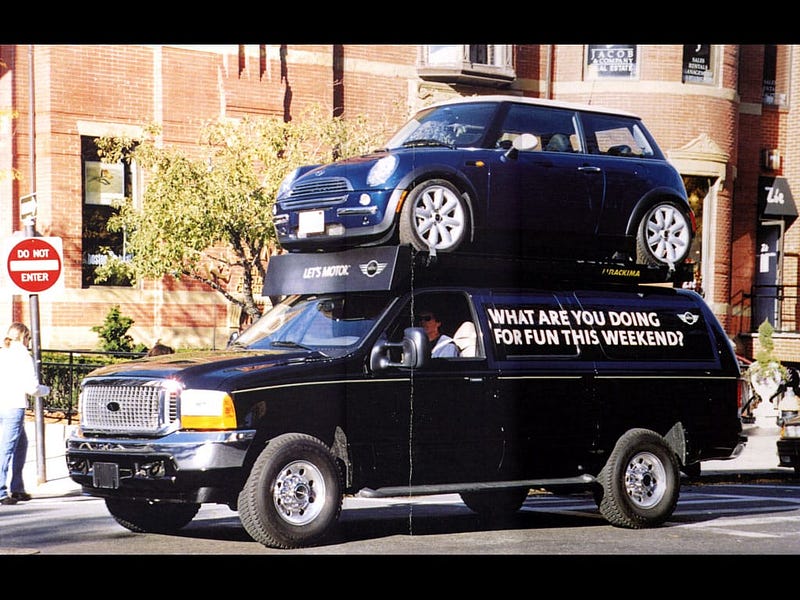
But why?
Well, because — consciously or not — the advertising agency knew about a psychology principle called the Blemishing Effect.
🧠 What is the Blemishing Effect?
This psychological principle says that when we show a little negative information alongside the positive, we can make something seem more attractive.
Mini took advantage of this effect by being upfront about its disadvantage in the American market — its “mini” size.
Lots of brands use this effect to make themselves more lovable.
Just take Pringles who’s 2023 Super Bowl ad showed people getting their hands stuck at the bottom of its distinctive can:
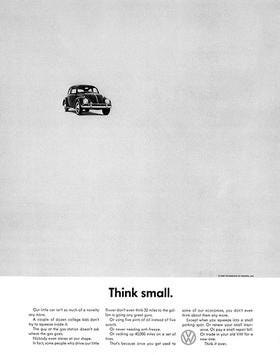
Or VW’s classic example of the Blemishing Effect in action, the famous “Think Small” campaign (which could be seen as the inspiration for Mini’s triumphant U.S. launch).
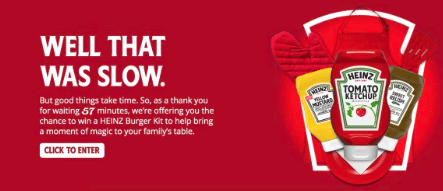
Or Heinz ketchup’s advertising that focuses on how slow it is to come out of the bottle:
If you want to try the Blemishing Effect, start here…
✅ Talk to and listen to your customers — is there a quirk in your product that they love to hate?
✅ What are the small imperfections that make your product unique? (Don’t pick something that’s integral to how it works, like how Teslas *allegedly* have the tendency to catch fire)
✅ Think about how you can dial up this quirk and present it alongside your product’s good attributes.
Getting traffic but not enough sales, leads, or clients? 👇
What if you could quickly understand a customer’s impressions of your digital experience, get rapid expert feedback, and immediately understand how to improve your experience with marketing psychology and behavioral science?
My popular Choice Hacking CX Audit can help you.
✅ 43-point CX Audit
✅ Drive sales and retention
✅ Build your brand for the long-term
// What is a Customer Experience Audit?
Part expert review, part user research, and part behavioral diagnostic, I record a video teardown of your website or marketing experience and share my initial recommendations in an actionable 43-point CRO report.
Each audit will help you:
✅ Instantly understand flaws in your messaging, visuals, design & information architecture
✅ Quickly identify areas where behavioral science and persuasive design can help your business accomplish its goals
✅ Predictive AI Salience analysis to understand what users are noticing and what they’re missing.
To see an example audit or schedule yours, visit: https://www.choicehacking.com/customer-experience-audit