
How Microsoft Tried to Lock Out Web Browser Competitors
For 15 years, Internet Explorer dominated the market

Microsoft announced on June 15, 2022 that it would end support for Internet Explorer (IE). This action may elicit yawns from users of Chrome, Firefox, Safari or other web browsers — but from a historical perspective, its significance cannot be overlooked. After all, IE dominated the web browser market for fifteen years.
Here’s the backstory.
What’s the World Wide Web?
The internet originally derived from a concern about the Cold War. The United States, fearing an attack by the Soviet Union on the country’s telecommunications network, turned to the Advanced Research Projects Agency (ARPA) of the U.S. Department of Defense for an alternative communications system. In 1962, ARPA with assistance from MIT began to devise a “galactic network” through which computers could communicate, eventually creating “ARPAnet,” which sent its first computer-to-computer message in 1969.
Networked communications were pushed forward with the development of “Transmission Control Protocol” (TCP), a method for any networked computer anywhere to talk to any other. “Internet Protocol” (IP) was later added to create TCP/IP, the protocol that essentially transformed the internet into a global computer network. Researchers and scientists with government agencies and research organizations used the internet to communicate through the 1970s and 1980s. Initially, commercial use was not allowed.
The internet started to take shape commercially when, in 1984, CompuServe introduced an online “electronic shopping mall.” The World Wide Web didn’t come along until 1991, thanks to Tim Berners-Lee, an English computer scientist. Berners-Lee is credited with creating the “web” of information that led to the modern-day internet. In 1992, with the passage of the Scientific and Advanced-Technology Act by the U.S. Congress, the internet was officially recognized for public and commercial use.
Predatory practices
This is where things really get interesting. Also in 1992, researchers and students at the University of Illinois developed a web browser, Mosaic. Two years later, Jim Clark and Marc Andreessen commercialized the browser, forming Mosaic Communications Corporation. Their first product, “Mosaic Netscape,” was released in late 1994. Internally, the new browser was nicknamed “Mozilla” because it was designed to be a “Mosaic killer.” (Predatory practice #1.)
Just a few months into 1995, Mosaic Netscape led the browser market. To distinguish it from the original Mosaic browser, it was renamed “Netscape Navigator.” With the new corporate name of Netscape, the company successfully went public in August 1995.
Meanwhile, Microsoft, known for introducing its MS-DOS and later Windows operating systems for personal computers, realized it was behind the curve when it came to internet technology.
To get a browser to market quickly, Microsoft’s embedded it into an add-on package for the Windows 95 operating system. Called Internet Explorer (IE), this web browser was based on Spyglass, a commercial version of Mosaic, and IE was “distributed under a license with Spyglass, Inc.” For its part, Spyglass was supposed to get a quarterly fee plus a percentage of Microsoft’s revenue for the software. By the browser’s third release, however, Microsoft decided to bundle IE free of charge into Windows 95, denying Spyglass any additional revenue beyond its fee. (Predatory practice #2.) Spyglass threatened Microsoft with legal action and Microsoft offered the company $8 million to settle the case in 1997.
Microsoft flexed its muscles in another way, aiming its fire and ire at Netscape. Netscape agreed to meet with Microsoft in 1995. According to then Netscape CEO James Barksdale, “I had never been in a meeting in my 33-year business career in which a competitor had so blatantly implied that we should either stop competing with it or the competitor would kill us.” (Predatory practice #3.)
Browser war winner
From a technology point of view, IE couldn’t compete with the more sophisticated, feature-rich Netscape Navigator. That didn’t seem to matter. Even though IE was widely seen as a bug-plagued, sluggish inferior product, it was irresistibly free — bundled with Microsoft’s operating system. Microsoft’s market domination in PC operating systems virtually guaranteed that IE would by default become the leading web browser.
According to Steven Vaughan-Nichols, Senior Contributing Editor for ZDNet:
“Here’s the real reason why IE beat Netscape: Microsoft strong-armed PC vendors into putting the new operating system and its browser on all their PCs. The goal was not so much to kill off other PC operating system vendors. There wasn’t any real competition in the mid-90s. The goal was to destroy Netscape.”
The U.S. Department of Justice, along with twenty states, took notice, accusing Microsoft of unfairly restricting other web browsers in the competitive marketplace. In 2000, Microsoft was found guilty of abusing its monopoly position by attempting to “dissuade Netscape from developing Navigator as a platform,” by “giving Internet Explorer away and rewarding firms that helped build its usage share,” and by “excluding Navigator from important distribution channels.” While the judge hearing the case recommended that Microsoft be split into two companies, this idea was overturned on appeal. Microsoft settled without being forced to change its corporate structure.
Unfortunately for Netscape, it was too little too late. The company was acquired by America Online (AOL) in 1999. Netscape Navigator, along with other software products, was blended into a brand family called iPlanet, which eventually became a division of Sun Microsystems. By late 2007, Internet Explorer had over 77 percent of the browser market compared to less than 1 percent for Navigator. The final version of Netscape Navigator was released in 2008.
The winner becomes a loser
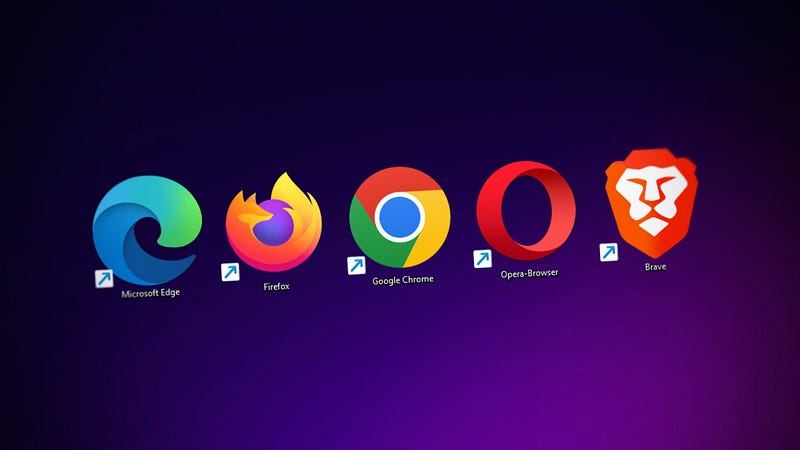
Even as Netscape Navigator was on the way out, Google introduced its Chrome web browser in 2008. The primary competitive advantage of Chrome was its cross-platform ability — and that was the death knell for Internet Explorer. In short order, Chrome became the new bully on the block and Internet Explorer inevitably began to fade. By 2012, Google Chrome was the most used browser worldwide. While Microsoft won the browser war initially, it had ceded its leadership position in the market to Google.
Going forward, Microsoft Windows operating systems will now include the web browser Microsoft Edge. Sean Lyndersay, general manager of Microsoft Edge Enterprise, wrote in a blog post:
“Over the next few months, opening Internet Explorer will progressively redirect users to our new modern browser, Microsoft Edge with IE mode. Users will still see the Internet Explorer icon on their devices (such as on the taskbar or in the Start menu) but if they click to open Internet Explorer, Microsoft Edge will open instead with easy access to IE mode. Eventually, Internet Explorer will be disabled permanently as part of a future Windows Update, at which point the Internet Explorer icons on users’ devices will be removed.”
Microsoft may once have dominated the web browser market… but not anymore.
Trademarks and registered trademarks referenced in this article are the property of their respective holders.
Sources
History.com Editors. “The Invention of the Internet,” History, Oct. 28, 2019
Levenson, Michael. 2022. “Internet Explorer is Shutting Down in a Burst of Nostalgia,” The New York Times, June 15, 2022
Vaughan-Nichols, Steven. 2021. “How Internet Explorer really beat Netscape,” ZDNet, Aug. 18, 2021


