
How Microsoft caught Google napping
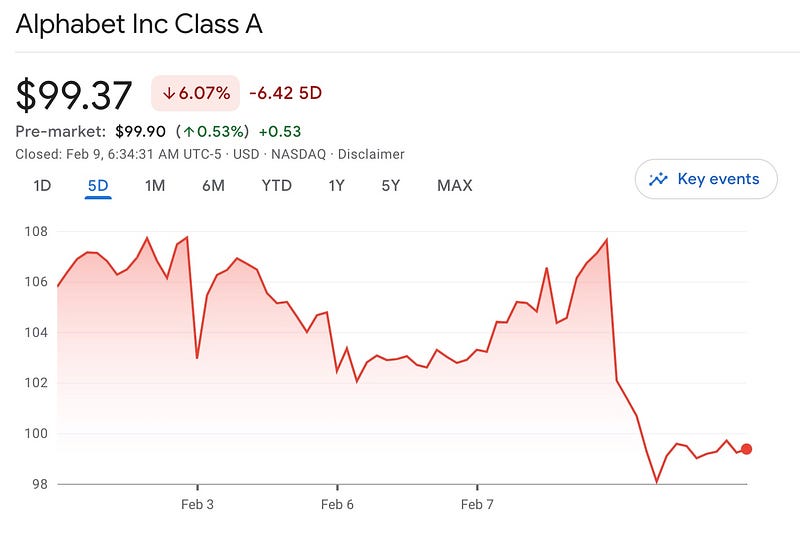
Google’s launch event on Wednesday, a rapid response to Microsoft’s presentation of its Bing ChatGPT feature, was a flop that prompted a nearly 10% drop in the company’s share price.
What did Google get so wrong? The launch reflected the panic that has gripped the company since the launch of ChatGTP in November. It had to put together a presentation at full speed and pinned together that told us less than the corporate blog post the day before, basically consisting of a few announcements but no commitment to a feature that, to make things even worse, produced a rather questionable search result.
It was a worst-case scenario: having garnered the world’s attention to say nothing new, the feature it was launching revealed haste and lack of planning, with a dodgy search result to boot. If the presentation of Microsoft’s new Bing resulted in a rise of around 5% in the company’s share price, Google’s generated a fall of almost 10%, and worse, a total impression of having been caught napping. While the headlines that greeted Microsoft’s event were along the lines of “search engines will never be the same again”, “competition with Google heats up”, “Bing makes online searching interesting again” and “Microsoft challenges Google”, Google’s prompted much less attention, and comments along the lines of “still several weeks behind Microsoft”.
That said, impressions, headlines and the stock market are not always a true reflection of reality: machine learning has been a strategic technology for Google for many years now, while Microsoft, apparently, is betting almost everything on an alliance with OpenAI, which it achieved by letting it use Azure early on. But in practice, things are not black and white: Microsoft is not totally dependent on OpenAI technology, while Google, which boasted of having trained all levels of the company in machine learning, has found it tough to react in time to Microsoft’s challenge. It’s been clear since the beginning of January that Microsoft was going to incorporate OpenAI technology; the company has not been particularly secretive or discreet in this regard, and the reality is that all Google has been able to organize in several weeks has been a bad presentation at which it hasn’t even been able to launch any product as such.
A clear problem: the industry leader, pressed by the possible consequences of major change, is unable to think nimbly about how to deal with it. For Microsoft, that change represents a huge opportunity for improvement in an environment, online searches, in which it had very little involvement, and with the possibility of injecting new life into areas such as office automation, in which it is a leader. For Google, the change is a problem that leads it to question everything from its cost structure (queries to a Large Language Model generate a much higher consumption of resources than a simple database search), to its business model or SEO itself.
For Google, this change is a minefield: apart from the not at all obvious question of cost, why would customers pay for advertising on the search engine, which accounts for around 58% of the company’s revenue, if a good proportion of users are going to be satisfied with an answer in the form of text and, therefore, will not need to click on anything else? What happens when your clients have been investing all their lives in SEO that makes the internet work to Google’s liking, if now the position of a page in the list of results is going to be practically irrelevant, because what counts appears in the form of a written answer? How come Microsoft indicates the sources of information on which its search engine has based its answer, but Google, at least apparently, does not?
The overall narrative here is clear: Microsoft has pulled a flanker on Google. The new Bing is there for anyone to evaluate, while Google offers promises down the line. And even if we are only talking about narratives for the moment, there is no doubt that, firstly, they are important, and secondly, they show that Google has failed to capitalize on what seemed like a long-standing advantage, and despite being the leader, has proved a disappointment. Meanwhile, both companies should remember that there are plenty more competitors waiting in the wings.
(En español, aquí)


