
How Medium Uses Gamification to Keep You Writing
Mechanisms that make writing easy and fun

Have you ever stopped to wonder what it is that really makes you clock in, day after day, to a platform that pays, on average, far less than minimum wage?
“Based on my experience over the last year, I would say that it is realistic for someone putting in decent part time writing effort to make $100–$500 per month.” — Medium Blogging Guide
The answer might surprise you.
It’s found in the art of gamification.
What Is Gamification?
“When you take away the technical [aspects] of a game, you are left off with four elements…” — Eugen Eşanu
For centuries, mankind has been playing games.
It’s only recently, though, that we’ve started dissecting what it is that makes for a successful game. Gamification, in its simplest definition, is the science of what makes a game.
As outlined in Eugen Eşanu’s article entitled Gamification: Understanding The Basics, it turns out there are four key elements to any game:
- A goal
- Rules
- A feedback system
- Voluntary participation
Once you break down the concept of a game into these four elements, you can see that there’s a lot that we do today, especially on our mobile devices, that wouldn’t historically be called a game, but in reality, is.
From dating apps to education platforms, designers and developers today are all gravitating towards making their user experience more gamified.
Why Is This?
The answer is simple enough. Everyone loves playing a game but not everyone loves online dating or budgeting.
The more you can make any online user experience a game, the greater the likelihood they’ll come back.
And, in a world oversaturated with things competing for our time, a game happens to be the one thing we always make time for.
Which brings us back to Medium.
Medium is run by really intelligent people, making a huge difference in the competitive world of online publishing.
They know that the more participants they can pull into their platform, the better their chances of continued success.
Which is where we come in — the tens of thousands of writers “playing” every day on the platform.
So let’s look at Medium through the lens of the four elements of gamification:
Game Element #1: Goals
“A goal provides players with a sense of purpose.” — Eugen Eşanu
Self-expression, especially self-expression that pays, can be found in the heart of 99.99% of Medium’s players.
As writers, we all want to be heard. We all dream of making a living writing. These two goals, being heard and being paid, drive the Medium user experience.
How do I know this?
It’s what Medium tells us.
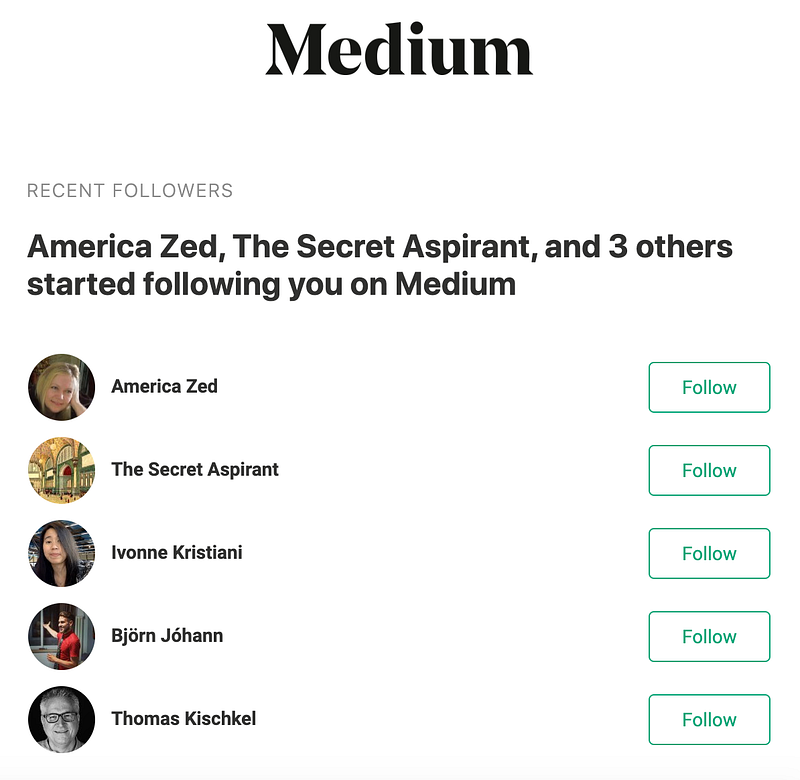
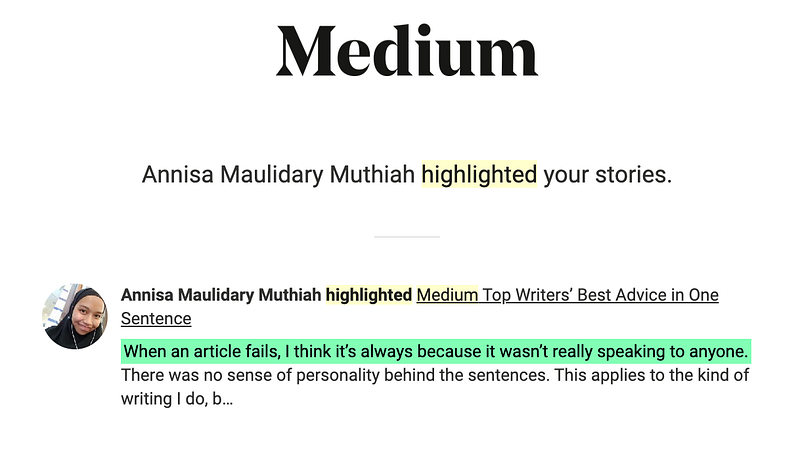
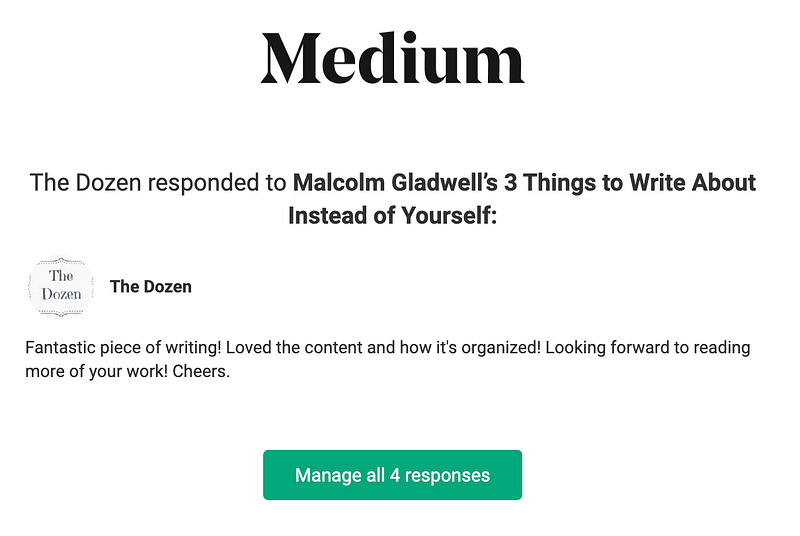
As players, we’re constantly getting reminders from Medium that tie us back to our core goals.
Here are the three most common reminders:
1. Followers:
2. Highlights:
3. Comments:
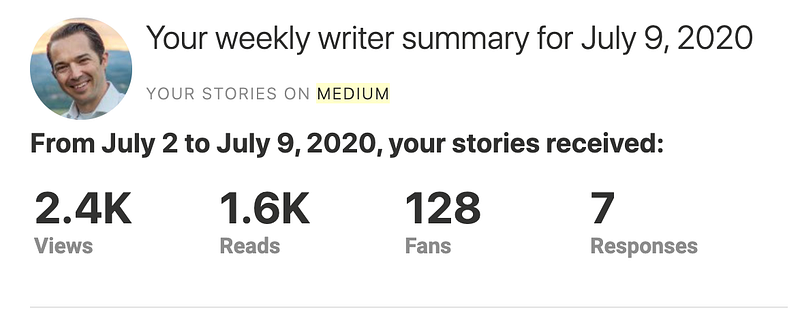
In addition, we get weekly notifications from Medium telling us our “stats” for the week, which helps us to gauge how well or poorly we’ve played that week:
Game Element #2: Rules

“Rules place a limitation on how players can achieve the goal.” — Eugen Eşanu
If the end goal of every writer is to be read, then Medium’s curation guidelines are the rules that tell us how to play.
Curation guidelines are simultaneously very specific and unpredictable.
Medium tells you what rules you need to play by as a writer to be curated but makes no promise that in playing by the rules you will be curated.
In gamification, this is known as the tool of unpredictability.
Medium knows that if publishing were entirely predictable, then we as writers would eventually get bored with the process.
By not knowing whether we’ll be curated or not, we’re required to invest emotional energy into the process.
We’re ecstatic when curation happens and boast to our friends about our “curation rate,” and we are extremely frustrated when we don’t get curated.
Medium knows this, which is why they keep things unpredictable.
They need our emotions to keep us in the game.
Game Element #3: A Feedback System
“[A feedback system] tells players how close they are to achieving their goal. It can take form of points, levels, progress bars, etc.” — Eugen Eşanu
Anyone who is active on Medium is aware of the Stats section of the site.
As a new writer, I was challenged by my coach Shaunta Grimes to reach a certain number of reads every day.
What this meant is that three to four times a day I was logging in to see how my read rate was faring. It’s a habit I haven’t kicked months later.
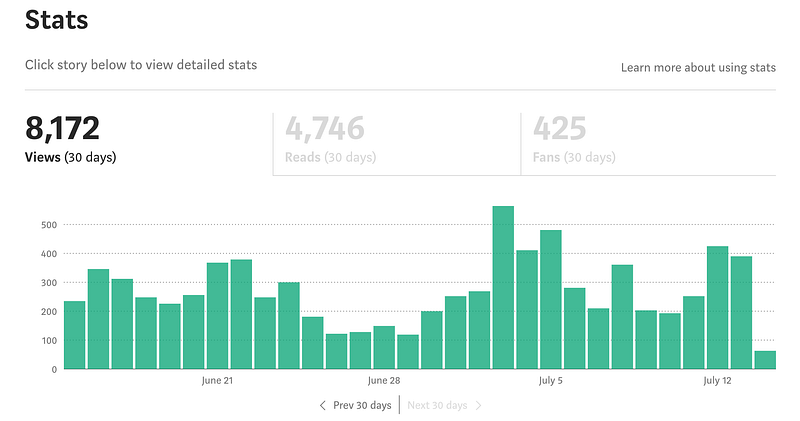
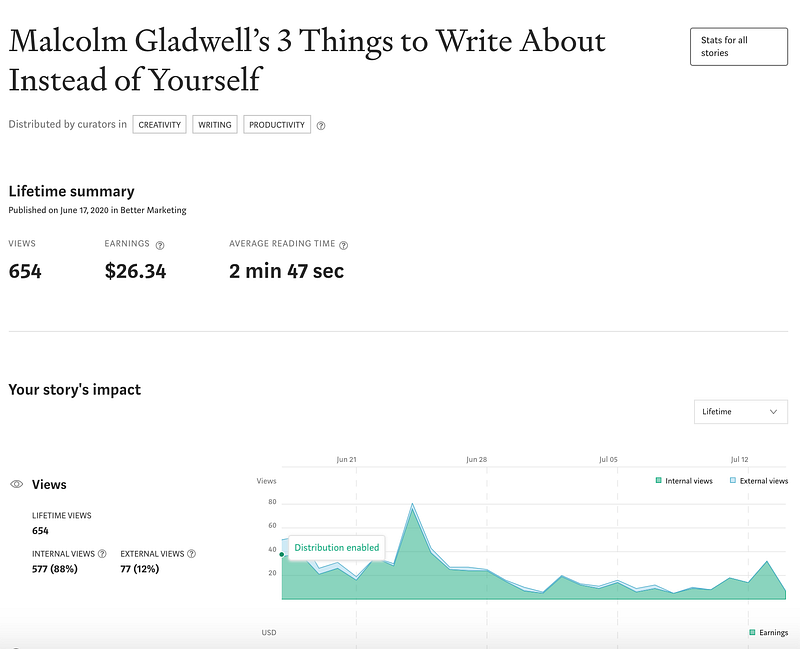
The dashboard, which provides both a macro and micro level assessment of our writing, provides instant feedback on everything we’re doing on the platform.
Macro (all stories):
Micro (single articles):
For those interested in understanding their stats, here’s a great resource from Medium.
Game Element #4: Voluntary Participation

“[Voluntary participation] requires everyone who is playing the game to acknowledge the goal, the rules and the feedback system.” — Eugen Eşanu
Today, Medium offers writers the biggest venue to self-publish work.
At last count, over 30,000 writers were actively playing.
“Medium has now paid out more than $6 million total to 30,000 writers.” — TechCrunch
And not only do players participate but they’re also willing to pay to play, which is the absolute best-case scenario for any game developer.
Medium members pay $5.00 a month in order to reach their goals. If you don’t sign up, then there’s no way to get paid for your work, which Medium knows is a key driver for their players.
Correction: You don’t have to be a Medium member to get paid (thanks to Pamela Hazelton). However, most writers/players are also members.
And how many of these players actually break even on their $5.00/month membership fee?
We don’t know.
We don’t know because, if we had that info, many of us would stop playing.
Instead, Medium plays on our goals and aspirations by providing a monthly update with a couple of carefully-crafted stats:
- The percentage of writers who make over $100 (a seemingly reasonable goal for a player in the long term).
- The big winners. The highest amount a single author received and the highest amount a single article received. These are the big aspirational carrots floated in front of starry-eyed writers, hoping to hit the jackpot with their masterpiece.
Not Right. Not Wrong. Just a Game.
There’s no question that Medium provides a stellar platform for writers wanting to share their work.
It’s worth recognizing, however, that Medium is not philanthropy nor is it a non-profit. As a platform, its goals are to increase players and participation as a means to maximizing profitability.
So next time you’re wondering why they keep things unpredictable or don’t make it easier for you to reach your wildest dreams as a writer, keep in mind that Medium isn’t designed to make you rich.
It’s designed to make sure you keep playing.
Enjoy the game!


