
How Media’s Silent Symphony Plays in My Life
We seem to know everything about the last twenty-four hours but very little of the last sixty centuries or the last sixty years.
In the small hours of the morning, when the first lights of dawn splash colors across the horizon, many of us reach for our digital anchors. The first sip of coffee pairs not with the morning paper, but with a parade of cat videos, celebrity snapshots, tweets, and a sprinkle of posts — or should I say “news?”
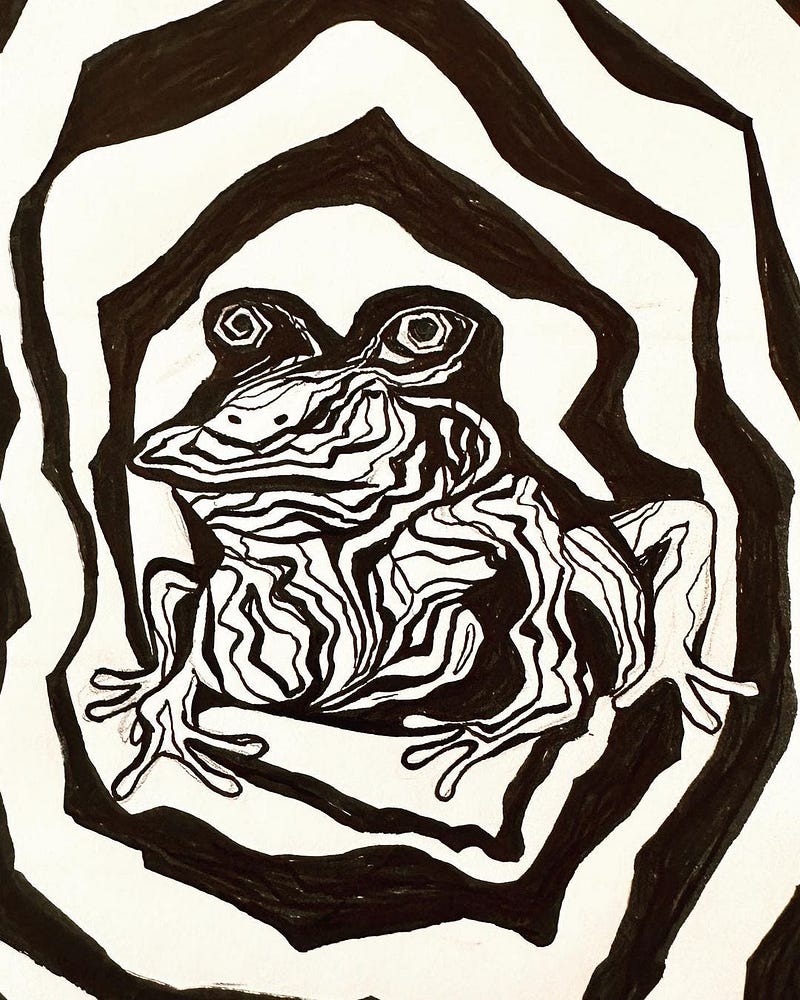
My argument extends beyond the simple assertion that we’re being starved of genuine information. I’m positing that we’re losing touch with the very concept of being informed. Ignorance, as daunting as it may seem, can always be remedied. But how do we address the situation when what we perceive as knowledge is, in fact, ignorance? We live in an era where unseen algorithms act like clandestine maestros, orchestrating a grand concert of imagery and noise that amuses, diverts, and more often than not, leaves us in a state of hollow emptiness.
Don’t mistake me for a Luddite. A well-crafted meme can be art, and brevity they say, is the soul of wit. But do we risk replacing thoughtful discourse with the fleeting satisfaction of a well-timed GIF? When did our value for information start being weighed against its entertainment quotient?
Many of us are consciously aware of the ebbing tide of our attention spans. As a child, I could get lost in books for hours on end. Even during my high school years, I was capable of devoting undisturbed hours to my assignments. Admittedly, this knack for focus made me a terrible texter, much to the liking of many. However, nowadays, a mere thirty minutes into any task, I can feel my mind itching for a sneak peek at my phone. It’s common knowledge that this decline is a byproduct of our growing appetite for bite-sized content — be it 15-second TikToks or 250-character tweets — and our exposure to a relentless barrage of distractions like advertisements. But could there be a more profound, underlying cause? Something far more profound? Far more profound …

We frequently resort to metaphors to comprehend one concept in light of another. For instance, God is often imagined as an elderly man residing in the skies, family as a branching tree, and time as a clock. The latter analogy might stir debate amongst some: the clock isn’t a metaphor for time, time genuinely manifests in the form of minutes, seconds, and hours. But does it truly? Prior to the advent of the clock, time wasn’t perceived in such meticulously exact fragments. Even in our current understanding of time, certain hours race by, while others seem to linger eternally. However, the clock has become so intertwined with our notion of time that we mistake the clock for time itself.
Metaphors are crafted to stand in for concepts, but our minds can inadvertently blur the lines and perceive the metaphor as the actual object it represents. This illustrates the profound influence of media. Media serves as a metaphor for communication — it’s an embodiment of our human desire to share and connect. A book signifies knowledge, and music could be a symbol of beauty, yet media’s ubiquity in our lives often leads us to a fallacy where we confuse media with the essence of what’s being conveyed.
Whenever we sit down to enjoy a romantic film, it’s a mere metaphorical representation of love. However, people often conflate this cinematic portrayal of affection with the genuine essence of love, as experienced in a character’s relationship. Similarly, when we tune into the news, it serves as a metaphor for information. Still, many individuals perceive it as the definitive source of knowledge, or in some cases, the absolute truth. The primary forms of media in our society profoundly influence every aspect of our lives: the way we converse, our approach toward various subjects, and our literal perspective of the world around us.
Insert pic here
The beauty of written language lies in its inherent potential for truth and falsehood — every word invites us to ponder, to reflect. Take for example these statements: “The sky bathes in shades of blue. I answer to the name Abhi. I’m 6ft tall.” Even if we’re not consciously scrutinizing each sentence for its authenticity, we need to accept or challenge each claim before we can digest what comes next. However, visuals tread a different path. They don’t court judgment in the same way words do. You can dispute the veracity of the statement “Abhi is 6ft tall”, but when presented with an untouched image showing me as 6ft tall (not true at all), you find yourself accepting the reality as the camera has captured it.
Consider this, as you peruse a print ad from a gourmet burger joint claiming, “The ultimate burger experience awaits you. Prepared with the choicest cuts of meat, each burger is a masterpiece — a symphony of flavor, texture, and aroma. Our award-winning chefs, trained at the famed Le Cordon Bleu, adhere strictly to the time-honored culinary traditions.” Each sentence sends a ripple of skepticism through your mind. Could these burgers really be that transcendent? Are their chefs truly alumni of the iconic Le Cordon Bleu? Are age-old culinary traditions the secret behind their taste?
Now, juxtapose this scenario with an enticing image of a succulent, perfectly grilled burger, sizzling on your screen. The visual medium does not encourage you to evaluate its truth or falsity; rather, it strives to evoke an emotional response. You might find the ad alluring or off-putting, it might stir up feelings of joy, anticipation, or even sudden hunger — but you can’t challenge the authenticity of the image, in the same way you can dispute the claim, “Our chefs are trained at Le Cordon Bleu.”
Okay, so what has all of this been building up to really?
What sort of content does our society, awash in visuals and sounds, gravitate towards?
Have you ever permitted yourself this luxury — the luxury to simply halt? To consciously set aside time for doing absolutely nothing?
An interval to sit and soak in your own existence…
I questioned myself — “Hmm, have I?” The response was a silent “Not really.”
Yet, there’s absolutely no wrong in seeking the solace of entertainment. It’s human, after all. As an entertainment enthusiast, I revel in the amusement it offers. However, the trouble arises when entertainment starts to be perceived as the default setting for all experiences. It’s as though “entertaining” has become interchangeable with “valuable” or “relevant.” I’ve seen individuals criticizing the content of my articles and others for being “too monotonous,” essentially implying they’re not worth viewing. But such critiques have never truly stirred me. Learning, in my belief, isn’t necessarily designed to amuse us or ignite a dopamine frenzy.
Regrettably, the expectation for entertainment to be infused into all aspects of life is becoming commonplace. News broadcasting is a particularly notable example of this trend. Newscasters, covering daily snippets of tragedies and atrocities, urge us to ‘tune in tomorrow.’ But why should we? It’s puzzling to think that a few minutes of crime and chaos would leave us craving more rather than causing sleepless nights for weeks on end. But we accept the newscasters’ invitations, primarily because we’ve grown to understand that the ‘news’ isn’t meant to be taken too seriously. News shows meticulously select presentable individuals, ideally conventionally attractive, accompanied by a catchy soundtrack to make the news feel more like a cinematic experience than a source of crucial real-world information.
When we consume news, intricate stories are often truncated to fit within a minute or less. This rapid-fire pace inhibits meaningful contemplation. In the online realm, pausing to say, “Let me think about it,” or “I don’t know,” isn’t appreciated because it disrupts the pace. The act of someone sitting and thoughtfully processing isn’t deemed entertaining. Rather, the spectacle of swift dismissals and instant reactions tends to steal the show.
As an author endeavoring to intertwine educational content with an appealing allure, I often find myself contemplating my own position in this shifting landscape. The effort I invest in presenting myself favorably on paper is undeniable. I meticulously try to remove any lingering pauses from my writing and strive to intersperse engaging visuals to prevent readers from losing interest during an in-depth discussion on a topic like irony. Promotions occasionally punctuate my writings and, though I’m aware these are not uncommon and generally don’t undermine the credibility of substack articles, I can’t help but wonder about their influence on how educational content is perceived here.
Could essays ever hold the same gravitas as books in the minds of readers? Do my efforts inadvertently alter people’s expectations when it comes to learning? The answers might vary based on individual perspectives. As for me, I’ve discovered that consuming educational content with a dash of entertainment online whets my appetite for more profound learning, pushing me towards reading more books. But I remain uncertain whether others share this sentiment — perhaps you can shed some light on this?
However, a conundrum continues to plague me — the significance of my persona. How appealing and likable should I make myself appear, as a person, a friend, or a ‘creator,’ to validate my content in the eyes of the audience? Does the visual aspect of video content overshadow my words and ideas, making my image the primary representative of who I am? I can’t shake off the thought that when my name is mentioned among friends, the first thing that flashes in their minds is my face, not my thoughts.
When people are judged first by their images, not their work, it profoundly alters how we evaluate individuals. Consider TV commercials that exploit the images of athletes, singers, chefs, and even chess players, as selling points. This approach seems to imply that regardless of one’s profession, one’s image can always be manipulated for entertainment.
As I find myself pondering these dilemmas, I can’t help but question: how does this trend affect us individually and collectively? Have we started to view ourselves and others merely as images, gauging the value of our ideas based on our visual appeal rather than their inherent worth? Is this a transition we’re willing to accept, or is it time to ponder and question more deeply?
Here I am, a chronicler of our times, wrestling with an existential dilemma. Again! Do I trade my pen for a vlogging camera? Do I convert my weekly digests into digestible TikToks? Or perhaps swap my author photo with that of a grinning Chihuahua for increased ‘engagement’?
Allow me to propose an alternate path. Let’s reclaim the lost art of reflection. Let’s slow down, step back from the relentless stream of memes, clips, and sound bites, and delve deeper. The world, after all, is not a sitcom to be consumed in 20-minute segments, nor a music video with fast cuts and autotune.
It’s a complicated, beautiful mess of truth and falsehoods, love and conflict, innovation and tradition. It deserves more than a quick swipe and a sarcastic comment. It deserves our thought, our conversation, and our sincere efforts to understand.
Will you join me on this intellectual expedition? A journey not bound by character limits or view counts, but fueled by curiosity, an appetite for knowledge, and an insatiable desire to question. I cannot promise you cat videos or laugh tracks, but I assure you, it’ll be a voyage worth embarking on.
Until our next dispatch, I bid you adieu. Stay sharp, stay curious, and remember — wisdom is not a sprint, but a marathon.


