
How many of you know about Zoetrope?
Animation device that made History.
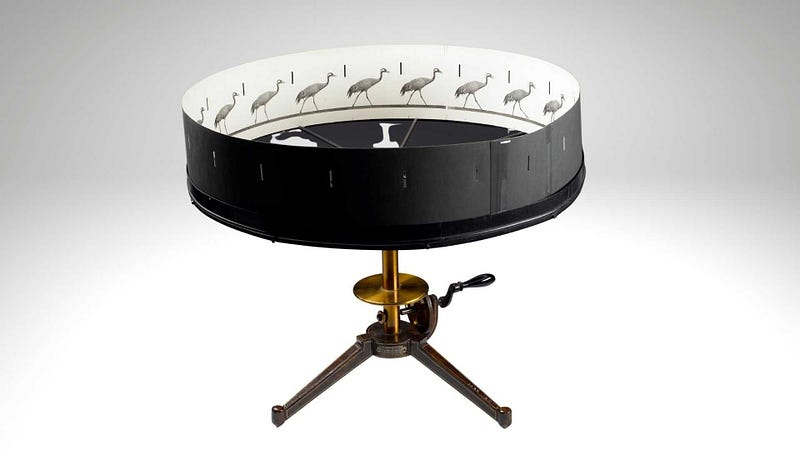
Have you ever heard of a zoetrope? If you are into animation, you probably have. Let us look into everything we need to know about a Zoetrope.
The zoetrope’s origins can be traced back to the 1830s, with inventors like William George Horner credited with developing early versions. However, it was the iteration introduced by Milton Bradley in 1866, featuring replaceable film strips, that truly captured the public’s imagination. The zoetrope became a popular parlor toy, a source of wonder and amusement for Victorian families.
Beyond its playful nature, the zoetrope held historical significance. It paved the way for future advancements in animation technology, including the phenakistoscope and ultimately, the motion picture camera. By demonstrating the power of sequential imagery and the persistence of vision, the zoetrope laid the groundwork for the world of cinema as we know it.
What is the principle of zoetrope?
The zoetrope uses the principle of persistence of vision to create the illusion of motion. This principle states that the effect of light on the retina chemically persists for up to a tenth of a second. Old movie projectors flicker because they are just below the noticeable 10 or 12 frames per second.
So, the next time you encounter a zoetrope, take a moment to peer through the slits and witness the magic of early animation. It’s a captivating glimpse into the history of motion pictures, a testament to the human desire to bring stillness to life.
How many of you know about zoetrope before?


