
How Many Hours Should You Spend Editing — Is There a Standard Time
Every story is different but some general rules exist for editing time
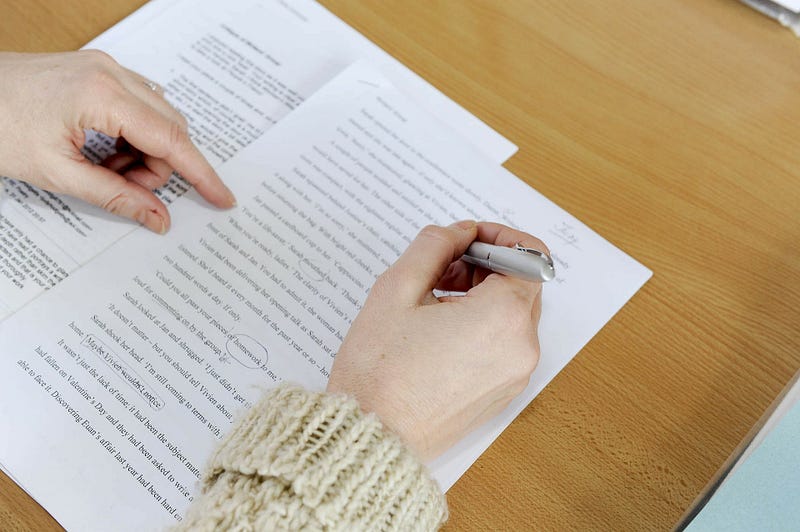
Yesterday I spent four hours editing a two-minute read. ‘Am I doing it right?’ I thought. But I kept on editing until the whole thing made sense:
After finishing the piece, I started searching for a standard of editing time. It proved a tough nut to crack.
The four stages of editing
Why had I spent so much time editing? It turned out I was doing not one but four things. According to the blog post by David Brewster, we have:
- Structural editing: It focuses on the heart of the narrative — to make it a better story.
- Copy editing: Also called line editing. It is the process of correcting inconsistencies, mistakes, and repetition.
- Proofreading: It is the last stage of checking the draft before it is published. You focus on minor errors and inconsistencies — like typos, punctuation, formatting, and capitalization.
- Page proofs: This one is for books. You check for layout, page numbering, and other issues.
So, I was doing a lot of work without being technically aware of what I was doing. When I was mulling over these types of editing, I found the Society for Editing for professional editors.
Standards set by The Society for Editing
What do professional editors do? Clients constantly criticize them for taking too long to edit. They need a standard to answer the complaints.
ACES — the Society for Editing — collects and answers questions of editors from around the world.
“Are there benchmarks to present in defense of my work?” One ACES member editor asked
“A 1000 word story should take about an hour if the draft is in good shape,” Samantha Enslen answered after referring to six sources. “Of course, text in bad shape will take longer; text in great shape will go more quickly.”
I edit at 150 words per hour.
I know I am not a professional editor. Editing 1000 words per hour is not easy for me. But I am only at 15% of the standard editing speed. That’s pathetic.
But as I thought more about it, it made sense. When I am trying to edit, I am not answerable to anybody. That is why I edit it so slow.
I have noticed another thing too. If I am not feeling mentally fresh, my editing speed goes down.
Edit with a fresh mind?
Hemingway edited his work several hundred times with a fresh mind. How? Here is an excerpt from Papa Hemingway, the book by A. E. Hotchner:
“I like to start early, before I can be distracted by peoples and events. I’ve seen every sunrise of my life. I start by rereading and editing everything I have written to the point I left off.
That way, I go through a book I’m writing several hundred times.
Then I go right on, no pissing around, crumpling up paper, pacing, because I always stop at a point where I know what’s going to happen next.”
Takeaways
We should try to know more about editing. Why bother, you say? Faster editing can make us more productive. A 500 words per hour speed is an excellent goal for heavy self-editing.
Also, as a writer learning to edit, consider these points:
- What happens when you are running? You get exhausted if you go too fast. It applies to editing as well.
- A fresh mind is necessary to write well. But editing needs a clear head too.
- Always take a break before you start editing a piece.
- If you can edit in the morning like Hemingway, it is the best time to focus.
- With knowledge and practice, you can improve your editing skills.
In the end, I’d love to read your answers to these two questions: Are you satisfied with your editing speed? Do you think you need to learn more about editing?
You can read my curated stories here.


