avatarR. Rangan PhD

Free AI web copilot to create summaries, insights and extended knowledge, download it at here

1870

Abstract

y’re masters of light manipulation. They can absorb both visible and ultraviolet light with finesse — thanks to their soccer ball-like geometry with tiny cavities. And — the researchers have managed to recreate these complex structures in the lab for the first time ever — a truly remarkable breakthrough!</p><p id="5abb">But why should we care about bugs and their fancy particles? Imagine invisible cloaking devices straight out of science fiction or coatings that could supercharge solar energy harvesting. It is like something out of a superhero movie, except this time — nature is the real MVP.</p><blockquote id="c7be"><p>“Nature has been a good teacher for scientists to develop novel advanced materials,” Wang said. “In this study, we have just focused on one insect species, but there are many more amazing insects out there that are waiting for material scientists to study, and they may be able to help us solve various engineering problems. They are not just bugs; they are inspirations.” Source : Science Daily.</p></blockquote><p id="c483">So in the future, these synthetic <i>brochosomes</i> could lead to all sorts of game-changing applications — think more efficient solar panels, advanced sunscreens for ultimate UV protection, or even next-level data encryption. The sky is truly the limit when inspiration comes literally from the backyard.</p><p id="9ca4">And there is more! The team isn’t stopping there. They’re already gearing up to scale up their synthetic <i>brochosomes</i> and explore even wilder possibilities. From keeping predators at bay to unlocking the secrets of light manipulation, it’s safe to say that the future of tech looks brighter (and stealthier) than ever before.</p><p id="4135">So — dear reader — the next time you spot a leafhopper buzzing around your garden try to remember — it might hold the key to the tech of tomorrow

Options

. After all in the world of science sometimes the smallest creatures pack the biggest surprises. Here’s to keep dreaming big and embracing the wonders of nature-inspired innovation!</p><p id="6edb">Thank you for reading.</p><div id="b83a" class="link-block"> <a href="https://www.sciencedaily.com/releases/2024/03/240318164501.htm"> <div> <div> <h2>Backyard insect inspires invisibility devices, next gen tech</h2> <div><h3>Leafhoppers, a common backyard insect, secrete and coat themselves in tiny mysterious particles that could provide both…</h3></div> <div><p>www.sciencedaily.com</p></div> </div> <div> <div style="background-image: url(https://miro.readmedium.com/v2/resize:fit:320/0*Uq9haoz2M1MSPkR1)"></div> </div> </div> </a> </div><p id="a8bc">**This article is part of the science-inspired poetry ( #SciNaVerse) prompts to get you inspired — our dear readers — do join us — take a peek, read, applaud, or better yet, join the fun! Spend some time crafting and exploring, and if you create a science or nature-inspired poetry piece (#SciNaVerse), feel free to share it anywhere on Medium — I can’t wait to read your creations.</p><div id="c16b" class="link-block"> <a href="https://scienceansoul.medium.com/list/e7cbe159c53b"> <div> <div> <h2>Science & Soul</h2> <div><h3>undefined</h3></div> <div><p>undefined</p></div> </div> <div> <div style="background-image: url(https://miro.readmedium.com/v2/resize:fit:320/0*fbfdf80fe67410dbc03e234091d8a655ff3ee54a.jpeg)"></div> </div> </div> </a> </div></article></body>

How Leafhoppers Inspire Next-Gen Cloaking Devices and Beyond

A Backyard Revelation
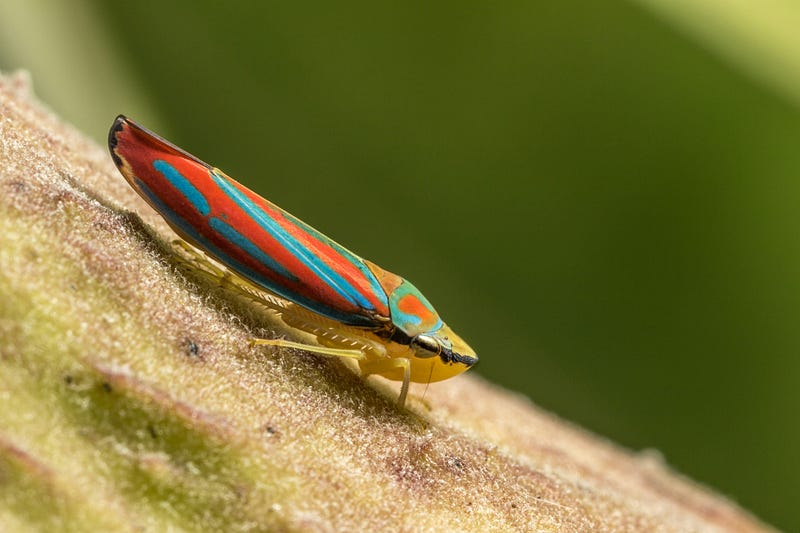
Photo by Mariusz Dabrowski on Unsplash

nature is the inspiration for science and arts just observe

hidden in plain view leafhopper’s secret a peculiar find

tiny critters cloak even tinier particles or braceosomes light manipulation

future of tech invisible cloaking devices unseen to the naked eye yet holding secrets

for us to explore nature’s wonders innovators and gardeners unite

changing the world. in nature’s delight wanted inspiration?

Go ahead — spend time in the backyard!

Nature often serves as an inspiration for the latest and greatest tech devices — think sleek drones mimicking the flight of birds or sturdy materials modeled after spider silk. But what about a common backyard insect, the leafhopper, serving as the inspiration for some mind-blowing next-generation tech — Intrigued?

Researchers at Penn State have uncovered a peculiar trait of leafhoppers. These tiny critters cloak themselves in even tinier particles called brochosomes. Now, these brochosomes aren’t just your run-of-the-mill bug secretion. They are tiny mysterious structures that could revolutionize technology as we know it.

And you ask — what is so special about these microscopic marvels? Well — for starters — they’re masters of light manipulation. They can absorb both visible and ultraviolet light with finesse — thanks to their soccer ball-like geometry with tiny cavities. And — the researchers have managed to recreate these complex structures in the lab for the first time ever — a truly remarkable breakthrough!

But why should we care about bugs and their fancy particles? Imagine invisible cloaking devices straight out of science fiction or coatings that could supercharge solar energy harvesting. It is like something out of a superhero movie, except this time — nature is the real MVP.

“Nature has been a good teacher for scientists to develop novel advanced materials,” Wang said. “In this study, we have just focused on one insect species, but there are many more amazing insects out there that are waiting for material scientists to study, and they may be able to help us solve various engineering problems. They are not just bugs; they are inspirations.” Source : Science Daily.

So in the future, these synthetic brochosomes could lead to all sorts of game-changing applications — think more efficient solar panels, advanced sunscreens for ultimate UV protection, or even next-level data encryption. The sky is truly the limit when inspiration comes literally from the backyard.

And there is more! The team isn’t stopping there. They’re already gearing up to scale up their synthetic brochosomes and explore even wilder possibilities. From keeping predators at bay to unlocking the secrets of light manipulation, it’s safe to say that the future of tech looks brighter (and stealthier) than ever before.

So — dear reader — the next time you spot a leafhopper buzzing around your garden try to remember — it might hold the key to the tech of tomorrow. After all in the world of science sometimes the smallest creatures pack the biggest surprises. Here’s to keep dreaming big and embracing the wonders of nature-inspired innovation!

Thank you for reading.

**This article is part of the science-inspired poetry ( #SciNaVerse) prompts to get you inspired — our dear readers — do join us — take a peek, read, applaud, or better yet, join the fun! Spend some time crafting and exploring, and if you create a science or nature-inspired poetry piece (#SciNaVerse), feel free to share it anywhere on Medium — I can’t wait to read your creations.

Poetry
Science Inspired Poetry
Nature Inspired Tech
Leafhopper
Backyard
Recommended from ReadMedium