
How Language and Culture Shape Different Versions of You
A polyglot’s quest for the integration of their many identities
As I was sitting in my Toronto apartment, having just turned twenty-seven, close to celebrating my one-year anniversary of moving to Canada, a classical tune on my Spotify playlist threw me into a nostalgic reminiscence of years gone by: my late teenage years in Western Europe, my many visits to Russia in my early twenties, a version of me that now felt distant, faded by time, geographical distance, and cultural distance. A version of me that had been irreversibly altered by the many years I have spent in North America, gradually discovering a new me and embracing a completely different culture and lifestyle which, in turn, seemed to have forged a new me.
Each of my long-term stays in different countries was marked by the primary use of that country’s official language in my day-to-day life, meaning, respectively: Italian, Russian, and English. Thus, along with the cultural divide, there was also a linguistic divide taking place in my mind.
Charlemagne is famously quoted as saying that to have a second language is to have a second soul, and in recent years it has been argued that polyglots often seem to “switch” personalities when they switch between languages, a phenomenon usually referred to as “Cultural Frame Switching” (CFS). This is primarily due to the fact that, if the polyglot in question is familiar with the culture associated with that language — which they should be — they know to behave themselves according to the mores of that culture and society. This is not as much of a conscious choice as it is the subconscious result of two phenomena. The first one is the much deeper understanding of culture that emerges as a result of one’s mastery of the language that acts as the verbal medium of that culture. When it comes to cultural analysis, language is something of an instrument of dissection to analyze and comprehend a culture. As I’ve discussed in a previous article, language and culture are inextricable and indissoluble.
Language is something of an instrument of dissection to analyze and comprehend a culture.
The second phenomenon regards the effects that the use of a specific language has on somebody’s mind — on a microlevel — as well as on culture and society as a whole — on a macrolevel. Some intellectuals, like Ralph Waldo Emerson, went as far as to proclaim that a country’s national and cultural identity is significantly defined by its language, arguing that “we infer the spirit of the nation in great measure from the language, which is a sort of monument to which each forcible individual in a course of many hundred years has contributed a stone.”
This topic has been famously discussed by linguist Guy Deutscher in his book Through The Language Glass: Why The World Looks Different In Other Languages, in which he analyzes language as “a mirror of the mind” and explores the way in which each language’s specific vocabulary and syntactic structure converge in creating a unique lens through which the general world is viewed. A different view of the world, in turn, leads to different and unique ways to create and express thoughts and ideas. Thus, Deutscher argues, no two languages are alike in the way that they influence a person’s mental framework and cognitive processes.
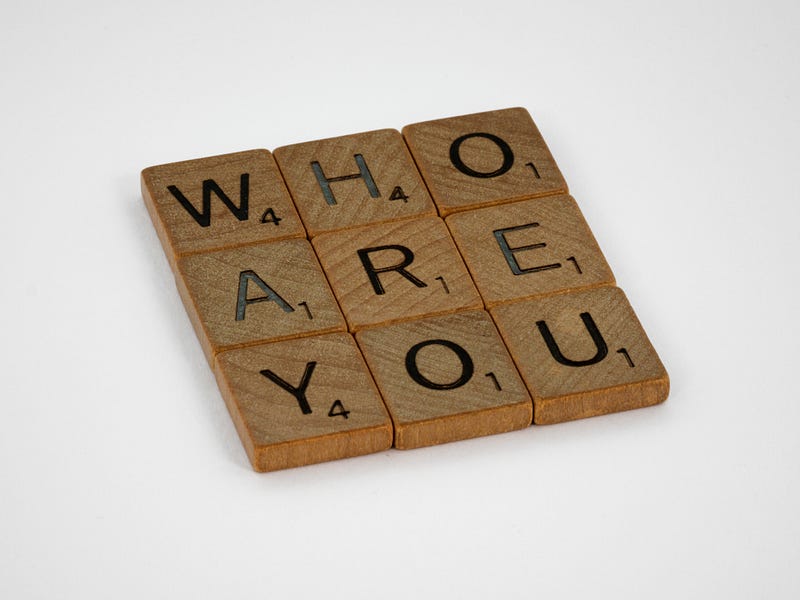
Therefore, we can infer that not only does language by itself shape someone’s perception of the world and the ways in which they relate to it, but also that the indissoluble duo of language and culture inevitably adds to this phenomenon by bringing in one or more specific cultures. This is a process that adds both complexity and richness to the polyglot’s identity. So much so, in fact, that to some of us polyglots it is an enigma in itself: at the end of the day, we are left to question what our true identity is. After all, if we can behave and even think so differently when switching between languages and cultural environments, how can we be sure which one of those many identities is our true and authentic one? And if our identity is the result of all those multiplicities combined, then who are we, really? Can such different cultures and identities actually coexist in the same person? Are we unknowing victims of linguistic DID (if there is, indeed, such a thing)?
This is especially true for young polyglots such as me, that is to say, people who have been exposed to different languages and cultural environments very early in their life, particularly if this was, as was my case, during particularly formative years. My “formal” entry into adulthood happened as I was living in New York and adjusting to the American lifestyle. This was a fundamental stage of my mental formation as an adult, and American society and culture definitely played a paramount role in my transition into adulthood. Does that mean that I “forfeited” the arguably much more “European” identity that came before that? And what about my “Russian” identity, which is at once complementary and contrasting in relation to the general cultural identity of Western Europe?
I believe that the main issue when discussing the matter of the polyglot’s multiple identities is the fact that our society is not equipped to deal with the ever-increasing phenomenon of multiple cultures combining and embracing. That may seem counterintuitive when one is living in a country with high immigration rates, such as the United States or Canada, or in an age of ever-increasing globalization, and yet, in all the countries I’ve lived in, I’ve always encountered this same issue: people failing to view multiple cultural identities as a whole, and, instead, constantly viewing elements of foreign cultures as “other” compared to the socially dominant culture in any given country.
Mastering more than two languages is still seen as relatively uncommon, and even more uncommon is one’s complete immersion in a different culture, usually by means of studying and living abroad. The latter process leads the person in question to fully “absorb” not only the language but also the general culture of that society, its social norms, values, mannerism, etiquette, etc. Hence the “confusion” of people like me, a European emigrée who has lived in a total of four different countries, when it comes to unequivocally defining one’s cultural identity.
However, it is my belief that it is exactly because of this richness and vastity of multiple cultural identities that the polyglot achieves a much greater level of freedom: by developing as many versions of themselves as the languages they speak and cultures they absorb along the way, they are more able to see themselves and their unique identity as something that is independent of all those cultural and linguistic influences.
Once you strip away the formal characteristics of a language — vocabulary, syntax, phonetics, etc. — all you are left with is meaning in its primary, unrefined form. All languages are essentially vessels for meaning. That is language’s first and foremost task. Everything else — the specific form of a language and the culture that is intrinsically attached to it — are additions that further enrich that language, but never interfere with its primary purpose as a vessel for human communication.
In other words, the polyglot is well aware that form and culture are relative, whereas meaning is universal. This knowledge, in turn, leads the polyglot to see through the kaleidoscope of the many languages they master, down to each language’s very essence.
The polyglot is well aware that form and culture are relative, whereas meaning is universal. This knowledge, in turn, leads the polyglot to see through the kaleidoscope of the many languages they master, down to each language’s very essence.
Once the formal attributes of a language are stripped away, the polyglot is left with who they are regardless of the language they speak or the culture they immerse themselves in at any given moment. They are left with their own, unique, unrepeatable personality, which may be enriched and formally re-shaped by the specific vernacular they choose to use, but is never maimed or eclipsed by it. By containing multitudes, the polyglot is able to see through those multiplicities and get to the essence of them, and there is where they find unity.
By containing multitudes, the polyglot is able to see through those multiplicities and get to the essence of them, and there is where they find unity.
The form or lens through which we see the world at any given time might change, and when it does, it is often a fascinating process to explore and savor each lens’ unique perspective, but ultimately, we are still we, in all our richness and complexity.
Want to keep reading? Check out these similar articles:
Sign up for Medium through the author’s affiliate link and get instant access to unlimited articles, or show the author your support and appreciation by buying her a coffee!