
How to Use a Sketchbook to Promote Creativity
Some useful advice for visual artists on keeping a daily sketchbook
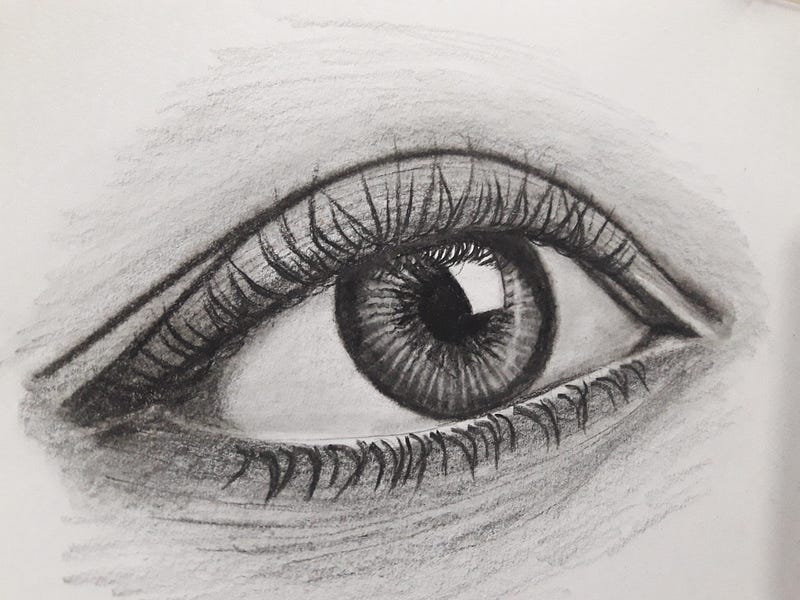
It took me a long time to understand this, but the day-to-day job of the artist is not ‘making art’, it is filling sketchbooks.
As Austin Kleon says, “filling my sketchbook” is a perfectly legitimate answer to the question “what are you working on right now?”
The sketchbook is a sort of creative engine: with every page, I fill the pistons make another revolution; like any engine, it works best when used often; it is hungry for fuel, meaning I have to be better at seeing and recording the world around me; the art, whatever that is, will be the by-product, the exhaust fumes of this creative combustion.
After 15 months of solid daily sketchbook-filling, here are some things I have learned.
Do not draw anything without warming-up first!
Like a pianist or an athlete, an artist’s muscles and joints need stretching — especially if you draw first thing in the morning.
As I open my sketchbook in the morning, I always fill the first page up with something to warm-up my hands.
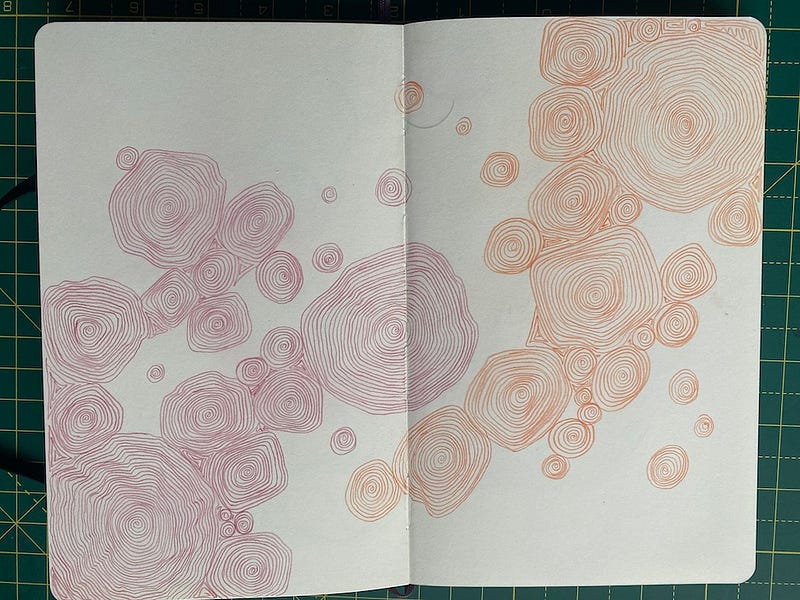
Spirals and volumetric shapes are great exercises. They require almost zero brainpower (ideal if you are still waiting for the caffeine to soak in). The only decision required is where to start a spiral, but then the rules are set: keep going until you hit something, then start again.
Additionally, they are a good way of practicing your precision and spatial awareness.
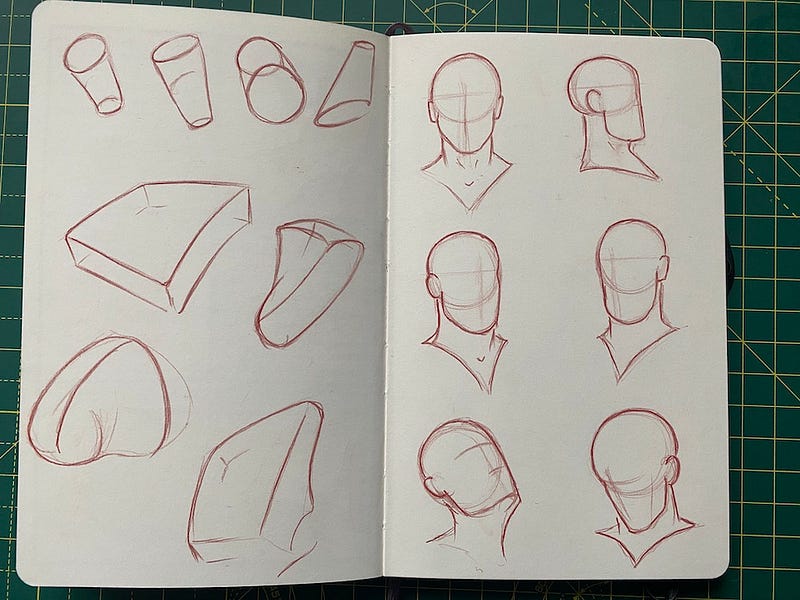
Volumetric shapes are great to practice eyeballing perspective as well as understanding 3D shapes from different angles. Being able to draw the “primaries” — cubes, spheres, and cylinders — in three dimensions unlocks a superpower of being able to draw anything.
Your sketchbook will open your eyes if you let it.
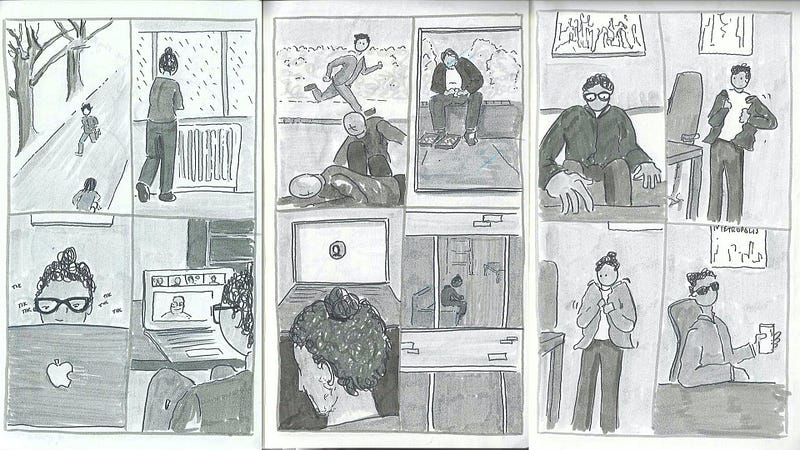
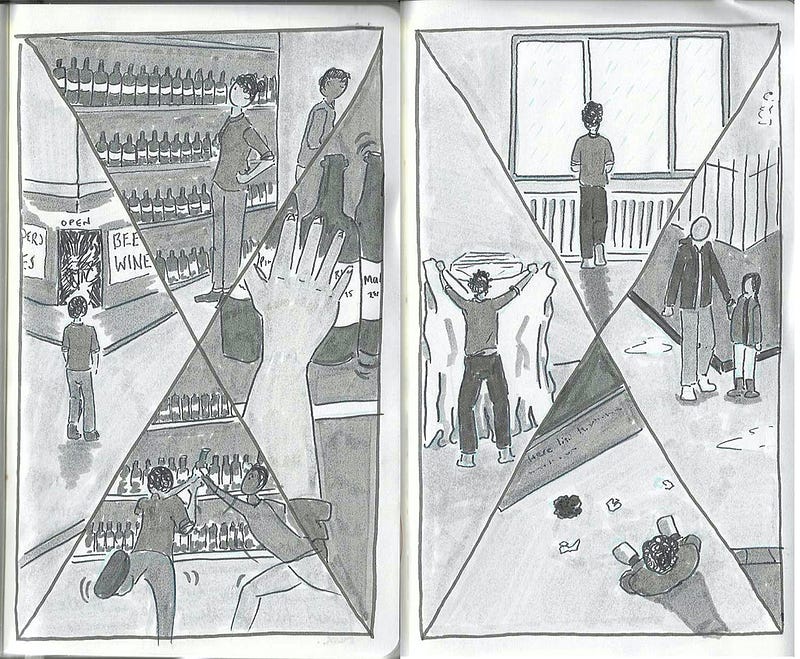
On the second page, I try to keep a record of the previous day, following the method outlined by cartoonist Lynda Barry in her excellent book Syllabus.
When doing Barry’s method, which requires listing things you see or hear, you learn to ‘collect’ moments.
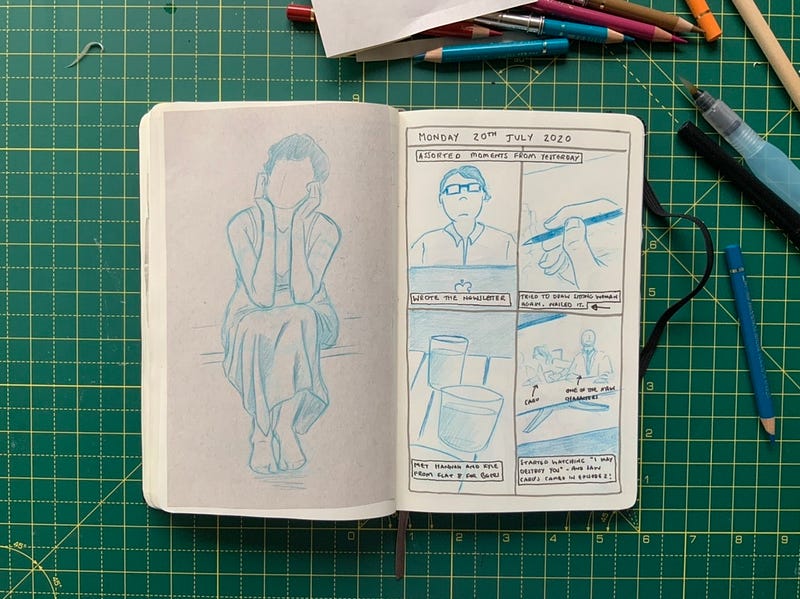
Comics are great at both recording a moment and exploring my internal world, plus I can practice drawing figures and building stories in sequence.
Meanwhile, I’ve found that when I draw a comic a day, I become more excited about drawing comics generally; when I stop, that excitement disappears.
The method you use to journal changes what you notice and what interests you
Drawing begets more drawing
The real purpose of a sketchbook is practice and at least a few days each week I let myself linger to fill more pages.
The best way to do this, as I wrote recently, is a process of “active drawing”.
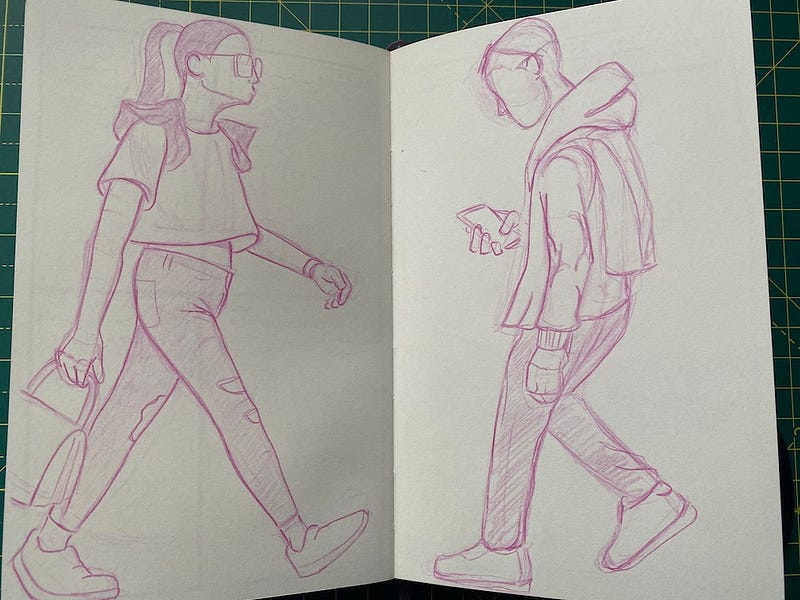
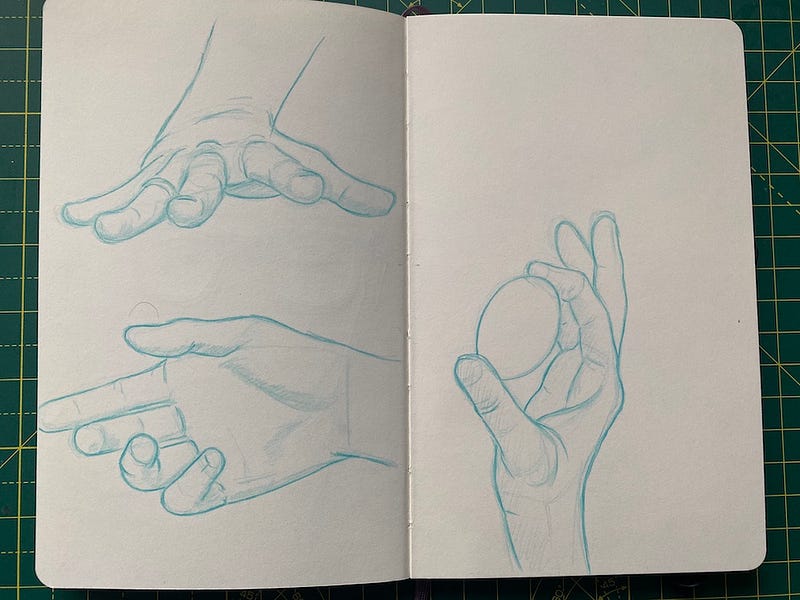
Active Drawing is a three-step process of 1) making a mistake, 2) identifying the mistake, and 3) re-drawing until you get it right.
This is a discipline but it pays dividends.
After drawing a pose for the first time I’ll annotate it, noting the mistakes I’ve made. I also find it’s helpful to draw over the volumetric shapes that make up the body, and see what angles I can exaggerate to make the pose more expressive.
Your sketchbook is yours.
It’s not Austin Kleon’s, or Tillie Walden’s or Loish’s or mine.
Your sketchbook might be, depending on the obligations you have in your life, the only place where you are completely free, so don’t waste that trying to imitate other people.
For the same reason, don’t hold back from writing or drawing things which you feel embarrassed to share. Draw them, explore them and then don’t share them. Your sketchbook is your own private kingdom if you choose it to be.
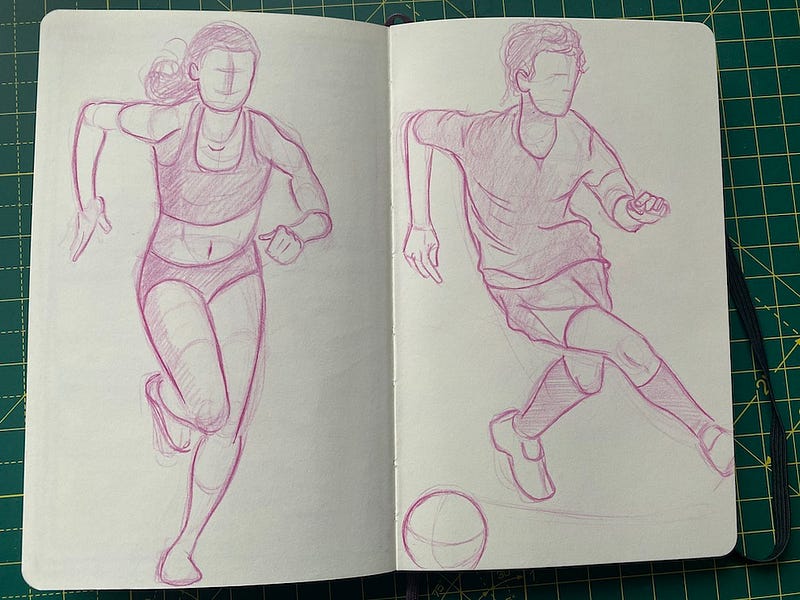
Your sketchbook lives.
The professionals who share their sketchbooks on Instagram perpetuate two myths: firstly that every page in a sketchbook must be good and secondly that they must have a consistent style. These artists have found their style and are practicing and developing it, but if you don’t have one, then there is no reason to lock yourself into a format.
Your sketchbook can be as alive and messy as you are and can change, grow and evolve with your tastes and interests. I’ve experimented with different sizes and styles of sketchbook; I started drawing in brush pens and then switched to coloured pencils on a whim. I’ll absolutely change again.
This is not a YouTube channel: there are no rewards for consistency, but the potential rewards for experimenting are great.
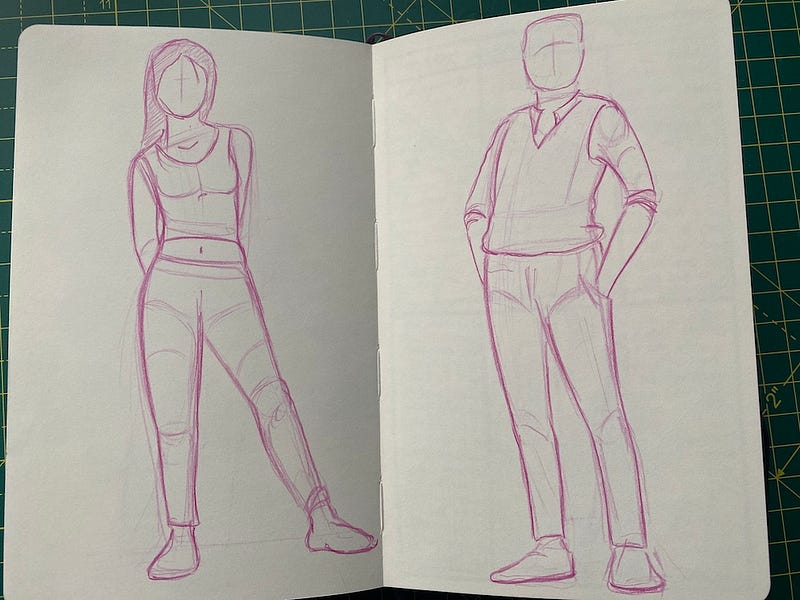
Ask nothing of your sketchbook.
Here’s graphic novelist Tillie Walden in the introduction to a recently published compilation of her sketchbooks:
“I first started keeping a sketchbook in high school and I found it to be a joyless experience. I was trying far too hard to make every page beautiful, and my ability at the time meant that no matter how hard I tried I couldn’t get there.”
Your sketchbook is not there to get you hearts, to help you figure out your next big project or to launch your career. Burdening it with the need to be ‘beautiful’ or profound or popular will weigh it down. You’ll always feel disappointed with what you just drew and then you’ll stop.
Here’s the one small thing you can expect of your sketchbook: it is there to keep your engine ticking over.
Creativity is like my old 1989 Nissan Micra — it doesn’t benefit from being left unused outside in the snow for months on end (at least until it got stolen and driven into a lamppost at high speed, but that’s another story).
It became apparent very early on in 2020 that my art was not going to happen It could easily have been ignored, unused and left rusting as life most definitely got in the way.
The small act of filling a page or two of my sketchbook every day stopped the rust from setting in and when the Cape Graphic Short Story competition was opened in September, I wasn’t starting from cold.
And it’s in this way that your sketchbook, like your art, exists in that duality so brilliantly expressed by Elizabeth Gilbert: at once being the most important thing, so that you turn up every day to do it; and at the same time, not mattering at all so that you can be free.
In some ways, my sketchbook is just a place to play. But in a very real way last year, it saved me too.
Adam Westbrook is an Emmy-nominated filmmaker. He writes a newsletter about creativity, drawing and visual storytelling.