
How Karl Drinkwater Ditched His Job to Become a Career Author
Making the switch to professional writer
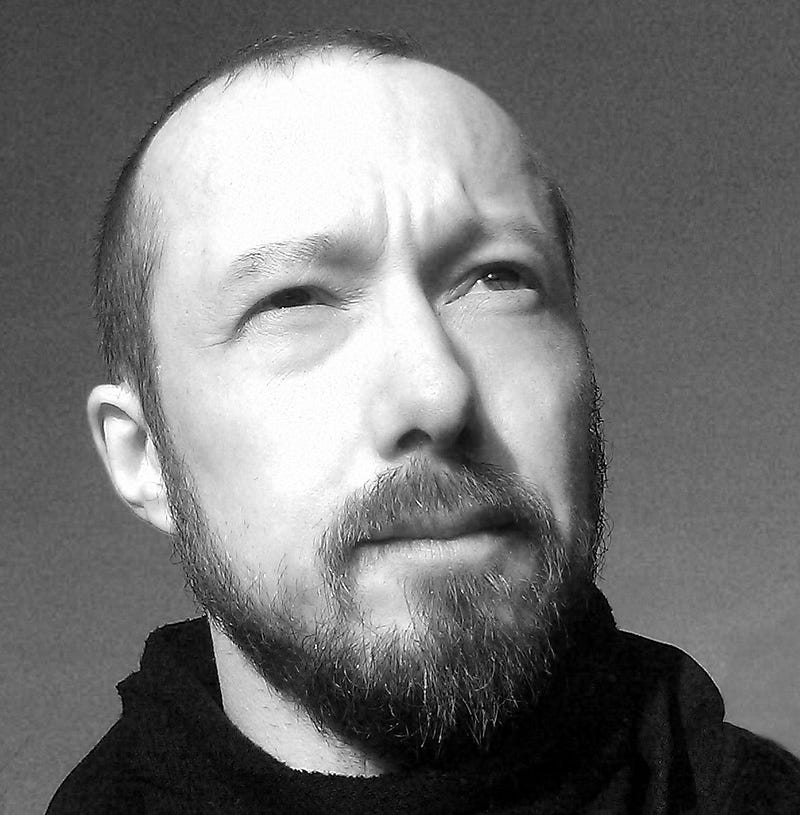
Karl Drinkwater is an independent author who self-publishes across a range of different genres and was able to quit his day job to write and earn a living from his books seven years ago. I interviewed him for a magazine and published the first part of the interview here. Here’s how he turned his hobby into a career…
Reading always triggered Karl’s imagination. He would escape problems as a child by taking a book and climbing into a weeping willow at the bottom of his garden. There, he’d sit for hours, immersing himself in a magical world created by an author. His early reading inspired him to write his own stories from a young age.
When he went to college, Karl worked in his local library at weekends. He then gained a Master’s Degree in Information Science and Librarianship and became a full-time academic librarian, a role he thoroughly enjoyed. Helping people do research turned out to be a useful skill. But he always had this burning desire to be a writer. And he achieved it by being careful with money and focusing on his goals.
“I live frugally, so I was able to save money, always with the plan that I would use that to sustain myself when I became a full-time writer,” he explains.
“Eventually, I was able to cut down my hours at work, to spend more time writing. I started to have some success and got good feedback on the books I had written. I reached a point where I felt I was ready to give up the library work and become a full-time author.”
His gamble paid off. “Now I’m living the dream!” he laughs.
Did leaving his job to become a full-time writer feel risky? “Less than it could have been,” says Karl. “I planned ahead. I combined a small voluntary severance package with my savings, working out how much money I could survive on a month.
“I knew how long I could support myself for, even if I didn’t make much money from writing at the start. And, because I’d supported my partner through her Ph.D., she was happy to do the same for me when I quit work to write. That helped eke out my savings.
“I also provided editing services to other authors, analysing manuscripts and making suggestions at macro-structural, character arc, and stylistic levels. Critiquing other works is a good sharpener for your own craft. Editing is always a backup plan, if necessary.
“I have no car, no extravagant holidays, no children, rarely eating out — I’m a vegan so love cooking! A key tip is to live within your means.”
Independent publishing means there’s a lot to do, and a lot of challenges. “You have upfront costs, hiring people for cover design, interior design, editing, proofreading and marketing,” Karl continues.
“On the plus side an independent author gets 70% royalties on each e-book sale, rather than 10% with trade publishing.”
Karl was invited to Chair of one of the juries for the International Bram Stoker Awards in 2018. “It was fun and rewarding, but a hit to my productivity!” he says.
What has he learned along the way? “You have to find the overlap between what you love writing, and what sells. I’d never write something I wasn’t in love with, just to make money; but neither would I want to spend a year writing a book that only one person will ever read. It can take time to find that sweet spot. I write in three genres (SF, horror, and contemporary/literary), and some of my fans enjoy all of them.”
What’s been the high point? “Seeing Lost Solace get to #1 globally on Kobo and Amazon was a huge thing. I’m used to great feedback from my readers, but rankings are purely based on sales, and provide hard proof that you’re doing something right.”
Karl values quality over quantity and has taken a slow and steady approach to building his author profile. “My books have long gestation periods, with feedback from editors, rewriting, and polishing. I know it’s possible to have success with lots of books rushed out too, but I could never do that. Being an author is a marathon, not a sprint.”
What would he say to other writers thinking of going full-time? “Make the books as good as they can be. That will build your reputation. Let it be a gradual thing, with paid employment to support you initially.
“Be efficient: I usually have three books at different stages of progress at a time — one at planning/ideas, one at writing/editing, and one complete and moved on to marketing/advertising.
“Seek support from other writers and organisations, and contribute to return. I’m a professional member of the Horror Writers Association, the British Science Fiction Association, and the Alliance of Independent Authors.”
Read more about how Karl has developed himself as a writer by dabbling in different genres in the story below…
© Susie Kearley 2023. All Rights Reserved.