
How just this tiny amount of alcohol can destroy months of fitness efforts
A few years ago, I suffered through a Multiple Sclerosis scare that left me terrified I’d never feel “normal” again.
Fortunately, after a year-plus of CT scans, blood tests, heart tests (and I’m sure I’m forgetting something), doctors attributed my dizziness, lack of balance, lethargy, and pain to a combination of herniated discs and migraines.
This was in addition to the usual strains and pains that came with working out on a regular basis and a sports hernia suffered while playing hockey.
Oddly enough, since quitting daily heavy alcohol consumption, I don’t really get injured anymore.
My discs healed up, my inflammation went down, and I was able to re-introduce a bunch of exercises I thought I was done with.
Now, I’m typically well-rested and my body recovers fairly rapidly from any physical exertion I put it through.
Could alcohol have been a major contributor to my sports and gym injuries?
I can’t say for sure, but the more I read up on alcohol’s disastrous effects on the body and fitness levels, the more shocking it becomes.
In fact, it turns out that just one night of heavy drinking can destroy months of training efforts.
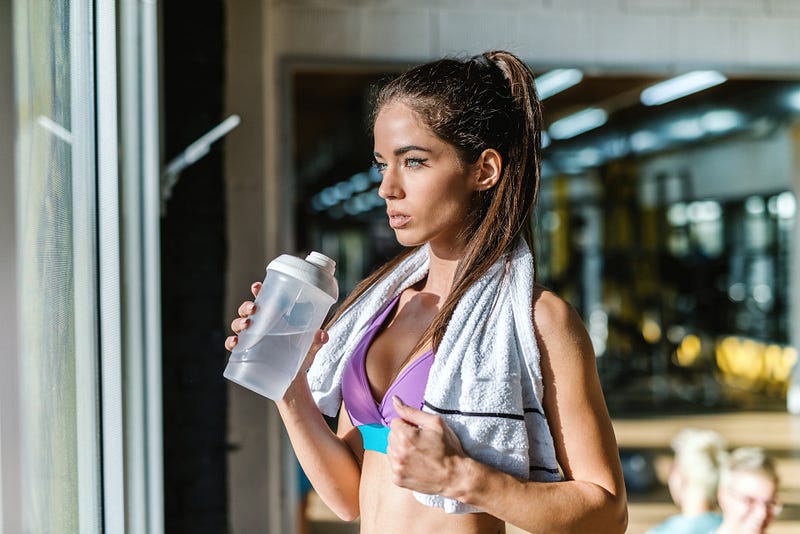
Alcohol is a fitness crusher
When I’m doing research for an article, I’ll often go off in a bunch of different directions, noting interesting threads to follow at a later date.
In my recent piece called “3 reasons your fitness will always be trash if you drink alcohol”, I discussed some fairly recent research by the fitness tracking company Whoop.
Here’s what I wrote:
Whoop measures recovery in a handful of ways: heart rate variability (HRV), resting heart rate, sleep, and respiratory rate.
“It should come as no surprise that of all the behaviors available to record in the WHOOP Journal, drinking alcohol is the one with the single greatest negative impact on next-day recovery,” the company wrote in a blog post.
“On average, WHOOP members’ recovery is 8% lower when they log consuming alcohol the day before (again, this includes everything ranging from one drink to several).”
That’s because alcohol causes your HRV to drop and your resting heart rate to rise. Neither of those is good.
It gets worse.
In a study of college athletes in 2016, Whoop found alcohol could have a negative impact on recovery for 4–5 days.
So if Whoop found that even one drink can have a negative impact for several days, how about a night of really hard drinking?
If you thought 4–5 days was bad, consider the following research that touches on that very topic.
Binge now, singed later
After publishing that piece, I came across another article in the UK Guardian about what researchers found about the effects of just one night of binge drinking.
This one looked at recovery time for runners, and the results are pretty disturbing.
It quotes Professor David Cameron-Smith of the University of Auckland, a researcher looking into alcohol’s effects on the biological processes valued by athletes.
Here’s what he told the paper:
“One of the key determinants of success is not just event-day performance, but the continuous gains and improvements that are made through the long, arduous grind of training.
“Most people should be aware of the impact alcohol has if you consume it the night before a race, but not everyone appreciates the disruptive impact it has on the way your body adapts to handling the training, and that’s the most important part.”
This should be jarring not only for people training for athletic competition but people who just want to stay in shape generally.
Training and motivation are hard! Do you really want to throw it all away?
How does alcohol make you less able to heal and far more injury-prone? The Guardian counted the ways:
- It alters your sleep cycle, which reduces glycogen in the body (important for endurance)
- The sleep disruption also increases the stress hormone cortisol, which slows healing
- The presence of more cortisol reduces the levels of human growth hormone by as much as 70% (!)
- It causes the release of a liver toxin that attacks testosterone
- It’s a diuretic, which means you can be dehydrated for up to a week afterward
- The dehydration puts you at higher risk for injury
- It also decreases your appetite at a time when you need more caloric intake
Even if you quit alcohol a full six hours before going to bed, it won’t matter. Your sleep will be totally messed up — even if you don’t perceive all these internal chemical processes.
Professor Cameron-Smith also tackled the lame argument that alcohol provides key antioxidants to humans.
As the paper quotes him saying, “the same (antioxidant benefit) can be said for broccoli, brussels sprouts and a whole host of fruits and vegetables. Drinking alcohol for antioxidants is an excuse — plain and simple.”
A total waste
I’ve written recently about the deep regrets I’ve been feeling lately about lost time.
Although I’m still thrilled to have finally gotten alcohol out of my life for good about 10 months ago — and I’m relishing the personal and professional gains I’ve made since — I do still mourn “what could have been”.
Here’s what I wrote about that:
“When you don’t build your life around alcohol anymore, your perception of time shifts.
“Before, when I was drinking every night, the days kind of just blended together. Every single one was the same, unremarkable. I didn’t give a damn, either.
“If only I had known time would move like this when I got older, I wouldn’t have wasted more than a decade’s worth of it drinking it away.
“I’m unabashedly proud of what I’ve accomplished since quitting.
“But it upsets me to think about what I could have done with 10 years.”
And the more I read up on alcohol’s disastrous effects on the body, the more I resent it and lament all my wasted training.
Imagine putting all that work in and then just rug-pulling yourself in one single night of heavy drinking?
I did it all the time.
I remember doing my first Spartan Race in 2018 and coming in with a time above 1 hour and 30 minutes.
A year later, having quit alcohol after a particularly boozy and disappointing trip to Las Vegas and feeling highly motivated to turn my life around, I completed the same race in less than an hour.
Unfortunately, the COVID pandemic and lockdown-related depression put me back in booze’s clutches for another 2.5 years or so.
Had I not slipped up, would I have avoided all the pain and injuries I suffered through the pandemic?
Turning it around
At the very least, this latest research has me more motivated than ever to stick with my current alcohol-free path.
At 42, I can no longer drag the burden of alcohol behind me as I go running, climb stairs, do pull-ups and push-ups, toss a football around with my boys, or, as I plan to do for the first time this summer since 2019, complete a Spartan Race.
My hard-earned fitness is mine alone now.
Alcohol can have a seat on the bench.
Thanks a bunch for reading all the way to the end! If you enjoyed this post, please give it some claps so others can find it!
Get an email every time I publish so you don’t miss a story!


