
How John Adams Principles Shaped Our Nation
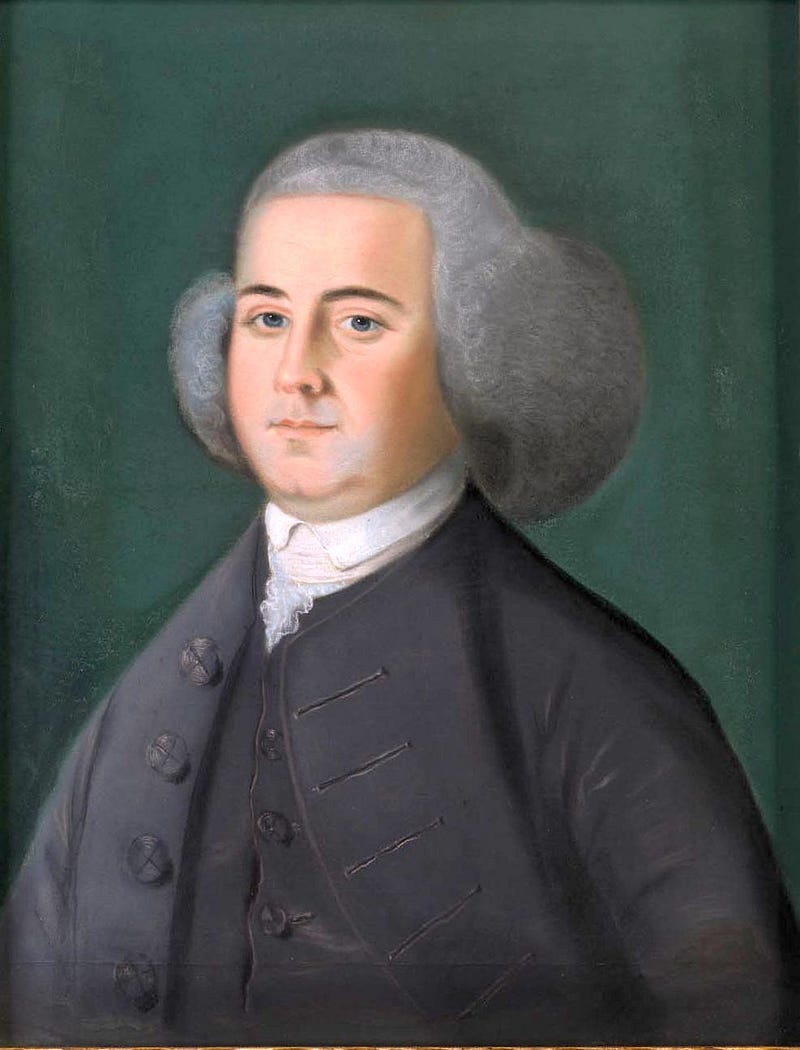
John Adams was born on October 30, 1735, in Braintree, Massachusetts, to John Adams Senior and Susanna Boylston. His early life was typical of the middle classes of colonial Massachusetts in the mid-eighteenth century. He was educated in a mixed-gender school where the curriculum centered on The New England Primer. Adams was sent to Braintree Latin School, where he undertook the first stages of a classical humanist education.
Adams was an intelligent student, but his rebelliousness and questioning of authority got him into considerable trouble while attending the Latin School. His fractious spirit would later prove ideal for a revolutionary. In the mid-eighteenth century, America was a different place than it would be during his later years. The British, French, and Spanish colonies dominated the east coast of North America. During Adams’ time, there were thirteen individual colonies, stretching from New Hampshire in the north to Georgia in the south. These were generally divided into three categories: New England, the Middle Colonies, and the Southern Colonies.
Adams attended Harvard University in 1751 and became interested in Greek and Roman authors, as well as the European Enlightenment. His interest in law led him to study law and earn an A.M. from Harvard in 1758.
Adams and his third cousin, Abigail Smith, settled on their 9½-acre farm at Quincy, outside Braintree. They had five children, including John Quincy, Susanna, Charles, Thomas, and Elizabeth. Unfortunately, their two younger daughters did not survive.
In 1756, Britain and France entered the Seven Years War, the first global conflict in modern history. The conflict involved clashes between the two main belligerents and their allies in Europe, the Americas, and Asia. Adams, a British subject in the Thirteen Colonies, was greatly impacted by the conflict and was disillusioned to find that London’s intention was to impose higher levels of taxation on the colonies.
Adams’ political views began to become clearer during these years, and he began writing and publishing frequently on various political issues. He published under the pseudonym ‘Humphrey Ploughjogger’ in The Boston Evening Post, criticizing prominent Bostonians who were overly critical of British rule in the Thirteen Colonies. However, he was not committed to overturning British rule in North America.
In 1765, the British government introduced the Stamp Act, which required all subjects of the Thirteen Colonies to pay a tax on almost any form of paper or printed material purchased. Adams became a vocal opponent of the Act in Massachusetts, and the British government repealed it in March 1766.
By the late 1760s, Adams had moved his family to Boston and emerged as the preeminent lawyer in the city. He continued to voice his complaints against heavy-handed policies imposed by the Westminster Parliament in England, such as the Townshend Acts, but also acted in accordance with the government. This was evident in the Boston Massacre, where Adams provided legal defense for British soldiers involved in the incident.
In 1773, the British government introduced the Tea Act to crack down on illegal tea smuggling and force the colonial community in North America to purchase surplus tea stocks. However, the poorly handled introduction led to violent unrest in the colonies, with the Boston Tea Party being a notable example. This event was seen as one of the “grandest events” in the history of opposition to British rule in the Thirteen Colonies.
The Patriots, opponents of British rule in North America, convened a meeting of delegates to decide how they could act against the government. The First Continental Congress, convened in Philadelphia in September 1774, was led by John Adams, who was a key figure in bringing different parties together to compromise on issues. The Continental Association, an agreement between the twelve colonies, was formed to pressurize decision-makers in London into granting concessions and addressing the Patriots’ grievances.
The response in Britain was not conciliatory, with the parliament declaring the colonies in rebellion against the crown in February 1775. The outbreak of hostilities and the refusal of the government in England to offer concessions in response to the petitions of the First Continental Congress convinced Adams that British rule needed to be overthrown altogether in the Thirteen Colonies.
In the summer of 1775, the Second Continental Congress convened, leading to the establishment of the Continental Army. Adams proposed George Washington as the first commander-in-chief to gain support for the revolt in the Southern Colonies. However, Britain rejected the "Olive Branch Petition," which led to the declaration of rebellion in the colonies. Adams and other members of Congress began building a government from scratch, raising revenue, and appointing officials.
By the early summer of 1776, the war had intensified, and a committee of five members was established to draft a document declaring independence from British rule. Adams, along with Benjamin Franklin, Roger Sherman, Robert Livingstone, and Thomas Jefferson, drafted the Declaration of Independence, which was ratified on July 4, 1776. The United States would then make its independence a reality through armed conflict.
The American Revolutionary War was primarily fought in New England and the Middle Colonies. After a lengthy siege, the Patriots captured Boston in 1776. The British commander-in-chief, Sir William Howe, attempted to cut New England off from the Patriots’ capital in Philadelphia by securing New York and New Jersey. However, the British war effort was defeated at the Battle of Saratoga in October 1777, and France officially joined the conflict on the Congress’s side.
Adams was a senior member of the Second Continental Congress, sitting on ninety committees and chairing over two dozen. He was appointed head of the Board of War and Ordnance, overseeing the acquisition of weapons and gunpowder for the Continental Army. His efforts also included fostering strong diplomatic ties with major European powers, such as France, the Dutch Republic, and Prussia, which ultimately led to direct military alliances with these nations.
The American Revolutionary War began in 1777, when the Second Continental Congress believed it could convince King Louis XVI’s government to agree to a formal military alliance with France. Adams was appointed as a commissioner to France, but his mission was mixed. The French government agreed to a military alliance, but Adams was frustrated and eventually appointed Benjamin Franklin as Minister Plenipotentiary to France.
Upon returning to North America, the Second Continental Congress determined that negotiations might be entered into with the British. Adams was selected to oversee this possibility and was sent back across the Atlantic to Paris. However, the war reached a stalemate by early 1780, making the British reluctant to enter into concerted peace talks.
Adams took leave of Paris in mid-1780 and headed for Amsterdam to convince the Dutch Republic to provide greater support to the United States. However, the government in the Hague refused to acknowledge Adams’ credentials as the US ambassador to the country.
The British’s focus on securing the Southern Colonies was thwarted by the shifting international situation, with France’s entry bringing naval support for the Patriots. In April 1782, Adams convinced the Dutch government in the Hague to acknowledge the United States as an independent nation and negotiated a large loan for the Congress. Peace negotiations began in Paris, and it took until September 1783 before the Treaty of Paris was signed, officially ending the American War of Independence, or Revolutionary War.
John Adams, the first ambassador of the United States to Britain, arrived in London in 1785 to establish cordial relations with the country he had just been at war with. The failure of both the British and US governments to uphold all provisions of the Treaty of Paris complicated his time in London, where he met King George III and developed a cordial relationship. Abigail, one of Adams' children, joined him in London, which lessened his frustration.
Back home, the political landscape was shifting as senior statesmen were drafting the constitution for the new country and planning to hold the first presidential election. Adams and Abigail left Britain and headed home, witnessing a tussle between advocates of a popular democracy and conservatives who wanted a limited form of democracy. The US Constitution, primarily drafted by James Madison and Alexander Hamilton, provided for a bicameral Congress, a federal government, and a Supreme Court of judges.
Adams watched the proceedings in developing the US Constitution from his home in Quincy, near Braintree, Massachusetts, eager to serve as the nation’s first president. However, George Washington was the overwhelming favorite across thirteen states in the presidential election, leading Adams to become Vice President. He won the race to become Vice President and set off for New York City, which would eventually be named Washington, D.C.
Adams’ years as Vice President in the 1790s were significant in US politics for the development of the First Party System, dominated by two parties: the Federalist Party, established by Alexander Hamilton, and the Republican Party, led by Thomas Jefferson.
In 1797, Adams was sworn into office, dominated by the issue of declaring war on France. His Federalist Party was strongly in favor of war, but many in the US still harbored strong anti-British feelings and viewed the French as their allies in the war of independence. Adams sent a diplomatic embassy to France, but it ended in disaster when three French ministers demanded bribes before they would fully commit to negotiations. Adams could have used this development to bring the US into the war against France, but he resisted calls to do so. The US largely remained neutral in the conflicts until 1815, but the XYZ Affair introduced the Alien and Sedition Acts to combat the possible development of a fifth column of foreign interests in the US.
Adams’ presidency was notable for being the first president to reside in Washington, D.C., which was chosen to foster greater ties to the southern states. The new city, eventually christened Washington, D.C., after the war hero and first president, took several years to construct, but in November 1800, Adams moved into the President’s Mansion, which would later be renamed the White House. Congress met for the first time in the Capitol Building.
Finally, Adams issued an executive pardon to the leaders of the Fries’ Rebellion, demonstrating that excessive taxation was still viewed with disapproval across much of the nation.
In the late 1790s, the relationship between Adams and Jefferson deteriorated due to their opposing views on major policy issues. Adams was pro-French and opposed slavery, while Jefferson was a strong advocate. This division led to Adams rarely consulting with Jefferson as Vice President. The discord between Adams and Jefferson came to a head in 1800 during the presidential election. Adams was the Federalist candidate with Charles Pinckney as his running mate, while Jefferson was the Democratic-Republican Party candidate with Aaron Burr. The campaign was rancorous, with Jefferson’s party attacking Adams for handling relations with France and Britain and excessive taxation.
Adams returned to his family farm and intended to retire, but faced financial difficulties in retirement. His eldest son, John Quincy, was successful in law and diplomacy, but his other sons, Charles and Thomas, were troubled by alcoholism and mental health problems. Adams was determined to follow George Washington’s precedent of staying out of politics but was less successful in this endeavor.
In 1803, Jefferson’s government proposed buying a large swath of land from the French government, the Louisiana Purchase. Adams supported the move but was critical of the Embargo Act of 1807. He also supported the presidential bids of Jefferson’s eventual successor, James Madison, and was generally favorable towards Madison’s handling of the War of 1812.
Adams advocated for the establishment of the Continental Army, served as its commander, and made significant contributions to both the writing of the Declaration of Independence and its ratification by the Second Continental Congress during the American Revolution. He also served as ambassador to the Dutch Republic, helped negotiate the Treaty of Paris.
Despite his significant contributions to the American Revolution, Adams played second fiddle to others, being overshadowed by George Washington, who led it in the field of battle. He was an important contributor to the Declaration of Independence, but Thomas Jefferson gets nearly all of the acclaim for writing it. In the 1780s, he was one of the main negotiators for the United States in Paris, but the Treaty of Paris is usually credited to Benjamin Franklin.
The debate over whether to go to war with the French, who had despised Adams in Paris twenty years prior and were now causing problems for his presidency, marred Adams' time in office and caused controversy. As a result, of the first five presidents of the United States, only Adams was limited to one term, leaving office after four years.