
How Japanese Food Plating Can Help Overcome Emotional Eating
Healthy eating advice for people who are more emotionally-driven
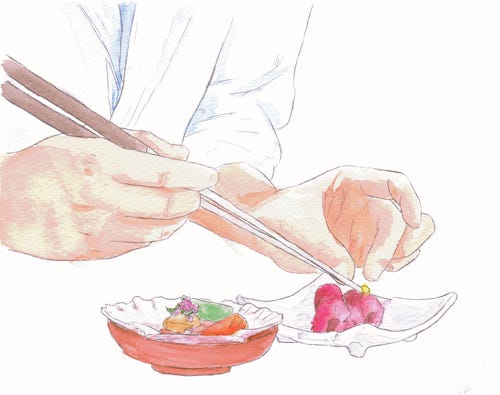
I’ve always been kind of an emotional person. I cry at movies, tear up when reading an inspiring story, and often find myself soaking in feelings of nostalgia, poignancy, and romanticism. I easily find things beautiful and I often find myself empathizing with complete strangers.
While on the whole I believe it has made my life better, being an emotional person has its downfalls, one major one being that when we are emotional, we have difficulty making rational choices. That is not to say that emotional people can’t be rational individuals, but that as humans we must consider that we are not purely logic-driven but can be feelings-oriented when making decisions.
So when I was overweight and my well-intentioned doctor was telling me that I just “needed to eat more vegetables and do more exercise”, naturally I felt very dumb and incapable. Of course that is the logical answer, but why couldn’t I just do that? Especially when the stakes are as high as chronic illness and disease, it would seem that would be motivating enough.
But we are human, and when it comes to emotional eating you need more than logic to help. You need design.
What My Doctor Missed, That My Grandmother Showed Me
I do not think my grandmother was trying to teach me how to eat healthier, but it was simply the way she ate. She just plated food beautifully.
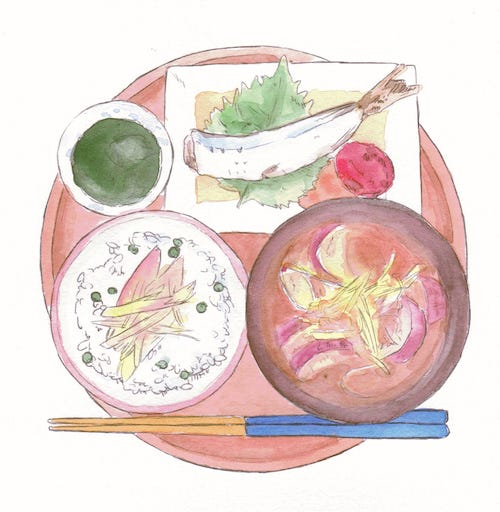
She cared about the angle she placed her fish on a plate, creating a carefully balanced mound of rice, garnishing dishes with color, and making sure there was an even balance between rice to soup to side dishes.
It wasn’t just meals, but it was the way she approached her desserts as well. She sliced pound cake in even and parallel slices, or she would delicately place a tiny piece of artisanal chocolate on a plate instead of eating it out the box. She expertly peeled fruit and would always use a small fork to enjoy the sweet treat, rather than the first utensil which came to hand.
And what do you know, sometimes that made all the difference.
Why Japanese Food Plating Helps
It can help you slow down, which makes you more mindful
When you take the time to plate things elegantly, you have to slow down. You have to think about what you’re going to eat and how you want to eat it — a short thought, none more than a few seconds, but when you are stressed, tired, or craving something to soothe the soul, learning to slow down is more important than learning to stop ourselves.
Trying to force ourselves to stop can be a form of restriction, a recipe for a further binge later on, but slowing down allows us to take the time: “What do I want for myself?”
It encourages moderate portion sizes, which encourages confidence
It is difficult to make mountains of food look elegant. It is why when you walk into a Michelin-starred restaurant, the portions tend to be small, as the elegance and quality takes precedence over the quantity.
So when you try to plate your ice cream dessert nicely at home, you end up making the scoop kind of modest and small. Maybe you even take the time to top it off with a small mint leaf like in a restaurant. And you feel good about it.
Moderation isn’t just moderation, but it encourages confidence, control, and peace with how you eat.
It makes you want to eat in color, which helps you choose healthier foods
Beautiful food tends to come in color. It’s why a basil or cilantro garnish can make a boring brown dish stand out as tasty. And colorful foods tend to be the foods that are the best for our health: leafy greens, red tomatoes, bright citrus, or deep-blue berries.
It may not seem like much, but an extra colorful serving of fruit or vegetable with every meal adds up when we do it every day. A handful of cilantro, a side of tomatoes, an extra cupful of edamame to our rice — it counts.
We don’t need to plate every meal we eat beautifully, but those meals, snacks, and desserts where we feel particularly out of control, action as simple as eating ice cream from a porcelain bowl with a small spoon rather than straight from the carton, or portioning out our chips on a separate plate rather than eating straight from the bag can make a loss in control turn into confidence and peace.
For humans are human, and sometimes what we need is not more science or data on how to eat better, but lifestyle design to nudge ourselves toward healthier habits.
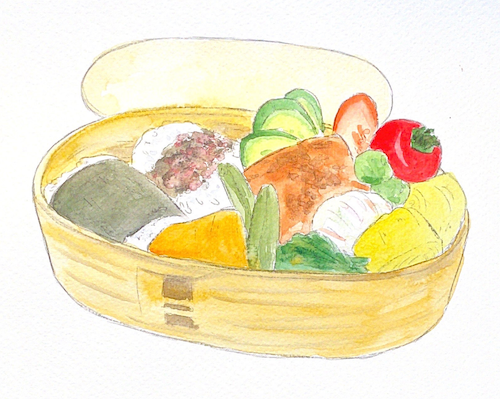
Learn to be healthier, inspired by life in Japan:
I teach about health inspired by simple Japanese philosophies and lifestyle practices, so you can learn to find peace, fulfillment, strength, and health in your own body. Stay in the loop and get access to free resources: Sign up here!
