
How I’ve Maintained a 40% Curation Rate in My First 3 Months on Medium
Tips on my process and what I’ve learned so far

Writers on Medium are under a lot of pressure. Many of us are trying to make a living as freelance writers.
Medium is mostly made up of writers reading other writer’s work, supporting other authors in their endeavors.
I find it nerve-wracking to think of more established writers reading my work, but it’s an amazing feeling if they like what they read. That feeling trumps all the doubts I’ve had about my ability.
Curation adds a whole other element to writing on Medium. Not only do we have to impress our fellow writers and our faithful readers, but the curators too.
The curators decide if our work is distributed in various topics or not. This can give our article the push it needs to become viral.
Curation can expeditiously propel a new writer to success.
Yesterday, one of my articles was curated in four topics. Receiving this notification made me feel ecstatic! Curation makes us Medium writers feel so good, especially those of us who are new to writing. It’s a real confidence boost!
This morning I decided to break down the numbers. I wanted to find out how many stories I’ve written and calculate my curation rate.
I’ve written 55 articles since December 8, 2019. Twenty-three of these stories were curated, so my official curation rate is 41.8% as of today, February 20, 2020.
If you haven’t been curated yet or have a low curation rate, don’t fret! Make sure you’ve read Medium’s curation guidelines. I always read this page whenever I’m not curated — I pretty much know it by heart at this point. It’s a breakdown of what the curators look for in a Medium piece.
Maintain a positive outlook, keep writing, and you will get that coveted curation notification.
If you’re new to Medium, I highly recommend reading other writers’ articles. Read their stories, but also focus on how they format their articles. I feel this made the biggest difference for me. These guys know what they are doing, and they do it well.
This is the first thing I did before I wrote anything on Medium. Preparation is paramount.
These are some of the top writers who inspire me: Casey Botticello, Tim Denning, Roz Warren, and Beth Bruno. These are just a few writers that I learned from on Medium. There are so many talented writers on this platform that it’s hard to narrow it down to just a few.
Recently, I’ve been asked a few times on social media about how I get curated so often. There’s no magic formula (as we all know) but there are a few things we can do to increase our chances of impressing the mysterious curators of Medium.
Pick a Topic That Interests You
Topic selection is always your choice. I’ve written about everything from birth stories to technology. Most importantly, I write about what I’m passionate about.
The articles I’ve written for experimental purposes (testing if they’re popular or not) have always tanked. They were not curated and they were barely read. The articles I’ve written about the plight of the missing and murdered Indigenous people of Canada are my best pieces. It’s a topic that hits close to home for me. Their stories make me cry, make me angry, and make me want to use my writer’s voice to tell their harrowing tales.
I don’t write these stories to be curated or make money. Some of them weren't curated and some of them didn’t make me more than coffee money. This doesn’t matter to me. They were still my best pieces because I felt so deeply when I wrote them. These women now have a voice on Medium. That’s more important to me than anything else.
I’ve read in other articles on Medium that it’s best to write about what’s popular. This is a fine approach and worth trying, but it did not work for me. I tried it — my writing was stiff as a board and I was bored reading it.
I have to be passionate about something for my writing to be fluid. It’s just how I operate.
If you write about what you love to read about, a topic that makes you feel strong emotions, it will shine through your writing. The curators and readers will take notice, and you’ll find your voice along the way.
Write Freely Now, Edit Later
When we stop writing to edit, it takes us out of the moment. We lose our momentum.
This is why I prefer to draft on my phone — there are no spell-check alerts. I would be tempted to stop and edit if Grammarly was always popping up to remind me of my mistakes. I use my laptop for editing and adding the header picture.
The Photo Matters
The picture is one of the first things the reader will notice about your article. You want your photo to convey a message to the reader. If it evokes an emotion, even better.
Pick an eye-catching photo that matches the mood and tone of your story. I recommend Unsplash or Pexels for beautiful, high-quality photos. On Unsplash, you can search for landscape orientation, which is preferred for Medium articles. Always add your caption to the photograph as soon as you upload it. This way it will become a habit and you will never forget to do it. If you don’t add the caption, curators will notice and you may not get curated.
As far as I know, you cannot add a caption to a photo on Medium while working on a smartphone. I always pick my photo when I use my laptop (during the editing process).
If anyone knows how to add a photo caption on a smartphone, please share this information with me in the comments. (See, we’re learning from each other!)
I try and think outside the box when picking a photo. I’ll search Unsplash for emotions, objects, and anything pertaining to my article. This way, I'll get a lot of unique search results.
If you search for a common term like “writing” on Unsplash, scroll down as far as you can, and work your way up. This way you will pick a photo that’s not been used several times.
Always cite the source of the picture with the photographer's name. There can be legal ramifications if you do not cite your image source. Medium won’t be sued, as per their terms and conditions, but you can be.
Always Use a Tagline
A tagline is the sentence below the title (aka the subtitle). It’s usually catchy and pulls the reader in.
I never pick a tagline before writing my article. I always write tagline under the title so I don’t forget to add one after the piece is completed.
If your article has a serious subject, a straight-to-the-point headline works well. Mirror the tone of the story.
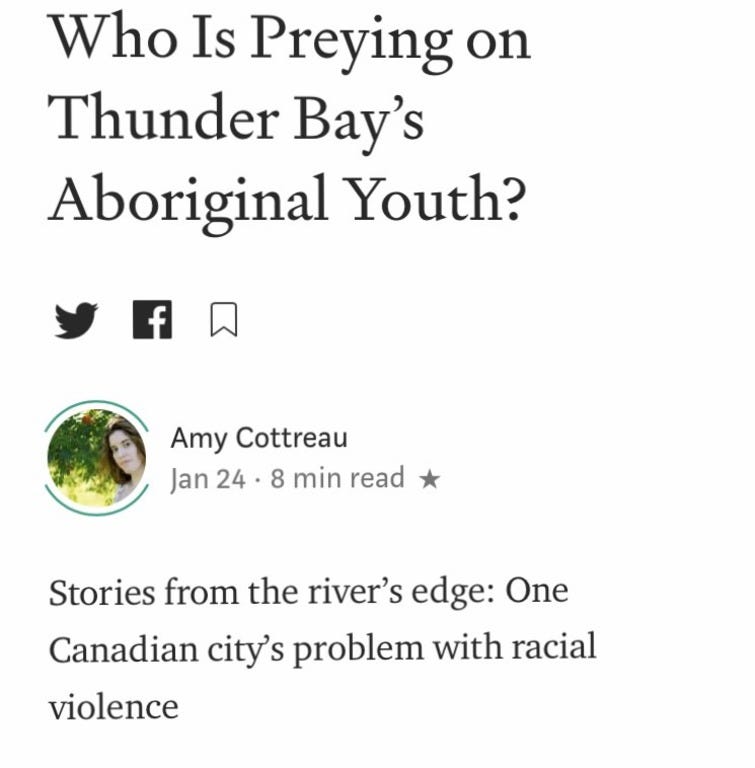
The tagline in this article is: “Stories from the river’s edge: One Canadian city’s problem with racial violence.”
The only capitalization rules for the tagline is to follow the same rules as a typical sentence.
You can use an exclamation point at the end of the tagline but it’s not usually necessary. Read it out loud to see if it’s required. If it feels over the top, it probably is. A period at the end of a tagline is not necessary.
If you don’t have a tagline, this will get in your way of getting curated. Your article looks naked without one. A good tagline can add professionalism and branding to your piece.
The Title
This is still a thorn in my behind. I love a good title — most readers and writers do. A good title can make or break your article on Medium.
The other day, I wrote a really good article and flubbed the title. I published it in a sleep-deprived stupor (I have a new puppy and a toddler). It was immediately rejected, and rightfully so.
I deleted the article because I was so embarrassed. I could have changed the title by editing the story and clicking on the three dots, then selecting “Change display title/Subtitle.” (Thanks for the tip, Britni Pepper.)
Don’t make this mistake. Put as much time into the title as you do the body of your article. Don’t rush the process.
- Write out several titles (at least five) and pick the best one.
- Use a title analysis tool. This gives you a number out of 100 that shows the clickability of your title. I use the Sharethrough Headline Analyzer tool.
- Always make sure you have properly capitalized the title of your article. I use this title capitalization tool.
- The title should clearly state the purpose of the article. Remember, simple is always better.
- The title and tagline sound better if they flow together. Read them out loud together, and if it doesn’t sound right, rewrite.
Always Cite Your Sources
I love to write true crime articles. They usually require a fair amount of research. At the end of my stories, I always include a section of all the sources of information for my article. One of my articles included nine citations. This article was a monster to write, but well worth it in the end. I was proud to give credit to some amazing Aboriginal journalists.
It’s important to cite every source you use because of copyright laws. Also, giving credit to other journalists ensures integrity in your writing.
When you cite your sources, you will never be distrusted by your readers or fellow writers. If you do not cite your sources, you’ll lose credibility. Citing sources is imperative if you want to be curated.
I use the three-dot breaker at the end of my piece and cite my sources there. I use the format from Brian Dixon’s article “Citations and footnotes on Medium.” This is what citing a source will look like:
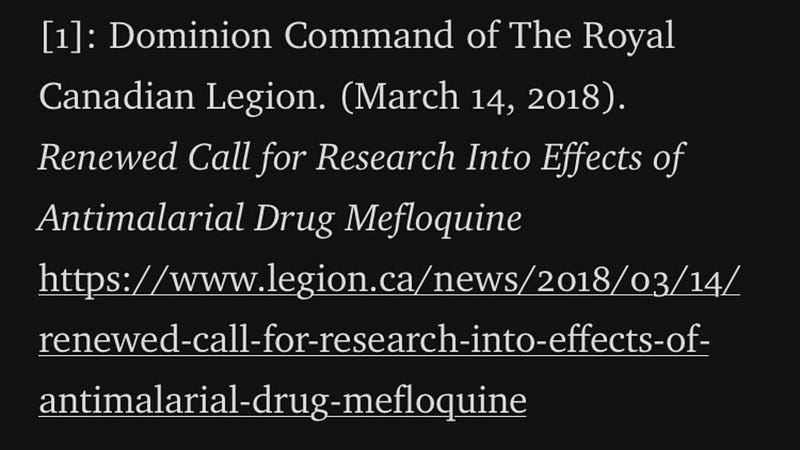
The number should correspond to whatever sentence or paragraph the information is in. You can refer to the link above for step-by-step instructions.
I saved Brian’s article in my web browser and refer to it every time I write an article that requires research. Do not attempt to cite sources off the top of your head. Always refer to a guide so you don’t forget any pertinent information.
Keep Your Writing Tight
Do not rush the editing process. Even one mistake can distract the curator who’s reviewing your piece.
- Always edit several times. I always edit my work at least four times, not including my final out-loud readthroughs.
- If you’re not sure if something is capitalized or hyphenated, google it. This may be time-consuming, but it’s important.
- Download the Grammarly extension. It’s an excellent tool that ensures accurate spelling, synonyms, and punctuation. Always pay attention when editing though — sometimes it will come up with some odd suggestions. If it doesn’t sound right, don’t use it.
- Use Google or Grammarly for synonyms. Make sure you don’t use the same words too many times. You don’t want your writing to become redundant.
- Mix things up by using contractions at various times. As I was an administrative assistant, my background is in business writing. The use of contractions is not encouraged in business writing, but I’ve noticed how stiff my writing is when I don’t vary my use of contractions.
- Don’t be afraid to move paragraphs around. Whenever I do this, I find my story becomes fluent.
- Do not be afraid to rewrite or cut out certain parts of your article. Make sure you don’t go off on tangents — stick to your vision.
- Delete the filler words! That, actually, and like are often examples of filler words. There is a great article on this: “How to Cut Words From Your Writing” by Cris Trautner. This tells you how to trim the fat from your writing, making it more articulate and precise.
- Conduct your editing in a quiet, private setting with minimal distractions if possible. I can write around the chaos of the puppy and toddler. But editing has to be done in silence or with ambient music as a backdrop or I miss the little things.
- Be as detail-oriented as possible in your editing process. Ask someone you trust to review your writing if you’re unsure of a sentence or of the piece in totality.
- If you’re not a detail-oriented person, work on becoming meticulous in your writing. Small mistakes can easily stop readers from enjoying an otherwise good piece of writing. One of my favorite news outlets always has typos. They actually have a Report Typo button at the bottom of their articles. I get secondhand embarrassment from reading their articles. However, they always have the most up-to-date news, so I continue to visit their site. We don’t want to be like those writers, not putting our best work out there. That being said, if you’re a beautiful writer, sometimes you can get away with an oddly worded sentence or small punctuation error. However, I always try my best to edit with a reader’s eye.
- Any calls for action (clap here, follow me there, join my email list), affiliate links, or heavy self-promotion are usually a no-go for curation.
- Any articles about Medium or curation are not curated.
Read Your Work Out Loud Before Publishing
This tip is part of the editing process, but it’s so important that I’ve given it its own section. I always read my work out loud at least once to ensure it flows correctly. I’ve caught some major errors when reading my work out loud. I like to do my bolding and italicizing when I do my second out-loud read-through.
Readers enjoy a dialogue when they read a non-fiction piece. When we read our work out loud, we can hear how it sounds in the reader’s head as they read it. We can hear where the pauses should be (insert comma for pauses) and whether the sentence has fluidity.
This part of the editing process is paramount. I know that if I hadn’t done this with my stories, most of them wouldn't have been curated.
As we write, whether or not we’re curated, we’re building a portfolio of quality pieces.
At the beginning of my Medium journey, I consumed articles on the platform constantly and it helped me become a better writer.
I used to say that I would never write articles about becoming better at writing on Medium. I have a different outlook now.
My experiences on this platform make me want to help other writers become better at what they’re doing. The writers who write about success on Medium are only trying to do the same. I love reading these articles because I get great tips and these writers give me hope.
If you’re struggling with curation, continue to read other writer's work. Always stay true to yourself and your vision. Continue to edit until you feel it’s the best piece you’ve ever written.
When you do become successful, pass on your process to others. Let’s help each other become better writers. This platform was designed to help us become proficient at our craft. My experience with Medium has been very positive. Every day, I see writers helping other writers excel.
This type of behavior is a rarity in a field that is so competitive. We are a special bunch!