
How I’ve Made an Extra $11,185.70 in 9 Months by Working With a Virtual Assistant
11 steps I followed to hire someone living 10,000km away

In May 2020, I hired my first virtual assistant. She does all the things I hate doing and gets to work from home, spend time with her family, and learn a bunch of new skills.
No stress, no crazy expense, and I spend less than one hour a week communicating with her.
The process has changed my life. By saving over 10 hours a week, I’ve been able to learn how to code, put together my first Udemy course, and write for two hours a day.
This Udemy course has made $587.07, whilst writing on Medium has earned me $998.63 since September 2020. I’ve also received a number of paid freelance SEO opportunities off the back of my podcast.
Last month, I received the following question:
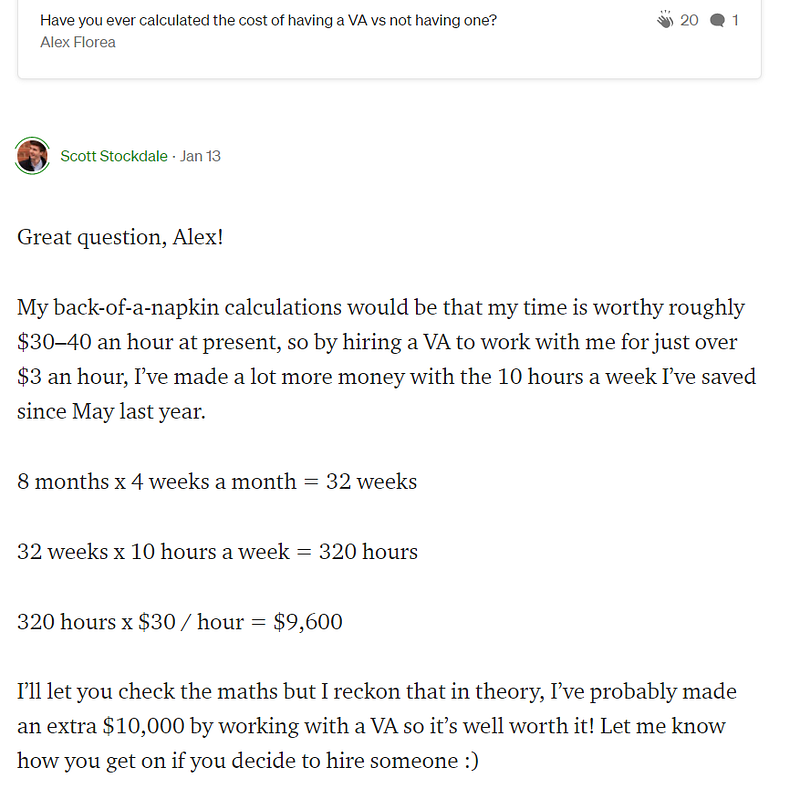
$9,600 + $587.07 + $998.63 = $11,185.70
Admittedly, this isn’t pure profit. Taxes are deducted from my Udemy and Medium earnings, and I’ve spent close to $700 over the last nine months working with my virtual assistant.
Nonetheless, by my calculations, I’ve made around $10,000 more over the last nine months by working with a virtual assistant versus the previous nine.
Here’s how I developed systems, hired my first virtual assistant, and spend less than one hour a week managing this relationship.
1. I documented all the tasks that need doing
This gave me a sense of how long each task should take and any potential pitfalls.
Take podcasting. For Entrepreneurs Can Party, there’s a bunch of tasks that go into making it happen, including promoting episodes, reaching out to guests, and editing audio.
I now have a single document that details every task that needs doing. My VA can access this anytime through our shared Dropbox, and each task is broken down into a series of steps. ‘Producing a podcast’ is broken down into over 30.
Documenting these steps out was the most tedious thing I’ve ever done, but now it’s there, I’ll never have to spend any more time training future VAs.
You don’t have to document tasks by writing them down. One of my favourite YouTubers, Travis Marziani, screen records tasks that his VAs can watch in their own time.
2. I wrote a Virtual Assistant Rulebook
A Virtual Assistant Rulebook will help set your expectations so that you and your VA are on the same page when you onboard them. It should also outline a process of what will happen if they don’t meet these expectations.
For example, what happens if your VA secretly does work for others in your time and you catch them? Do you give them a warning? Dismissal?
My rulebook contains information on my strike system. If a VA gets five strikes in a month for not fulfilling duties, I let them go. It also details what daily tasks I want them to complete.
It’s worth noting this rulebook is a fail-safe. I haven’t had to turn to it yet, and I believe if you hire the right person, you shouldn’t have to either.
3. I wrote a First Day VA Orientation Document
This First Day VA Orientation Document gave instructions to my VA on their first day of employment. It told her what tools to download, what documents to read, and an overview of my most important policies.
At this stage, it’s helpful to think about money. How much are you willing and able to pay? Will it be on an hourly or monthly basis?
It’s important to consider these questions before you hire because it’ll help give you clarity on the systems, tools, and processes you need in place.
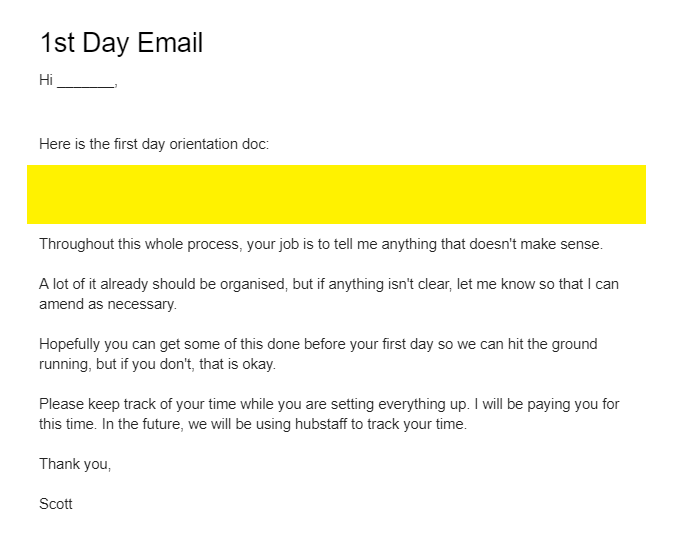
4. I wrote a First Day Email
This First Day Email detailed my expectations, how I’d pay for their time, and included a link to the First Day Orientation Document.
5. I loaded the tasks into Asana
Asana is a management system designed to help teams organise and track their work. Here are just a few of its great features:
- It’s easy to allocate tasks
- You can opt to receive emails reminding you of tasks due for completion
- If you have a task that needs to be completed every day, week, or month, you can set the task to repeat
6. I created an account on onlinejobs.ph ($69 fee)
I used onlinejobs.ph to hire a virtual assistant in South-East Asia for a number of reasons:
- According to Travis, the majority of VAs he’s worked with from this region are loyal, dependable, extremely well-mannered, and speak excellent English.
- Because of the low costs of living in South-East Asia, wages are extremely cost-effective for those looking to hire.
- The time zone difference means I wake up to completed work from my VA.
7. I created a sample project and pre-interview message
Before posting my job on onlinejobs.ph, I created a sample project in a Google Doc. This contained four mini-projects I asked candidates to complete 24 hours before our interview.
The four mini-projects included:
- Testing their internet speed using speedtest.net and attaching a screenshot. Internet speeds in South-East Asia can be slow, and I was looking for upload speeds over 5 MB.
- Producing a one-minute audio clip of them talking about one of their favourite hobbies. This tested their English and audio-editing skills.
- Finding a specific piece of information from my website and recommending a tool they think could go on one of the pages. This tested their ability to follow simple instructions.
- Including a link to their onlinejobs.ph profile in the email
Next, I wrote a pre-interview message which I sent to candidates when I received their applications. In this message, I provided a link to the sample project and asked them to select an interview slot from a Google sheet (which I also provided a link to).
Having an interview timetable means you can batch all of your interviews in one day. I interviewed seven people back to back, giving myself a 15-minute break between each for reflection.
I’d recommend scheduling an interview day at least a week after you post your job to give candidates enough time to submit their applications.
8. I posted a job on onlinejobs.ph
Here’s a link to the job I posted in April 2020:
https://www.onlinejobs.ph/jobseekers/job/386788
In the header at the top, it says I’m looking for someone on a part-time basis, and the salary is $200-$250 a month.
In the job overview section, I make it clear what the job entails and what the perks of working for me are. I wanted to make the proposition as enticing as possible.
For example, I made it clear the VA could work whenever they want, wherever they want, and would have the opportunity to learn new skills.
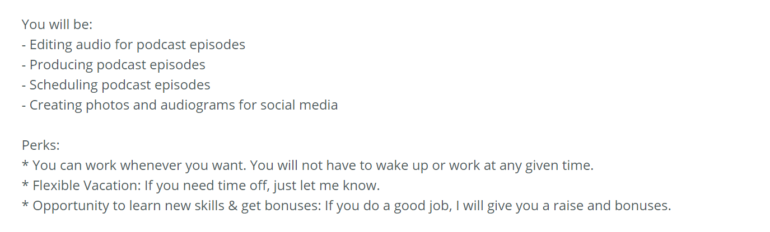
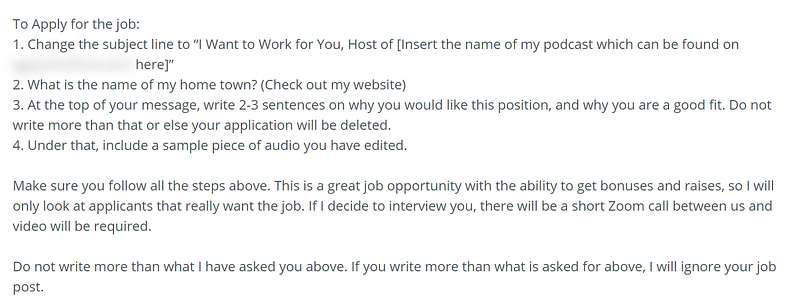
I also gave detailed instructions on how applicants should apply for the job. This separates those who tailor their applications from those who bulk respond.
Just by asking applicants to change their reply subject line, I was able to immediately discount over half of all applicants.
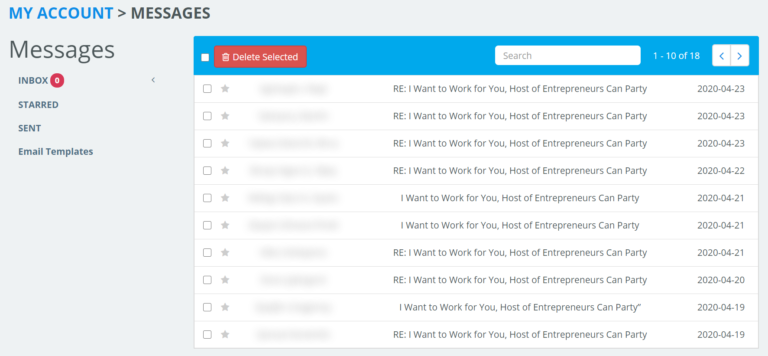
9. I waited for responses and started sending sample projects
Once the responses trickled in, I messaged applicants with the sample project for them to complete.
As the sample projects poured in, I reviewed each one and kept an eye on the interview timetable to make sure there weren’t any clashes.
10. I interviewed applicants
After receiving sample projects and whittling down the applicants, I conducted interviews over Zoom. Here are the questions I asked:
- Tell me about your last job — what did you do?
- Why did you leave your last job?
- If you were to get this job, how many hours are you looking to work?
- What are you looking to get from this job (other than a paycheck)?
- Do you own a computer and an internet connection?
- Do you own a smartphone?
- How fast is your internet connection?
- When would you be able to start if you got the job?
- Have you ever worked for a foreign employer before?
- Where in South-East Asia are you?
- Any previous podcasting experience?
- If your internet goes out, do you have any options? What happens? Can’t work?
- Do you have a PayPal account?
- What are your long-term goals?
- How many other companies are you interviewing with?
- Does the advertised wage work for you?
- Random question: if you could have a conversation with anyone, living or dead, who would you choose and why?
Here some other details I took note of:
- Did the applicant turn up on time for the interview? Note: Being an hour early (as one of my applicants was) and staying in the Zoom waiting room is just as bad as being late. In my opinion, candidates should be no more than 10 minutes early.
- How prepared are they? The VA I hired gave good answers and seemed to know everything I’ve ever done!
- Can you see yourself working with this person? This is one of the most important questions!
11. I responded to applicants
Once the interviews were over:
1. I messaged back the applicants I knew for sure I wouldn’t be hiring.
I thanked them for their time, gave a couple of lines of feedback (what went well, how they could improve), and wished them luck in their search.
2. I emailed the virtual assistant I wanted to hire on the same day with the following:
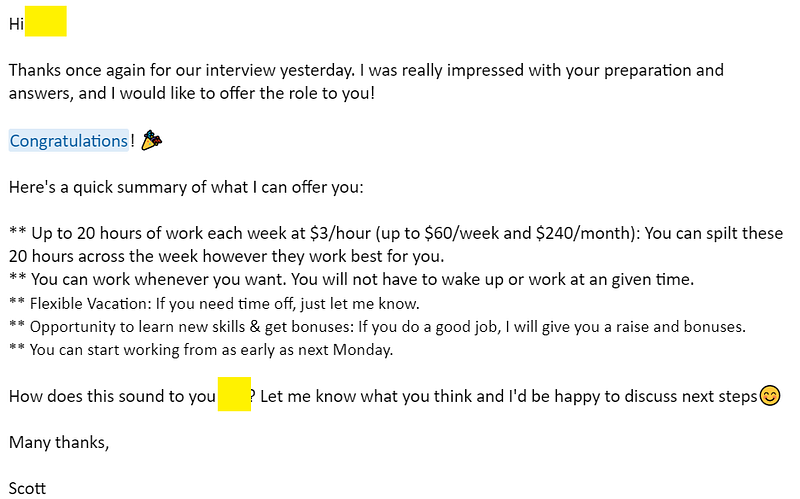
Thankfully, my assistant was delighted to accept!
3. I messaged the applicants I had on my reserve list to tell them the bad news and give them feedback
4. After my assistant accepted, I emailed her with the following:
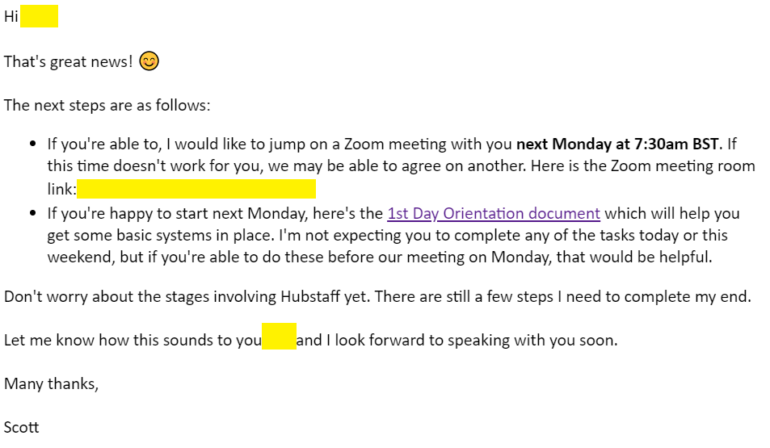
I made it clear that she didn’t have to complete anything before our first Monday meeting, but she’s the best! She agreed to check through the VA documents before Monday and came back on Sunday morning with the following:
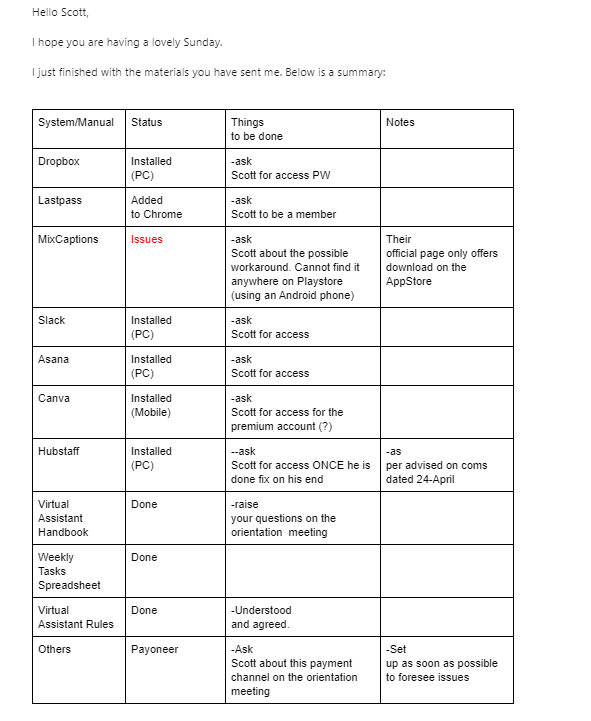
We had our first meeting on Monday to make sure she had everything she needed, and then I let her crack on.
The first week
I recommend keeping your schedule as clear as possible for the first week.
You’ll want to provide your assistant with constructive feedback, and it may take time to respond to their questions. By providing constructive feedback from the beginning:
1: It’s less likely your VA will make the same mistake twice (which will save you time in the long-run).
2: Providing detailed feedback signals to your VA that you’re serious about the relationship.
3: You’re developing their skills which most VAs will appreciate.
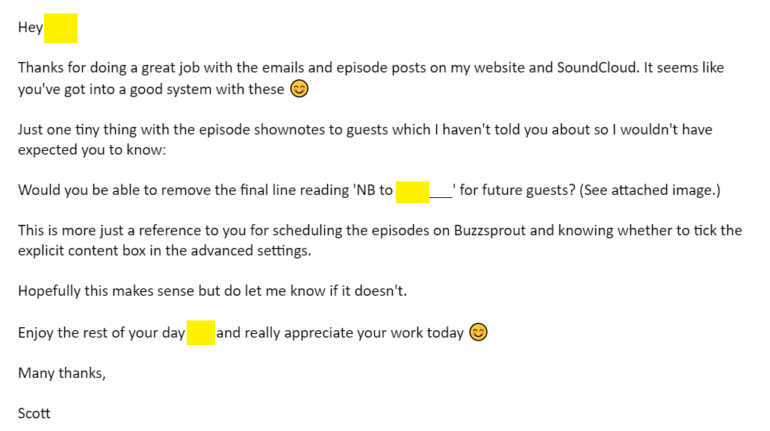
Here’s one of the first emails I sent to my VA with constructive feedback:
The first week is also a good time to iron out creases in your systems.
For example, it took us a while to find a suitable payment provider. We ended up using TransferWise and they’ve been fantastic.
We also had to tweak the amount of work I gave my VA to do each day. Initially, I spread it over the week. Now, it works better for us to front-load and to have the weekends off.
Hiring a virtual assistant is one of the best decisions I’ve ever made.
With the time zone difference, I wake up to a daily report, detailing work that’s been completed and the time it took. I’m effectively working in my sleep!
The cherry on top? Now all my systems are in place, on-boarding my next VA will be a hundred times easier.
You probably won’t get it right straight away. You’ll make some mistakes. And that’s absolutely fine. Enjoy the process and I hope your first hire is as successful as mine!
The Mini Post-Grad Survival Guide
A 5-day email course with tips on budgeting, investing, and productivity for 20-somethings. Sign up for free.


