
How It’s Like to Live and Work in Space
Life Without Gravity
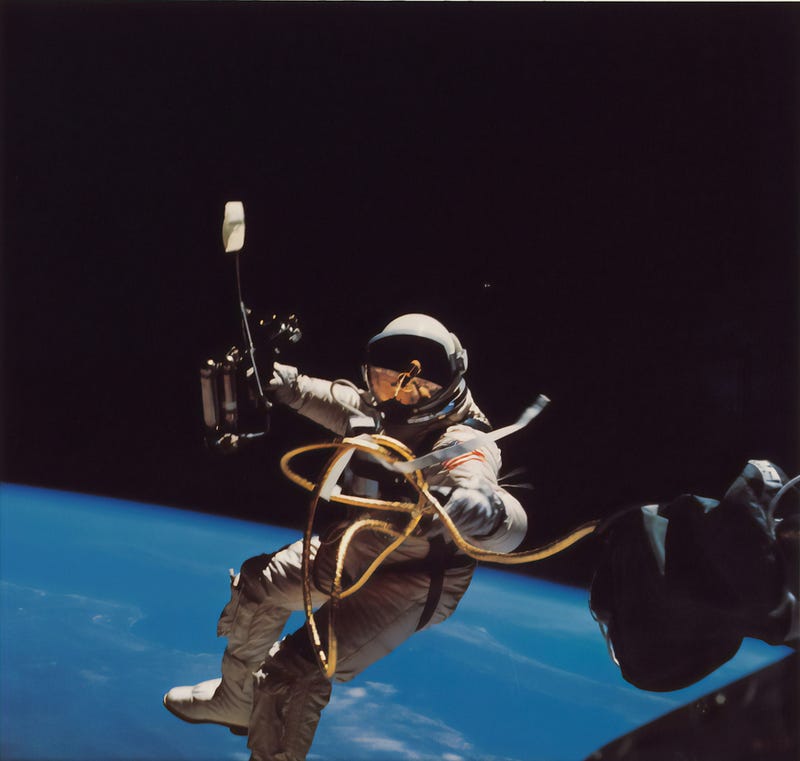
We've all seen the videos. Astronauts floating freely in the space shuttle, gulping "bubbles" of water out of midair, doing somersaults from one end of the cabin to the other. And if you think that floating in the weightlessness of space is great fun, you're right.
But being weightless is more than just fun. It takes arduous preparation before astronauts can even begin to enjoy this experience. As part of an extensive training program, astronauts must learn to adjust to an environment completely different than they've felt all their lives on Earth, In fact, people must actually learn to perform activities that all of us on Earth do instinctively every day-including such functions as walking, eating, and bathing.
Living and Working in Space
Even dealing with simple things such as knowing which way is up and down can be quite a challenge in the weightlessness of space. On Earth, we define "down" as the direction in which objects fall, and "up" as the opposite direction. But in space, there is no "up" or "down" and this can cause some confusion for astronauts.
The body and the mind really try to have a feeling for which way up and down is," explains space-shuttle astronaut Jim Newman.
"Everybody reacts differently, but for me, when I first get into space, there's some confusion, though it's less on every flight. But there's this feeling that the 'up' direction isn't really where it should be. And that lasts for a couple or three days, but it fades away until 'up' is finally [right]."
Each astronaut chooses his or her own strategy to handle this circumstance. "One is that there are people who feel that up is always out the top of their head," says Newman. "Another and most people are this way is that [some people consider] the orientation that matches all the lettering on the wall is the normal orientation. So people typically pick one of these. You use your eyes mostly to determine that stuff."
Fortunately, moving around in a weightless environment is not that difficult a task to accomplish. Crew members quickly adapt to moving around the cabin and positioning themselves at workstations where they fasten themselves, mostly by means of foot restraints.
When typing on a computer, says Newman, "you have to be either well restrained or hold on to something, because every time you hit a key, you’re pushing yourself away from the computer."
Accomodation
“Accommodation is the big deal. You learn to accommodate for the lack of things staying put. You have to put Velcro on everything, or use bungee cords to hold them down. Some things it makes easier. For example, moving large bags around, or carrying 350 pounds [159 kilograms] worth of space suit on your back, are a whole lot easier in space than they are on the ground."
It doesn't take long before astronauts become accustomed to "tossing" things to other crew members by pushing them gently in the correct direction. If something should accidentally float away from an astronaut, he or she just needs to grab for it.
Sometimes, however, they don't notice things floating off, and a search can take quite a bit of time. Astronauts quickly learn not to instinctively look down for a lost item. An all-encompassing sweep up and around the immediate volume becomes natural. If something remains lost, it almost always turns up sitting on the screen of one of the ventilation intakes, because objects tend to drift along with the airflow circulating in the cabin.
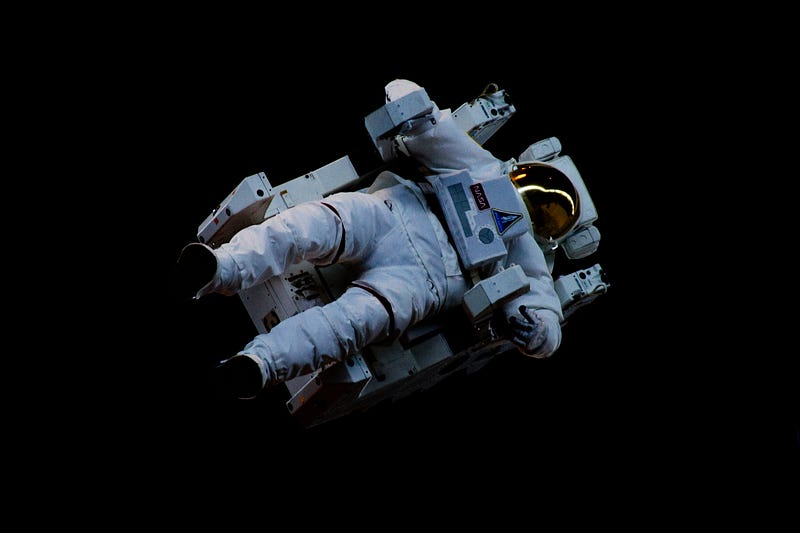
Learning New Habits
Even the simple act of eating requires that space travelers learn new techniques for this unusual environment.
"All your food has to be restrained," explains Newman, "which means you can't have real flaky stuff, and you can't sprinkle salt. Your salt is in water, and you squirt the saltwater onto your food. If you take out a tortilla, you can float it in midair while you're grabbing other things and making your little fajita sandwich."
Weightlessness requires extra effort in cleanliness as well, since certain microbes can multiply well in a confined, weightless environment. This could potentially spread illness to everyone on board. So, after eating, the astronauts make sure they pick up food trash floating about the middeck "dining" area.
Toilets and Sanity
The toilet, however, is cleaned regularly. Since there are no washing machines in space, worn trousers, socks, shirts, and underwear are sealed in mesh bags so they can air out and not grow mold, and wet trash is sealed in plastic bags.
Space toilets must also be engineered differently to accommodate the weightless environment of Earth orbit. Instead of using water and gravity, a flow of air directs solid waste to the bottom of the bowl before it is vented to a vacuum. Urine is collected in a separate storage tank, and wastewater is vented overboard.
Personal Grooming
Personal grooming also provides new challenges for the weightless. Astronauts have facilities and supplies available for sponge baths while in space. They’re always careful not to allow water droplets to float around the cabin, since it can be quite inconsiderate to their crewmates to have one’s soapy water come floating by. And, just like on Earth, when finished with their baths, the astronauts hang the towel and washcloth in the toilet area to dry out.
Sleeping in Space
Another adventure in weightlessness is sleeping; no matter when or how it's done, an astronaut must always make sure that he or she is fastened down!
If the shuttle crew is working as one shift, then everyone on board sleeps at the same time. Astronauts can attach their sleeping bags anywhere they like-on a wall, in a corner, or on the ceiling. It doesn't matter, since they're in a weightless environment!
When the workload of the astronauts is divided into two shifts, however, the crew members sleep in small bunks that can be closed off to keep out the light and sounds produced by those on the active shift. One might think that sleeping in such a narrow "shoe box" might be disconcerting.
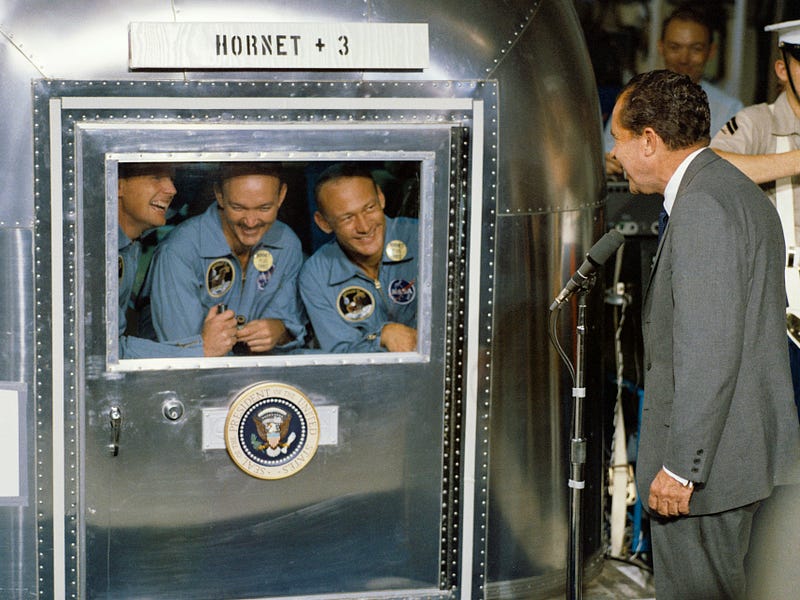
"It's not disconcerting at all," says Newman. "We've all been tested for claustrophobia for admission to the program, and those sleep stations are the absolute best way to sleep in orbit. Not only do you get a great little cubbyhole to sleep in, you can put up some pictures, and make it kind of like home."
One thing some astronauts miss while sleeping in a weightless environment, of course, is the lack of touch on their sides, front, or back because, after all, they're floating. In other words, that "tired heaviness" that makes us feel sleepy in bed is not present in Earth orbit. Some astronauts have trouble getting used to sleeping in space, so they need to take sleeping pills. Others have no trouble at all.
Thank you for reading. I wish you a happy and long life. If you like my content please follow and subscribe me via email. Stay blessed!


