avatarDenise Shelton

Free AI web copilot to create summaries, insights and extended knowledge, download it at here

5192

Abstract

n about pre-judgment that day, but that would be a lie. He was a disaster.</p><p id="40cd">Not only was he unable to offer any insight into my condition, he asked me, in front of my 65-year-old, devoutly Catholic mother, if I was on birth control. The year was 1979.</p><p id="b908">In the pause that followed, I could hear her heart shatter into a thousand pieces, tinkling down to join mine at the bottom of the sea. It was a long ride home.</p><h1 id="23d8">My senior year in agony and isolation</h1><p id="1f4b">There’s a curious thing that happens when people encounter someone they knew to be young, active, and healthy just 24 hours ago, who now moves as if they’re 100 years old. It’s a progression, and it goes like this:</p><ul><li>Concern — “My God! Were you in an accident or something? Are you okay?”</li><li>Skepticism — “You’re not really hurt. You’re just messing around, right?”</li><li>Caution — “This literally happened overnight? Is it contagious?”</li><li>Distancing — “Well, get better soon. I’ve got to be somewhere.”</li></ul><figure id="7fbb"><img src="https://cdn-images-1.readmedium.com/v2/resize:fit:800/1*4va6Ks1tN68zz2GOpUJRIQ.jpeg"><figcaption>Photo by <a href="https://unsplash.com/@ladymilkydeer?utm_source=unsplash&amp;utm_medium=referral&amp;utm_content=creditCopyText">Olesya Yemets</a> on <a href="https://unsplash.com/s/photos/fear?utm_source=unsplash&amp;utm_medium=referral&amp;utm_content=creditCopyText">Unsplash</a></figcaption></figure><p id="5277">My fellow students at Ithaca College in the fall of 1979 were not all clueless, callous, sadistic jerks. A few friends were supportive and the people who shunned me? I shunned them right back. I wrote a poem about it <a href="https://readmedium.com/the-night-alan-alda-came-to-me-in-a-dream-d7fc84bbdea7?source=friends_link&amp;sk=1e8579d62fe1a7dba1c07c7edcf6196f">here</a>.</p><p id="7dab">My sudden disability was a trigger for naughty and nice folks alike, and the emotion it triggered was fear.</p><p id="e586">Fear triggers the fight or flight response in humans, and I was lucky that most people in my dormitory chose to fly right by me.</p><p id="18f4">Some graced me with a pitying glance to prove to themselves they were a nice person even though they didn’t offer assistance. (My fingers hurt so badly I had to open swinging doors with the edge of my forearm.)</p><p id="9bf4">But, believe it or not, two of my dorm mates did want to fight. These were people I considered friends: guys with whom I partied.</p><figure id="7fec"><img src="https://cdn-images-1.readmedium.com/v2/resize:fit:800/1*a3ZCS2ml8nbRH6E1z-8cIw.jpeg"><figcaption>Photo by <a href="https://unsplash.com/@frankbusch?utm_source=unsplash&amp;utm_medium=referral&amp;utm_content=creditCopyText">Frank Busch</a> on <a href="https://unsplash.com/s/photos/fighting?utm_source=unsplash&amp;utm_medium=referral&amp;utm_content=creditCopyText">Unsplash</a></figcaption></figure><p id="a950">One day, as I was crab-walking my way down the corridor, they stepped out of their room and blocked my way. They began taunting me. “Come on; we know you’re faking it.”</p><p id="8068">The one we’ll call Pablo (not his real name but it’s what people called him) grabbed my leg by the ankle and yanked it upward to prove I wasn’t as bad as I was “pretending” to be. Some girls intervened, and my assailants begged off with the standard excuse that they “were just fooling around.”</p><p id="6cf4">I transferred to a study dorm and finished the year unmolested. I got my degree, but I was still in a lot of pain. I didn’t know if I was going to be able to hold down a job.</p><p id="8c9e">That summer, I did part-time work at a day camp and lived at home with my family. They didn’t fight, they didn’t fly, but boy did they deny, deny.</p><h1 id="bece">Practicing psychiatry without a license</h1><figure id="530d"><img src="https://cdn-images-1.readmedium.com/v2/resize:fit:800/1*Dqb-0xXRUhs7brqVXD8fbQ.jpeg"><figcaption>Photo by <a href="https://unsplash.com/@mindspacestudio?utm_source=unsplash&amp;utm_medium=referral&amp;utm_content=creditCopyText">Mindspace Studio</a> on <a href="https://unsplash.com/s/photos/lying-on-couch?utm_source=unsplash&amp;utm_medium=referral&amp;utm_content=creditCopyText">Unsplash</a></figcaption></figure><p id="efd8">I can’t blame my family for wanting to believe my illness was psychosomatic. They didn’t want me to be physically ill.</p><p id="321e">They preferred me to be mentally ill because, in those days, some people believed that mental illness was something you could just shake off.</p><p id="10aa">The cure for depression? “Cheer up!” The treatment for OCD? “Relax!”</p><p id="0138">The cure for psychosomatic illness? “It’ll go away when she gets tired of it.”</p><p id="e1cd">In a way, my family was practicing a form of gaslighting. It wasn’t malignant, it was compassionate. They didn’t want there to be anything seriously wrong with me, so they tried to convince me that there wasn’t.</p><p id="fd13">What they didn’t realize is that their good intentions had put me in a private Hell. It’s as if they were accusing me of gaslighting them. I was sick. I needed support not suspicion a

Options

nd accusations.</p><h1 id="611e">The girl who cried wolf?</h1><figure id="5cfa"><img src="https://cdn-images-1.readmedium.com/v2/resize:fit:800/0*5fD4Oumtrrasj1bv"><figcaption>Photo by <a href="https://unsplash.com/@jeroenbosch?utm_source=medium&amp;utm_medium=referral">Jeroen Bosch</a> on <a href="https://unsplash.com?utm_source=medium&amp;utm_medium=referral">Unsplash</a></figcaption></figure><p id="4f05">There was another reason my family was skeptical about my mystery illness. Something like this had happened before.</p><p id="3fef">When I was about eight years old, there were a couple of weeks when on Sunday mornings, I woke up and was unable to walk.</p><p id="c177">Because I couldn’t walk, I was unable to go to church with the rest of the family. I would have to stay home and watch cartoons which, I’m sorry to say would have been my preference.</p><p id="70b4">But the weird thing was, I wasn’t faking it. I really couldn’t walk. By the time my family got home, though, I was fine. Which, of course, convinced everyone that I <i>was </i>faking it.</p><figure id="521b"><img src="https://cdn-images-1.readmedium.com/v2/resize:fit:800/1*AdpKrQz1B0sf65LVuThMmw.jpeg"><figcaption>Photo by <a href="https://unsplash.com/@matfelipe?utm_source=unsplash&amp;utm_medium=referral&amp;utm_content=creditCopyText">Mateus Campos Felipe</a> on <a href="https://unsplash.com/s/photos/nuns-in-church?utm_source=unsplash&amp;utm_medium=referral&amp;utm_content=creditCopyText">Unsplash</a></figcaption></figure><p id="139f">If I recall correctly, the first time it happened, I got to stay home, but my mother was a stickler about attending Mass on Sundays.</p><p id="f573">When the next Sunday rolled around, and once again, I insisted I couldn’t walk, my mother insisted I go anyway.</p><p id="27bb">She carried me into the church. It was mortifying for me, my mother, my grandmother, and my four older sisters, especially since our regular spot was in the second row right behind the nuns who taught at my school.</p><p id="c35a">People kept asking what was wrong with me. I hid my face, and my mother didn’t know what to say. It’s was pretty awful.</p><figure id="6dd7"><img src="https://cdn-images-1.readmedium.com/v2/resize:fit:800/1*iLWVec48tc88OgAtWCd8eA.jpeg"><figcaption>Photo by <a href="https://unsplash.com/@caleb_woods?utm_source=unsplash&amp;utm_medium=referral&amp;utm_content=creditCopyText">Caleb Woods</a> on <a href="https://unsplash.com/s/photos/shame?utm_source=unsplash&amp;utm_medium=referral&amp;utm_content=creditCopyText">Unsplash</a></figcaption></figure><p id="2435">Eventually, my Sunday morning paralysis did go away, but it wasn’t because I got tired of doing it. It was because it just did.</p><p id="57fa">To this day, I don’t know what was going on with me. It certainly seems like a psychosomatic illness. My sisters think it was attention-seeking behavior. Maybe it was both.</p><h1 id="8230">The Reader’s Digest sheds some light</h1><p id="93d1">So life went on. I learned to live with what I believed was rheumatoid arthritis. The medication helped.</p><p id="3103">My symptoms decreased. I had a limited range of motion in my arms and legs. But the pain diminished over time until it was barely noticeable.</p><p id="d5cf">I got married. I was earning a living, and things were going okay.</p><figure id="1e0b"><img src="https://cdn-images-1.readmedium.com/v2/resize:fit:800/0*DcJ2mmU7cVA9TRRR"><figcaption>Photo by <a href="https://unsplash.com/@juniorferreir_?utm_source=medium&amp;utm_medium=referral">Júnior Ferreira</a> on <a href="https://unsplash.com?utm_source=medium&amp;utm_medium=referral">Unsplash</a></figcaption></figure><p id="771e">Then one day, ten years after my symptoms began, my sister Kathy called with a startling discovery.</p><p id="db68">She read a story in the <i>Reader’s Digest</i> about Lyme disease that convinced her that it was my mystery illness.</p><p id="c96e">Remember the internist (not Dr. Very Good, the other guy) who I said made an interesting observation which would prove to be important later?</p><p id="d756">That observation was a bullseye rash on my back, which is consistent with the mark that forms on the skin when a tick infected with Lyme disease bites someone.</p><p id="7fb5">More tests and visits to doctors were unable to confirm the Lyme disease diagnosis. Too much time had passed since I was first infected.</p><p id="144d">Still, I felt vindicated. My family apologized for doubting me, and I forgave them. It didn’t ruin my life. What would be the point of holding a grudge?</p><p id="21e1">One thing I’ve discovered in writing this is that, throughout the entire ordeal (and it was a long one), I don’t remember ever once doubting myself.</p><p id="a2f1">I always knew I was <i>legitimately </i>physically sick, even when those closest to me were skeptical. I’m pretty proud of that.</p><p id="ff32">©2020, Denise Shelton. All rights reserved.</p><p id="4c4e">If you liked this, please visit my <a href="http://denisesheltonwrites.com/">website</a>. You can sign up for my monthly newsletter <a href="https://deniseshelton.substack.com/">here</a>. Thanks for reading!</p></article></body>

How It Feels to Be Sick and Accused of Faking It

The problem is in their heads, not yours

Photo by Daria Litvinova on Unsplash

In the first semester of my senior year in college, I got sick: very sick. Every joint in my body was swollen and tender. I couldn’t move without pain. Sleep came in fits and starts because, once I dozed off, my body would forget it wasn’t supposed to move, and I’d be jolted awake with a vengeance.

It was the worst period in my life, not because I was in so much physical pain, but because nobody believed I was sick.

Doctors don’t know everything

It’s a doctor’s job to diagnose a medical problem and to treat it. If the problem is something they can’t diagnose, they do one of two things: brush you off or experiment on you.

As much as we’d like to think that every doctor is like House, they’re not. Unless your vital signs are taking a swan dive off the Hollywood Bowl or your symptoms are so bizarre, the doc imagines they’ll be a technical advisor on your Netflix biopic, they’re not interested.

Photo by Online Marketing on Unsplash

Once they determine you’re not dying, the motivation to examine every clue, perform every possible test, and consult with physicians around the globe evaporates. They’re in the business of saving lives, and yours doesn’t need saving. Next!

The fact that the doctor doesn’t know what’s wrong with you is the first building block in the prison of hypochondria your friends and family are so anxious to construct for you. But it’s early days. They’re not going there yet.

The specialist-go-round

While I was home from college for a visit, my mother arranged for me to see an internist. This doctor made an interesting observation about my condition, which would later prove to be important.

At the time, though, he thought I most likely had rheumatoid arthritis and prescribed 12 aspirin a day. He also mentioned something about gold injections that sounded weird and expensive. There was no test then to confirm RA, so that might have been my problem, or it might not.

Photo by Hal Gatewood on Unsplash

The next step in my medical odyssey was a visit to a “big-time” specialist. New York, where I lived, keeps most of its big-time specialists in New York City, but the Big Apple in the 1970s was crawling with maggots, so my parents took me to Albany, the state capital, instead.

My mother’s friend had heard from someone that this guy we were going to see was “very good.”

After the mandatory, obnoxiously long wait accorded anyone with the temerity to consult a prominent internist in New York’s capital city, the nurse ushered my mother and me into the great one’s presence.

Dr. Very Good was a sight to behold. He was on the shy side of 400 lbs. and was smoking a cigarette. He also looked to be under 30 years old. (Don’t judge me for judging, okay? Would you take medical advice from this person?)

On his desk was one of those joke paperweights with a cigarette encased in glass with the words “Break in case of emergency” stenciled across the front.

Photo by Wolfgang Rottmann on Unsplash

If you’ve ever wondered if hearts can sink, I can tell you they can. At that moment, mine sank like the Titanic.

I’d like to report that my first impression of Dr. Very Good was wrong and that I learned a valuable lesson about pre-judgment that day, but that would be a lie. He was a disaster.

Not only was he unable to offer any insight into my condition, he asked me, in front of my 65-year-old, devoutly Catholic mother, if I was on birth control. The year was 1979.

In the pause that followed, I could hear her heart shatter into a thousand pieces, tinkling down to join mine at the bottom of the sea. It was a long ride home.

My senior year in agony and isolation

There’s a curious thing that happens when people encounter someone they knew to be young, active, and healthy just 24 hours ago, who now moves as if they’re 100 years old. It’s a progression, and it goes like this:

  • Concern — “My God! Were you in an accident or something? Are you okay?”
  • Skepticism — “You’re not really hurt. You’re just messing around, right?”
  • Caution — “This literally happened overnight? Is it contagious?”
  • Distancing — “Well, get better soon. I’ve got to be somewhere.”
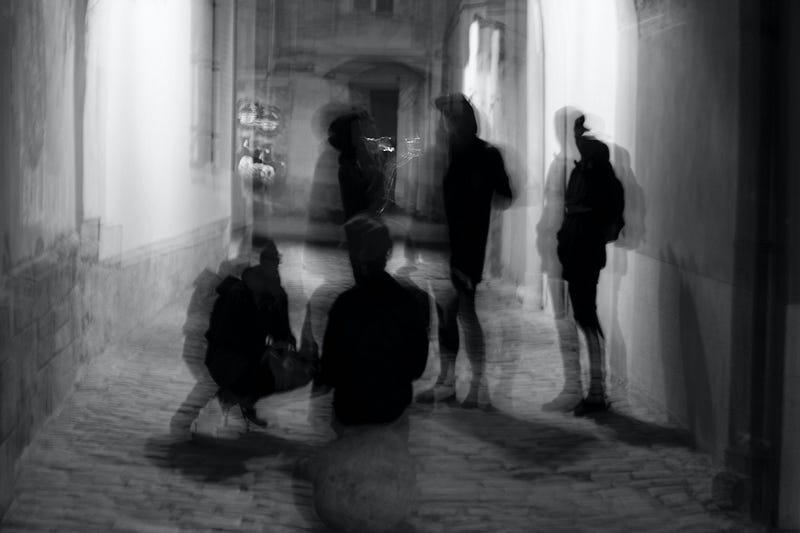
Photo by Olesya Yemets on Unsplash

My fellow students at Ithaca College in the fall of 1979 were not all clueless, callous, sadistic jerks. A few friends were supportive and the people who shunned me? I shunned them right back. I wrote a poem about it here.

My sudden disability was a trigger for naughty and nice folks alike, and the emotion it triggered was fear.

Fear triggers the fight or flight response in humans, and I was lucky that most people in my dormitory chose to fly right by me.

Some graced me with a pitying glance to prove to themselves they were a nice person even though they didn’t offer assistance. (My fingers hurt so badly I had to open swinging doors with the edge of my forearm.)

But, believe it or not, two of my dorm mates did want to fight. These were people I considered friends: guys with whom I partied.

Photo by Frank Busch on Unsplash

One day, as I was crab-walking my way down the corridor, they stepped out of their room and blocked my way. They began taunting me. “Come on; we know you’re faking it.”

The one we’ll call Pablo (not his real name but it’s what people called him) grabbed my leg by the ankle and yanked it upward to prove I wasn’t as bad as I was “pretending” to be. Some girls intervened, and my assailants begged off with the standard excuse that they “were just fooling around.”

I transferred to a study dorm and finished the year unmolested. I got my degree, but I was still in a lot of pain. I didn’t know if I was going to be able to hold down a job.

That summer, I did part-time work at a day camp and lived at home with my family. They didn’t fight, they didn’t fly, but boy did they deny, deny.

Practicing psychiatry without a license

Photo by Mindspace Studio on Unsplash

I can’t blame my family for wanting to believe my illness was psychosomatic. They didn’t want me to be physically ill.

They preferred me to be mentally ill because, in those days, some people believed that mental illness was something you could just shake off.

The cure for depression? “Cheer up!” The treatment for OCD? “Relax!”

The cure for psychosomatic illness? “It’ll go away when she gets tired of it.”

In a way, my family was practicing a form of gaslighting. It wasn’t malignant, it was compassionate. They didn’t want there to be anything seriously wrong with me, so they tried to convince me that there wasn’t.

What they didn’t realize is that their good intentions had put me in a private Hell. It’s as if they were accusing me of gaslighting them. I was sick. I needed support not suspicion and accusations.

The girl who cried wolf?

Photo by Jeroen Bosch on Unsplash

There was another reason my family was skeptical about my mystery illness. Something like this had happened before.

When I was about eight years old, there were a couple of weeks when on Sunday mornings, I woke up and was unable to walk.

Because I couldn’t walk, I was unable to go to church with the rest of the family. I would have to stay home and watch cartoons which, I’m sorry to say would have been my preference.

But the weird thing was, I wasn’t faking it. I really couldn’t walk. By the time my family got home, though, I was fine. Which, of course, convinced everyone that I was faking it.

Photo by Mateus Campos Felipe on Unsplash

If I recall correctly, the first time it happened, I got to stay home, but my mother was a stickler about attending Mass on Sundays.

When the next Sunday rolled around, and once again, I insisted I couldn’t walk, my mother insisted I go anyway.

She carried me into the church. It was mortifying for me, my mother, my grandmother, and my four older sisters, especially since our regular spot was in the second row right behind the nuns who taught at my school.

People kept asking what was wrong with me. I hid my face, and my mother didn’t know what to say. It’s was pretty awful.

Photo by Caleb Woods on Unsplash

Eventually, my Sunday morning paralysis did go away, but it wasn’t because I got tired of doing it. It was because it just did.

To this day, I don’t know what was going on with me. It certainly seems like a psychosomatic illness. My sisters think it was attention-seeking behavior. Maybe it was both.

The Reader’s Digest sheds some light

So life went on. I learned to live with what I believed was rheumatoid arthritis. The medication helped.

My symptoms decreased. I had a limited range of motion in my arms and legs. But the pain diminished over time until it was barely noticeable.

I got married. I was earning a living, and things were going okay.

Photo by Júnior Ferreira on Unsplash

Then one day, ten years after my symptoms began, my sister Kathy called with a startling discovery.

She read a story in the Reader’s Digest about Lyme disease that convinced her that it was my mystery illness.

Remember the internist (not Dr. Very Good, the other guy) who I said made an interesting observation which would prove to be important later?

That observation was a bullseye rash on my back, which is consistent with the mark that forms on the skin when a tick infected with Lyme disease bites someone.

More tests and visits to doctors were unable to confirm the Lyme disease diagnosis. Too much time had passed since I was first infected.

Still, I felt vindicated. My family apologized for doubting me, and I forgave them. It didn’t ruin my life. What would be the point of holding a grudge?

One thing I’ve discovered in writing this is that, throughout the entire ordeal (and it was a long one), I don’t remember ever once doubting myself.

I always knew I was legitimately physically sick, even when those closest to me were skeptical. I’m pretty proud of that.

©2020, Denise Shelton. All rights reserved.

If you liked this, please visit my website. You can sign up for my monthly newsletter here. Thanks for reading!

Family
Identity
Mental Health
Self
Life
Recommended from ReadMedium