
How Is NMN Better Than NR?
And Which of These Molecules Contributes To Higher NAD+ Levels
Introduction
NAD + is a molecule that supports homeostasis in our body. This molecule regulates proteins and inhibits aging processes. With the decline of NAD+ in our bodies, the Sirtuins’ activities decrease causing heart diseases, diabetes, weight gain, metabolic disorders, and cancer. For this reason, it is important to maintain an appropriate NAD + level in the cells.
NMN and NR are the most potent compounds that can increase NAD+ levels and reduce aging processes. Both supplements are currently available, but there is no consensus on which molecule works much effectively. In this article, we will compare these two compounds and review some of their properties.
What is NMN?
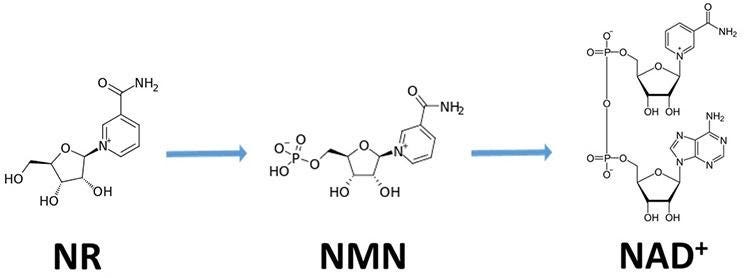
Nicotinamide mononucleotide (NMN) is a molecule naturally occurring in all life forms. This molecule is derived from NR or NAM (nicotinamide). NMN is the direct component of NAD+ and is considered as the main factor that can increase NAD+ levels in cells (Figure 1).
Several studies demonstrated that NMN has been able to suppress age-associated weight gain, enhance energy metabolism and physical activity, improve insulin sensitivity, improve eye function, improve mitochondrial metabolism and prevent age-linked changes in gene expression.
What is NR?
Nicotinamide riboside (NR) is a natural molecule that is one of the three forms of vitamin B3. A small amount of NR can be found in fruits, vegetables, milk, or meat. This vitamin received a lot of attention when scientists found out that it is one of the main components to increase NAD+ levels.
NR is translated into NAD+ in two steps: First, Nicotinamide riboside is transformed into the nicotinamide mononucleotide (NMN), then NMN is transformed to the NAD+ (Figure 1).
Compare NR and NMN
Nicotinamide mononucleotide and Nicotinamide riboside are two different molecules that have the same high potential to increase NAD+ levels. However, until these days there are no human studies that compare NR and NMN, but there are some in animal models. Scientists believe that NMN is a more efficient molecule to increase NAD+ levels in cells.
Misunderstanding of NMN
Due to the structural and functional similarities of NR and NMN molecules, people often mistakenly attribute this molecule to the vitamin B family. These molecules are very different in their properties and biochemically, NMN is more similar to NAD+ than NR.
NMN Is More Absorbed And Stable Than NR
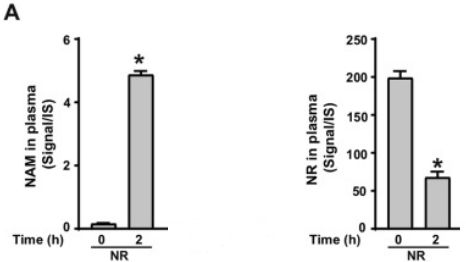
The biggest concern of NR is its instability in the bloodstream. Most of NR in plasma transforms into NAM (nicotinamide), a form of vitamin B3 and a very small amount of NR is absorbed in the cells as NMN. It was evidenced in a study where the mice were injected with NR.
Two hours after injection, NR had a dramatic decrease, and NAM — increased. This indicates that a large amount of NR was converted into NAM (Figure2). NAM can also be converted into NMN, but this process requires additional NAD+. Therefore, this is not the best way to increase NAD+ levels.
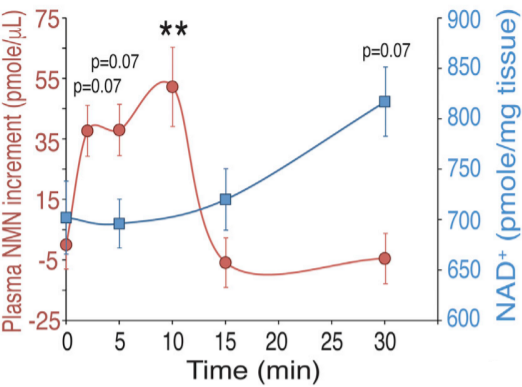
In contrast to NR, NMN is much more stable in the body. A 2016 study examined the uptake of NMN. The results showed that the NMN level decreased 10 minutes after the injection, but the NAD + level increased. This indicates that NMN in the mouse body is converted to NAD+ (Figure3).
In the same article, researchers studied the stability of NMN in water. The study shows that NMN was intact in drinking water for 7–10 days at room temperature. It can be concluded that NMN is significantly more absorbed and stable than NR and can be used for a longer period.
NMN activates Sirtuins when NR can suppress them
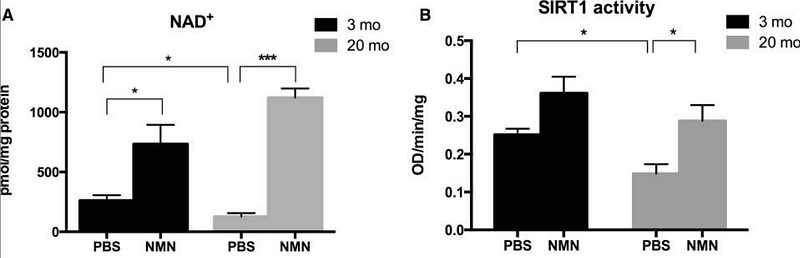
In a 2017 study, researchers investigated how NMN affects NAD+ levels and how it affects Sirtuin1 activity. Mice over 3 (black column) and 20 (grey column) months of age were included in the study.
Three results of the study showed that after 4 days of treatment, NAD+ levels were restored, compared to the control group (PBS). The researchers concluded that increased NAD+ levels increased Sirtuin activity (Figure 4). Thus, there is strong evidence that NMN is an effective way to activate sirtuin activity in cells.
As mentioned earlier, NR is converted into nicotinamide (NAM) in the blood system. NAM is also a source of NAD + production, though it has some poor properties. To this day, scientists have done a considerable amount of research and found that high levels of NAM in cells reduce Sirtuin1 and Sirtuin3 activity. Thus, improper use of NR can cause side effects and do more harm than good to the body.
Conclusion
NMN and NR supplements are a novelty in the field of longevity and health. Hence, it requires further studies to indicate which product is more beneficial for healthy aging. Comparing animal models, it can be concluded that NMN has a higher potential and can be a more effective supplement in maintaining human health than NR. In addition to this, David Sinclair talks about the differences between NMN and NR. He mentions NR missing phosphate which is a crucial chemical for NAD+ and your body. But by taking NMN which contains sugar, Vitamin B, and phosphate you receive all these benefits for NAD+ levels.