
SOCIAL PSYCHOLOGY
How Is It Possible That “Normal” People Commit Horrible War Crimes?
Stuff that boggles my mind. It turns out to be quite simple.
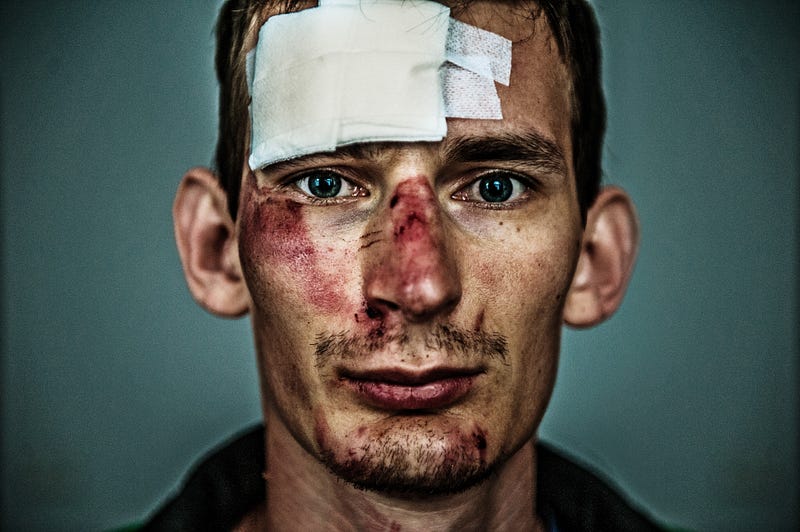
Do you ever ask yourself: “How on Earth could this have happened?” or “How is it possible that he or she did that?”.
Even though we live in the safest time of all time, we still see or read stories in the news that make the hair on our neck stand up.
That makes sense. Human beings seem — generally — good at heart but can develop into doing truly terrible actions.
Why?
Why can that normal and friendly neighbor develop into a harmful person who does terrible things to humankind?
(I’m not talking about people who are born psychopaths, that sets their actions apart from others. I’m talking about everyday people who were kind, social, and seemed to have their lives in check.)
Let’s take a look at the self to find a possible answer.
I like easy-to-understand explanations myself. So, I’ll keep it very simple, promise!
The Self of A War Criminal
You, I, and everyone around us tell stories about ourselves. We have a story we think we are. We have a story that we share with others when they ask us about who we are and what we find important in life. The fact that we can answer the question ‘Can you tell something about yourself?’ shows that we have a sense of self: that we have self-awareness.
That self — the loose bits of stories about ourselves —are collected in schemes. The total of those schemes is the self-concept. The self-concept contains certain information that ‘belongs’ to us. Information that fits with who we think we are.
We like information that fits with who we think we are. That feels good.
Now, if you’d ask an average person if he or she would ever commit a certain horrendous crime, the chance is (luckily) very, very high that the person would say ‘Hell no’.
The trick is that such (war) crimes don’t start with that size. There are many steps to be taken to arrive at that crime. And that's exactly what happens with the self of a going-to-be-criminal. It develops.
A person can’t imagine himself doing something harmful, but when this person does see himself doing a small act (such as something seemingly harmless to please a dictator, or to fit in with society), that small act is added to the sense of self.
With that seeing, I mean literally that the person observes himself doing something. And with that, the person starts identifying with what he sees himself doing.
Every new action that evolves from that seemingly harmless action will build on top of that previous action. The previous action already fits with the story about the self. That means that the new small difference from that first action is not that far anymore.
An example
It starts with: Oh… Selling my parent’s books which they don’t read anyway and are collecting dust on the shelves is probably not that bad. Can turn into: Mmm… Probably they don’t mind if I ‘borrow’ some money to buy the watch I want instead of selling the books. They wish me the same, and they wouldn’t miss it. Can turn into: They don’t notice the money is gone, so I can as well not give it back. I’m sure they don’t mind. Can turn into: If this is going fine… Maybe it’s better if I do this trick on other people whom I don’t know. They don’t notice it anyway.
Over time, those small changes will lead to massive impacts. A compounding self, you might call it.
Since we like information that fits with the story we have about ourselves, the person likes to take in information that matches his new actions. By exploring that new information, and finding stuff that fits the ‘new’ part of the self, the person will develop that part further and further. Another example: If propaganda now fits in the self, how far is not allowing other sources of information to be broadcasted?
The Developing Self
The self can grow in all directions.
A yoga teacher, criminal, waiter, or University student as a result. You’re the driver. You’re the one who decides in which direction you go. Focus on the smallest actions in life, they can decide your course.
Luckily, there’s no need to fully rely on yourself to make these decisions. Our environment plays a major role in this. Sometimes, the nudges in the ‘wrong’ direction come from politics, a dictatorship, being forced into war, or people bullying us at school.
Try to wiggle yourself into an environment that’s motivating and inspiring positively, and that gives you nudges in the right direction. Those tiny nudges add up!
The self is a developing ‘thing’. It’s compounding. It’s something that changes over time. This goes to show how important tiny actions are.
This also emphasizes how much help we are to others. Do you notice a friend or a relative going on ‘the wrong path’? You guessed that right: there are tiny actions, tiny nudges if you will, with which you can slowly help your friend in a different direction.
Thank you for reading this view from a social psychology perspective. I’m so curious to hear from you. What are your thoughts on this? Have you experienced the effect of a compounding self yourself?
❤
One more story for you:
Hi you! Do you enjoy writing? Join Medium to share your thoughts with the world. With the membership fee ($5/month) you have access to all corners of Medium, you can publish stories yourself, and you can support and connect with the community directly. Looking forward to being in touch!


