avatarJoanna Henderson

Free AI web copilot to create summaries, insights and extended knowledge, download it at here

4251

Abstract

.png"><figcaption>Source: <a href="https://planefinder.net/flight/AAL2754">PlaneFinder.net</a></figcaption></figure><p id="17e8">Keep in mind that many of those planes are not commercial. For example, you can spot a large number of FedEx, UPS, Amazon Prime, military aircraft and private planes:</p><figure id="5a56"><img src="https://cdn-images-1.readmedium.com/v2/resize:fit:800/1*aDlhSzK8kUAxGG_05QhmBg.png"><figcaption>Source: <a href="https://planefinder.net/flight/AAL2754">PlaneFinder.net</a></figcaption></figure><p id="f44c">It’s important to note that there are usually many more planes in the sky. The regular number is usually <a href="https://www.theguardian.com/world/ng-interactive/2020/apr/03/how-is-the-coronavirus-affecting-global-air-traffic">aiming towards 15,000 planes</a> with over 19,000 <a href="https://www.independent.co.uk/travel/news-and-advice/flights-sky-map-worldwide-air-traffic-aviation-busiest-day-june-a8428451.html">on the busiest days</a>. However, as of the time of this article, on April 30th, 2020, <a href="https://www.flightradar24.com/13.83,106.36/2"><b>Flightradar24</b></a> was showing only <b>4,996 aircraft</b>.</p><h1 id="7bcb">What is Going to Happen to the Airlines?</h1><figure id="4d4a"><img src="https://cdn-images-1.readmedium.com/v2/resize:fit:800/1*1Az6eJvNObMR5PUffWJkGw.jpeg"><figcaption>Photo by <a href="https://www.pexels.com/@brett-sayles?utm_content=attributionCopyText&amp;utm_medium=referral&amp;utm_source=pexels"><b>Brett Sayles</b></a> from <a href="https://www.pexels.com/photo/photo-of-airplanes-at-airport-3140204/?utm_content=attributionCopyText&amp;utm_medium=referral&amp;utm_source=pexels"><b>Pexels</b></a></figcaption></figure><p id="82f0">The pandemic presented a significant hardship to airlines around the planet. Many of them are seeking bailouts from their respective governments, while several companies recently <a href="https://www.businessinsider.com/coronavirus-airlines-that-failed-bankrupt-covid19-pandemic-2020-3">collapsed</a>:</p><ul><li>UK regional airline <b>Flybe</b> entered administration (a procedure similar to bankruptcy) in March.</li><li>The American company, <b>Trans States Airline</b>, shut down in March as well.</li><li><b>Compass Airlines</b> (US) ceased operations in April.</li><li><b>Virgin Australia</b>, an Australian airline, declared bankruptcy in April.</li></ul><p id="6553">The future of air travel is looking uncertain at the moment. Airbus’ chief executive <a href="https://www.theguardian.com/business/2020/apr/29/airlines-may-not-recover-from-covid-19-crisis-for-five-years-says-airbus">warned in an April 29th, 2020 interview</a> that airlines may need five years to recover from this crisis.</p><h1 id="2a4c">What is Happening to All the Planes?</h1><p id="ca4c">Airlines around the world have grounded planes at the airports, which presented a new problem: lack of parking spaces. Forbes featured numerous photos of aircraft parked on the runway back to back <a href="https://www.forbes.com/sites/ericrosen/2020/04/22/in-photos--most-of-worlds-airplanes-now-grounded-at-airports/#2744f42762d9">in its recent article</a>.</p><p id="7c25">On April 30th, 2020, CNBC <a href="https://www.youtube.com/watch?v=xpIs8Y9vgSs">posted a Youtube video</a> explaining how the airlines are coping with vast parking demand. Paul Oliver, the Airbus’ Vice President of customer service, is talking about a new app that allows companies to track where the planes are parked and where there is parking available. The video also educates the viewers on what kind of maintenance is required when an aircraft is grounded. It shines a light on how it becomes problematic to perform it when a significant number of planes are parked all over airports. The app also allows us to track what kind of maintenance is in need for every particular aircraft, and when it should be performed — that makes the job much easier and also saves the airlines some money.</p><p id="7924" type="7">Airlines around the world have grounded planes at the airports, which presented a new problem: lack of parking spaces.</p><h1 id="3279">How Many People Are Losing Their Jobs?</h1><p id="059e">Naturally, since the airlines are going through a tough time, their workers

Options

are struggling as well. Forbes <a href="https://www.forbes.com/sites/lisettevoytko/2020/04/29/coronavirus-layoffs-boeing-cuts-10-of-workforce-amid-pandemic/#5ab55f63487c">published an article</a> listing the job cuts implemented by many industries. They are not limited to the aviation sector but to the restaurant, auto, ride-sharing, travel, arts, entertainment, education, fashion and many others.</p><p id="16fc">Within the aviation industry, many people lost their jobs and even more are expected to be laid off. For example, Air Canada <a href="https://www.cbc.ca/news/canada/british-columbia/more-than-5-100-air-canada-flight-attendants-to-be-laid-off-amid-massive-covid-19-slowdown-1.5504051">reported</a> laying off 5,100 employees, and Scandinavian Airlines <a href="https://www.reuters.com/article/us-health-coronavirus-sas-jobs/airline-sas-cuts-up-to-5000-jobs-due-to-pandemic-idUSKCN22A0PC">is set to lay off</a> 90% of its staff.</p><h1 id="1e6c">What is Next?</h1><p id="3055">Currently, the aviation industry looks disturbing. It will require some time for them to bounce back and recover. But the governments around the world are working together with them to provide help and support. For instance, President Trump <a href="https://www.bloomberg.com/news/articles/2020-03-16/airline-industry-seeking-58-billion-in-grants-loans">confirmed his support</a> for the airlines back on March 16th by saying:</p><blockquote id="5ab0"><p>“As far as the airlines are concerned, we are going to back the airlines 100%. We’re going to help them very much.”</p></blockquote><p id="cb68">On April 9th, CNBC <a href="https://www.cnbc.com/2020/04/09/trump-says-airlines-could-receive-grant-details-this-weekend-as-sources-say-around-275-applied.html">reported</a> the US Treasury receiving 275 applications for the aviation grant. As per the CARES Act, the airlines are eligible for 25 billion in payroll grant, while airport contractors can get up to 3 billion, and cargo carriers can apply for up to 4 billion. You can read more about the grants and support for the aviation industry under the 2.3 trillion CARES Act on the <a href="https://www.faa.gov/airports/">Federal Aviation Administration’s website</a>.</p><h1 id="e79a">So… What Does It Mean for Us, Travellers?</h1><figure id="c9f2"><img src="https://cdn-images-1.readmedium.com/v2/resize:fit:800/1*IkMW-YWoY_6juHji7YxrYg.jpeg"><figcaption>Photo by <a href="https://www.pexels.com/@wanderer?utm_content=attributionCopyText&amp;utm_medium=referral&amp;utm_source=pexels"><b>Sheila</b></a> from <a href="https://www.pexels.com/photo/plane-on-airport-under-cloudy-sky-at-daytime-731218/?utm_content=attributionCopyText&amp;utm_medium=referral&amp;utm_source=pexels"><b>Pexels</b></a></figcaption></figure><p id="61a9">Some airlines indicated they need cash coming in to stay afloat, which means they hope to see customers buying plane tickets. Unfortunately, not everyone is willing to do that because the future is looking grim and unclear. No one wants to buy a ticket and then lose money is an airline collapses, or the borders remain closed.</p><p id="02f1">We don’t know if the situation will change in a month or a year — currently, we don’t have a timeline. All we can do is wait and hope for the best.</p><p id="4cef">As much as I would love to support my favourite airlines, I don’t think I’m ready to buy tickets. <a href="https://www.skyscanner.ca/"><b>Skyscanner</b></a>, so much loved and admired by my family, is offering dirt-cheap flights. Are you saying I can fly to Costa Rica for 273 in September? And Peru can be as cheap as 331?</p><figure id="23f4"><img src="https://cdn-images-1.readmedium.com/v2/resize:fit:800/1*UH7ppGHHRkdpXsTahw7iiw.png"><figcaption></figcaption></figure><figure id="f6d9"><img src="https://cdn-images-1.readmedium.com/v2/resize:fit:800/1*df22m_7K5H7dt_8aoqeNug.png"><figcaption>Source: <a href="https://www.skyscanner.ca/">Skyscanner</a></figcaption></figure><p id="e155">“Sign me up!” — would be my usual response. But right this moment, I am not sure. Frankly speaking, it makes more sense to save money in case things get more challenging and use it for an emergency. I’m afraid the plane tickets would have to wait.</p></article></body>

How Is Coronavirus Affecting the Airline Industry?

The aviation industry is suffering greatly
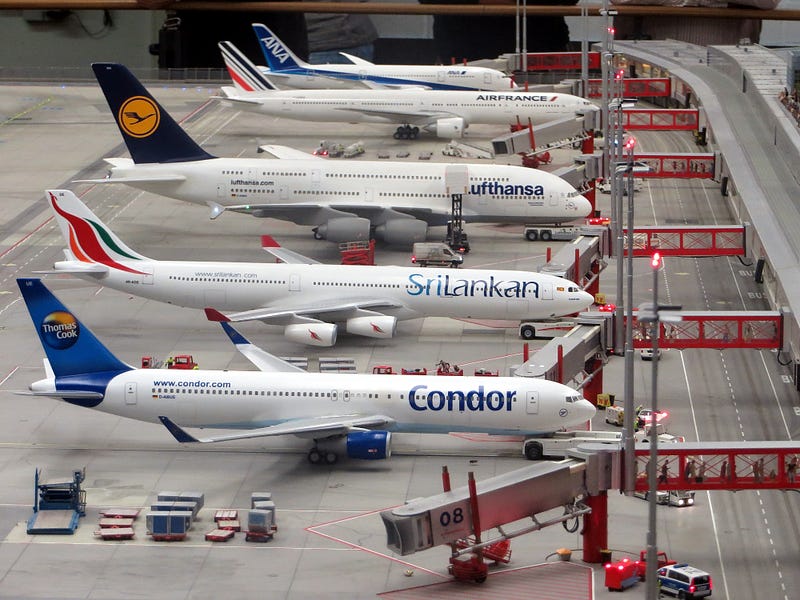
Photo by Pixabay on Pexels

Coronavirus has significantly affected multiple industries worldwide, and one struggling the most is possibly is the airline industry. On March 30th, 2020, BBC News reported that airports in the United Kingdom became almost empty. Many airlines confirmed they grounded up to 80% of their fleet in March 2020, including American Airlines, United Airlines, Air New Zealand and Air France-KLM. The German airline Lufthansa reported their intentions to cut 95% of their flights. At the same time, EasyJet grounded their entire fleet — except for the rescue missions aiming at bringing British nationals, who are stranded overseas, home. Thai Airways went as far as cutting some of their aircraft types permanently.

It’s safe to say the pandemic has dramatically affected the airline industry around the world. Let’s look more in-depth into what’s happening.

Table of Contents:
1. Airlines around the world: who is operating?
2. Is there anyone currently in the sky?
3. What is going to happen to airlines?
4. What is happening to all the planes?
5. How many people are losing their jobs?
6. What is next?
7. So… What does it mean for us, travelers?

Airlines Around the World: Who is Operating?

A privately maintained Coronavirus Flight Cancelation Tracker is suggesting that as of April 30th, 2020, a total of 106 airlines grounded 100% of their aircraft. The remaining 87 companies listed on the tracker are partially operating. Still, the percentages of active flights vary greatly: from 15% being the lowest (VietJet) to 99% being the highest (Virgin Australia, Volotea, Air Astana, SAS, Air Baltic and Aerolineas Argentina).

As of April 30th, 2020, a total of 106 airlines grounded 100% of their aircraft. The remaining 87 companies listed on the tracker are partially operating.

Is There Anyone in the Sky?

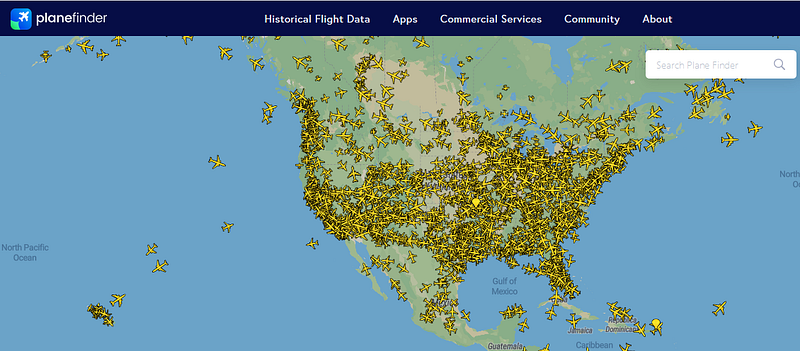
Yes, of course. Despite an enormous number of flights cancelled, there is still a lot of aircraft flying around the world. Check out Planefinder.net to see how many planes are above is in this particular moment:
Source: PlaneFinder.net

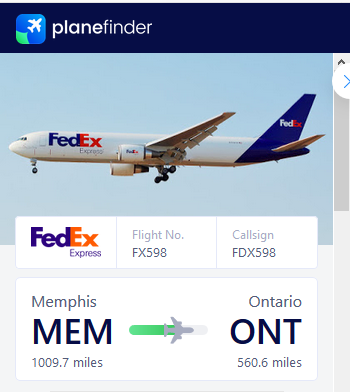
Keep in mind that many of those planes are not commercial. For example, you can spot a large number of FedEx, UPS, Amazon Prime, military aircraft and private planes:
Source: PlaneFinder.net

It’s important to note that there are usually many more planes in the sky. The regular number is usually aiming towards 15,000 planes with over 19,000 on the busiest days. However, as of the time of this article, on April 30th, 2020, Flightradar24 was showing only 4,996 aircraft.

What is Going to Happen to the Airlines?
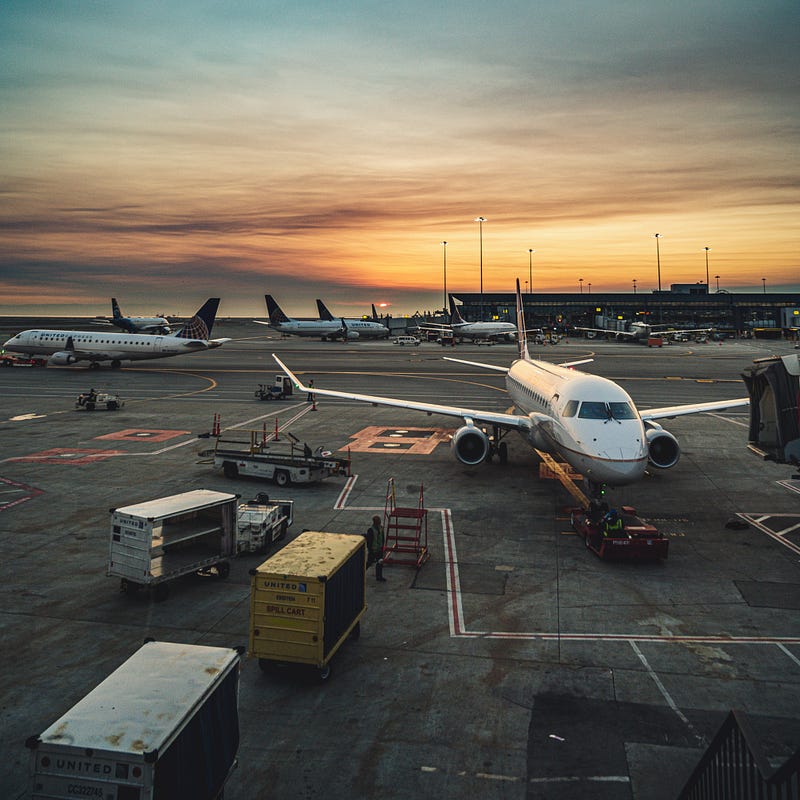
Photo by Brett Sayles from Pexels

The pandemic presented a significant hardship to airlines around the planet. Many of them are seeking bailouts from their respective governments, while several companies recently collapsed:

  • UK regional airline Flybe entered administration (a procedure similar to bankruptcy) in March.
  • The American company, Trans States Airline, shut down in March as well.
  • Compass Airlines (US) ceased operations in April.
  • Virgin Australia, an Australian airline, declared bankruptcy in April.

The future of air travel is looking uncertain at the moment. Airbus’ chief executive warned in an April 29th, 2020 interview that airlines may need five years to recover from this crisis.

What is Happening to All the Planes?

Airlines around the world have grounded planes at the airports, which presented a new problem: lack of parking spaces. Forbes featured numerous photos of aircraft parked on the runway back to back in its recent article.

On April 30th, 2020, CNBC posted a Youtube video explaining how the airlines are coping with vast parking demand. Paul Oliver, the Airbus’ Vice President of customer service, is talking about a new app that allows companies to track where the planes are parked and where there is parking available. The video also educates the viewers on what kind of maintenance is required when an aircraft is grounded. It shines a light on how it becomes problematic to perform it when a significant number of planes are parked all over airports. The app also allows us to track what kind of maintenance is in need for every particular aircraft, and when it should be performed — that makes the job much easier and also saves the airlines some money.

Airlines around the world have grounded planes at the airports, which presented a new problem: lack of parking spaces.

How Many People Are Losing Their Jobs?

Naturally, since the airlines are going through a tough time, their workers are struggling as well. Forbes published an article listing the job cuts implemented by many industries. They are not limited to the aviation sector but to the restaurant, auto, ride-sharing, travel, arts, entertainment, education, fashion and many others.

Within the aviation industry, many people lost their jobs and even more are expected to be laid off. For example, Air Canada reported laying off 5,100 employees, and Scandinavian Airlines is set to lay off 90% of its staff.

What is Next?

Currently, the aviation industry looks disturbing. It will require some time for them to bounce back and recover. But the governments around the world are working together with them to provide help and support. For instance, President Trump confirmed his support for the airlines back on March 16th by saying:

“As far as the airlines are concerned, we are going to back the airlines 100%. We’re going to help them very much.”

On April 9th, CNBC reported the US Treasury receiving 275 applications for the aviation grant. As per the CARES Act, the airlines are eligible for $25 billion in payroll grant, while airport contractors can get up to $3 billion, and cargo carriers can apply for up to $4 billion. You can read more about the grants and support for the aviation industry under the $2.3 trillion CARES Act on the Federal Aviation Administration’s website.

So… What Does It Mean for Us, Travellers?
Photo by Sheila from Pexels

Some airlines indicated they need cash coming in to stay afloat, which means they hope to see customers buying plane tickets. Unfortunately, not everyone is willing to do that because the future is looking grim and unclear. No one wants to buy a ticket and then lose money is an airline collapses, or the borders remain closed.

We don’t know if the situation will change in a month or a year — currently, we don’t have a timeline. All we can do is wait and hope for the best.

As much as I would love to support my favourite airlines, I don’t think I’m ready to buy tickets. Skyscanner, so much loved and admired by my family, is offering dirt-cheap flights. Are you saying I can fly to Costa Rica for $273 in September? And Peru can be as cheap as $331?
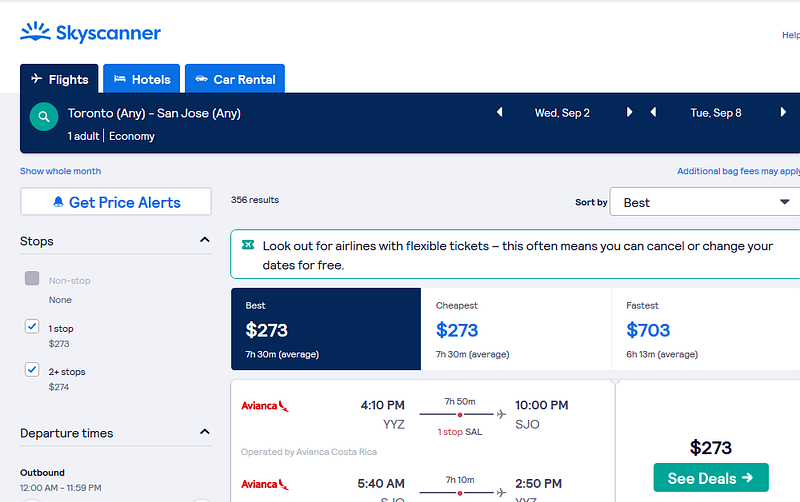
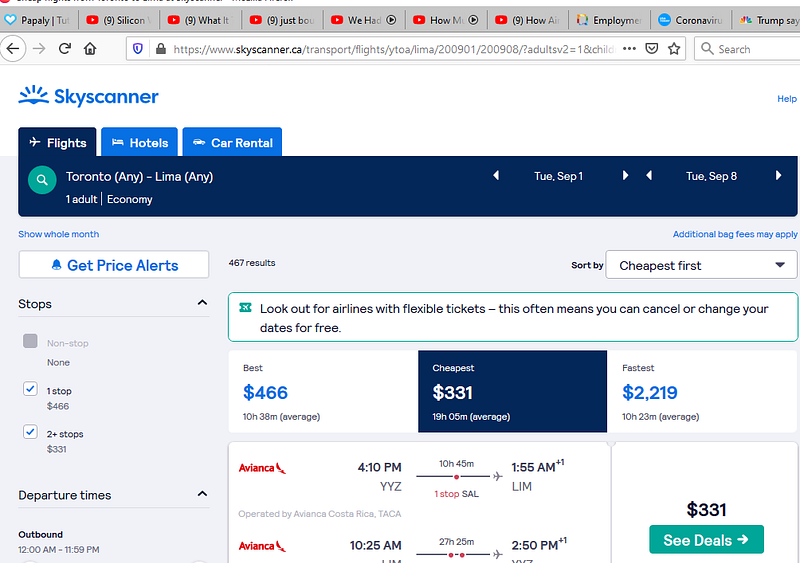
Source: Skyscanner

“Sign me up!” — would be my usual response. But right this moment, I am not sure. Frankly speaking, it makes more sense to save money in case things get more challenging and use it for an emergency. I’m afraid the plane tickets would have to wait.

Business
Money
Airlines
Economy
Technology
Recommended from ReadMedium