
How Irish Mothers Inspired the World
A story about manifesting peace in the face of violence

“When I told the people of Northern Ireland that I was an atheist, a woman in the audience stood up and said, ‘Yes, but is it the God of the Catholics or the God of the Protestants in whom you don’t believe?”
― Quentin Crisp
The nightmare began in 1968.
The bombings, riots, and killings occurred daily. These days were like any other. A blast occurred down the block. The reverb from the explosions shook the earth. Clinging to the ground were men sprawling, dazed as though drunk and just leaving a local pub.
Anticipation consumed dejected onlookers as the smoke cleared from a proxy bomb unveiling the bodies and rubble for ghastly display. The proxy is a human bomb. Northern Ireland had become a cemetery. This day was another of violence and brutality in Belfast. Ireland was dying.
Belfast circa 1973.
The learned purpose of a Northern Ireland citizen was mere survival. Violence placed the country in deep trauma for thirty years. Both sides of the war had lost children due to violence. Both sides suffered catastrophic casualties. Thousands were dead.
The Troubles, as it was called, was the result of a long-standing disagreement between two groups vying for control over Northern Ireland. Loyalists wanted to remain part of the British empire. Nationalists fought to absorb Northern Ireland from British control and restore Ireland to its own country.
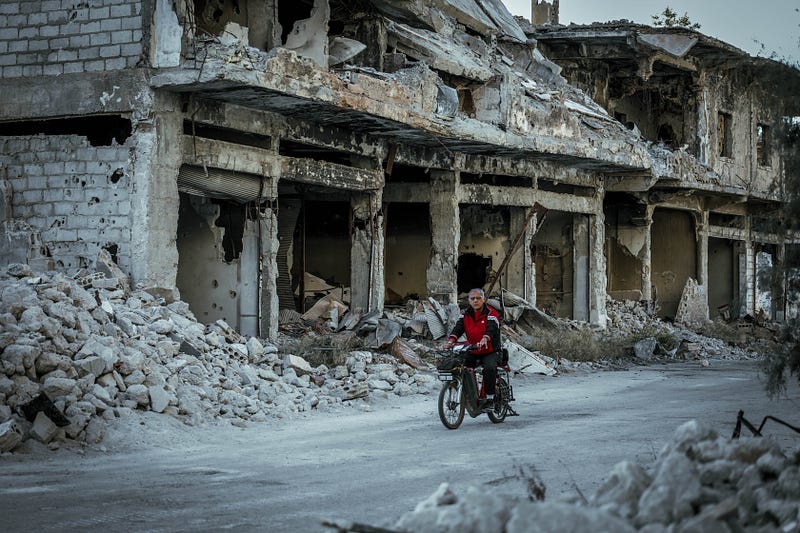
The women of Ireland were exhausted by what became a weekly ceremony of burying their children.
Catholic and protestant mothers grieved and were given amnesty from attacks in an accord implemented by both parties. Both sides had a common atrocity, mothers had borne the hardest pain.
Grieving together stirred aggressive emotions. They began the unifying of a women’s support organization.
Catholic and Protestant mothers created the Northern Ireland Women’s Coalition and injected themselves into peace talks and reform. Both parties of women united despite the possible cataclysmic repercussions of doing so.
The coalition worked across both protestant and catholic communities. This became advantageous during the peace talks. Both sides of the war were present in the coalition, but the organization didn’t argue for either side’s demands. The demand was simply for peace.
A massive number of devastated families were represented by the women’s coalition. The women’s party was a mosaic of political and religious diversity that presented a united front at the peace meetings in Belfast. They weren’t easily included in the meetings, however. After the coalition was created, it was discovered they had to fight for inclusion in the peace talks.
The women were seen as outsiders. Derogatory comments were commonly used by politicians as well as the news media during the peace talks to deter. It just strengthened their will as they grew larger in numbers. The women’s party began protesting the discrimination against gender at the political meetings. They lobbied politicians and initiated protest rallies.
‘I should not be saying I want around the table — the men around the table should be saying ‘where arethe women?’’ — Eileen Weir
The Northern Ireland Women’s Coalition was not only fighting the political factions but also against discrimination from news media. The Irish media fed off of the vitriol spewed from the political leaders during peace talks.
They were threatened, slandered, and humiliated in public view. In turn, this galvanized all women in Ireland. The event inspired courage among all Irish women outside of the committee to protest.
Women began to influence religious leaders in the church. This changed the message among priests and ministers to speak of non-violence and denounce the killings due to affiliations.
It began a wave of momentum at the heart of the movement and the “moving forward together” campaign began. This placed emphasis on the community to engage in the talks and become activists of peace.
Thereafter, priests and religious leaders influenced businessmen and corporate owners to talk about disengaging the conflict. The realization during these discussions was jobs and investor capital was leaving Ireland.
Business leaders and corporations began illuminating this issue. This inspired the politicians to become influential in the peace movement.
It was the catalyst that began negotiations that transformed the war into a non-violent conflict. In 1998 the two sides began conforming to a peace treaty called the Good Friday Agreement.
In the end, resolve for peaceful talks happened because Irish mothers were tired of losing their sons to violence.
My observations about conflict.
After reading the transcribed peace talks of the 1998 treaty, here are a few key observations.
First, how do you get to a yes in a difficult conflict? Have the courage to face fears. Ask yourself what you really want. Critical thinking is the key to what each side really needs.
Don’t raise your voice, improve your argument. Slow down.
Establishing peace starts with breathing.
Collect thoughts and breathe. Breathing transfers oxygen to our brain and allows us to think about what is really important. Pause and don’t react on the spot. Ask yourself what the prize is you are looking for — other than proving someone wrong. Successful engagement starts with disengagement. Start with stopping. I myself find the need to step away if emotions are high.
Exacerbation is common for those with low emotional thresholds.
Count, step away, and come back after thinking about what will really advance our interests. The highest purpose is to get to a resolution. Listening from their frame of reference is the key to negotiation. You don’t have to agree with someone to find a resolution or peace. Peace is not the end of the conflict. The goal is the transformation of conflict that we may deal with our disagreements in a constructive manner rather than a destructive manner.
The conflict needs to begin with a subtle transformation which is a modest goal. Modest goals are the steps that allow both sides to establish a unified direction. This creates confidence while generating momentum.
In Ireland, the situation grew so incredibly violent. Mothers were exhausted from burying children to the degree of risking their own lives. This led to an organization that created a rational non-violent plan. The skillset Irish women uncovered was finding the resolution at home on a microscale.
The ability to nurture community, in the end, provided the valuable key to unlocking the solution. They provided the community with the blueprint which ultimately led to the historical Good Friday Agreement. Peace was then established.
“Human history becomes more and more a race between education and catastrophe.” — H. G. Wells
Thank you for reading my article. If this speaks to you, please comment, clap, or share.