
Retirement in The Villages, FL
How Important Are Proofreaders? Very! Read Their Review Points. You’ll See.
Number of points & scope greatly exceeded my expectations. We disagree on two grammar points. Before/After examples selectively scannable.
My earlier story, “Is your Story Well-Written? How Do You Know?”, presented quality improvement ideas for your posts.
This article shows one of those ideas in action: ===> Use independent proofreaders.
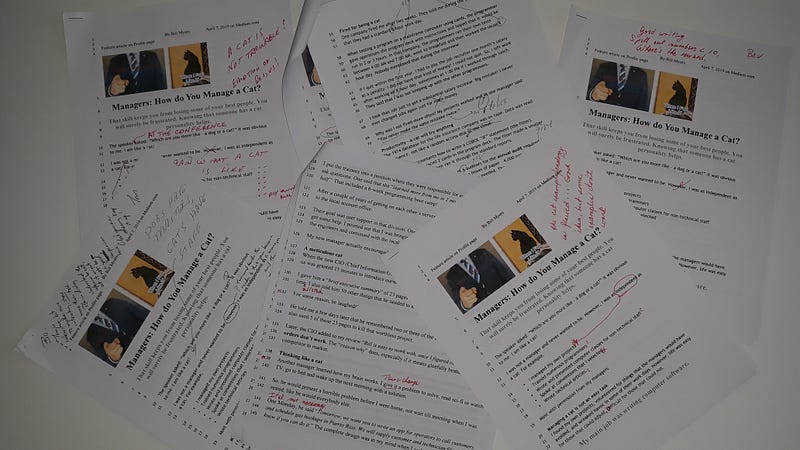
Based on that idea, I joined the Wannabee Writers club with 22 book authors and me. Members read their chapters and articles aloud at the weekly meeting, and then the others immediately offer their critiques.
I had them review my Managers: How do You Manage a Cat? article. I expected a few punctuation and grammar changes.
They made 102 unique suggestions
A bit more than I expected.
You can scan down through this article to see their critiques and review the examples that interest you, starting at the following line:= = = = = Critiques & Examples = = Selectively Readable = = = =You may not have access to proofreaders for every article.
Then, Medium’s “Read Aloud” feature, Grammarly, and your printer will have to do. Each provides your brain with a different perspective.
I found a number of corrections for this article after I thought it was ready by reading the printout.
How this article shows critiques
I originally planned to make minor changes to the original Cat article featured on my profile, but the writing quality “suggestions” from the reviewers were so dramatic that I, at first, decided to post a new version.
Here is a summary of the critiques:
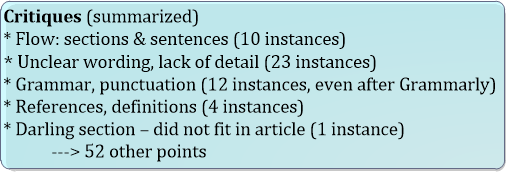
We also disagreed frequently on italics and written number rules for articles targeting electronic devices, such as tablets and cell phones. For me, clarity first.
- I use italics for “direct quotes” that are not interactive dialog, like in novels. The reader does not need to follow little bitty quote marks.
- I spell out zero and one, usually no other numbers unless they start the sentence.
I don’t care what the standards are. After all, I am like a cat.
How this article handles examples
Then, I read the Shaunta Grimes article Medium Rolled Out a Stricter ‘No Duplicate Content’ Rule Today. The help desk ruled that a version II of my article, even though radically revised, was still a duplicate.
Since I could not post before-and-after articles, I revised the original. It kept the same publication date and was not sent out to followers.
The original, Managers: How do You Manage a Cat?, is no longer available for comparison. Therefore, I’ve included the most flagrant examples here, by updated section title, as illustrated by the sample below, for comparison.
Sample section

I’ve added a box at the beginning of each section containing the most important criticisms, like the example above.
The examples show before and after. The after sections are highlighted by a vertical bar, like the sample below.
Before: some text
After: rewritten text
= = = = = Critiques & Examples = = Selectively Readable = = = =
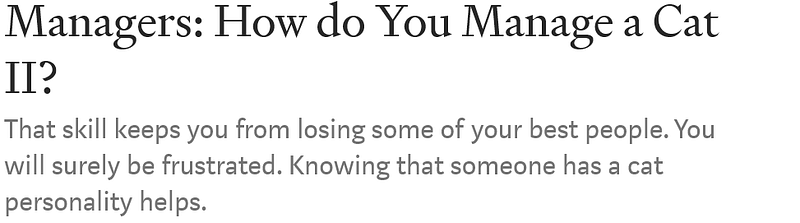

There is no Cat II article due to Medium duplication rules. The original title and publication date remain unchanged.
Introduction
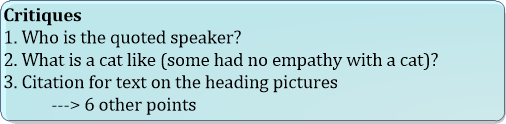
===> Who is the quoted speaker?
Before: The speaker asked: …
After: The conference speaker asked: …
===> What is a cat like?
Before: nothing
After: Cats rarely do what you expect. Based on the famous saying, “Dogs have masters. Cats have staff” (anonymous), I am like a cat!
The cat stereotype: — Casual, Laidback, Aloof, Indifferent — Independent, Obstinate, Opinionated, Self-sufficient — Willful, Spunky, Deliberate — Focused, Single-minded, Persistent, Tenacious, Meticulous — Playful, Curious — Cunning, Sneaky, Conniving, Manipulative, Startling, A hunter — Imaginative, Inventive, Resourceful — Clever, Confident, Self-assured — Lazy
Managing a cat is not an easy task
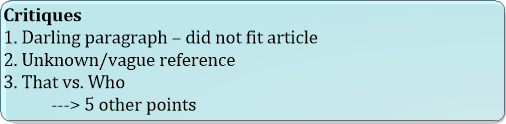
The Darling paragraph:
Before (removed):
The managers in my first two companies were not able to make deals. The technology was not good enough for me to put them into that position. The computers looked like those in the movie Hidden Figures, occupying a room, using cards and with 0.000000064 gig of memory. A good size cell phone has 64 gig of memory.
Interesting information, but had no impact or relationship to the article.
The cat shows itself
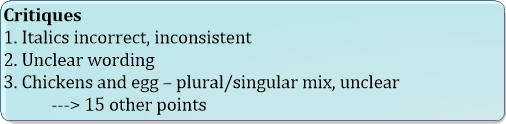
I have started to use italics for quotes in articles, to separate them from standard text, as long as there are not too many of them. That was the first critique, which continued throughout the article.
For example: Afterward, the only thing that my manager said was, “Don’t ever let it happen again.”
This part was unclear and didn’t connect since it had project details that had nothing to do with the story.
Before: The client department head presented my second project at a national conference as the best in the country for managing chickens and egg production.
The cat appeared during the second project:
After: For my first project, I was no different than any other programmer. The cat appeared during the second project.
Fired for being a cat
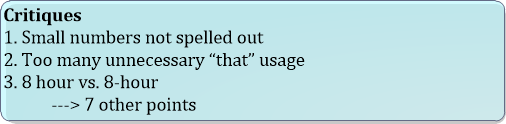
Most critiques here were minor, except for numbers. According to grammarbook.com, there are two basic guidelines:
- The Associated Press Stylebook — spell out numbers zero to ten and then numerals
- Chicago Manual of Style — spell out numbers zero to one hundred and then numerals
In my opinion, both styles were set up for print material and do not consider today’s reader mediums, such as cell phones and tablets.
Therefore, I usually spell out zero and maybe one, then use numerals for 2 to a million, depending on readability. From programming experience, it is easy to exchange the letter ‘O’ with the number zero, and in some cases, the number one can have the same problem.
In any case, it’s important to be consistent throughout the article.
Productivity — a cat will try anything
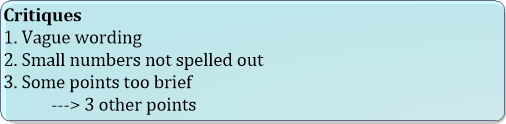
This piece was not as obvious as I thought.
Before: I taught the accountants how to write a COBOL “IF” statement (the filter). They carefully replaced 2 cards in the program deck.
After: I taught the accountants how to write a COBOL program “IF” statement (the filter, today called “Find” and shown with a magnifying glass). They carefully replaced 2 cards in the program deck with the new “IF” statement.
Both before and after: The filter made a smaller copy of the tape which was then used to print the standard reports.
Leveraging the cat — making deals
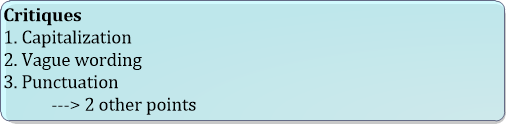
Before: In one plant, my job title was Statistician supporting Quality, instead of Computer Programmer.
After: In one plant, my job title was Statistician in the Quality department, instead of Computer Programmer.
The managers in my first two companies were not able to make deals. The technology was not good enough for me to put them into that position.
Managers in other companies where I worked leveraged my talents in similar ways.
The cat’s project time estimate
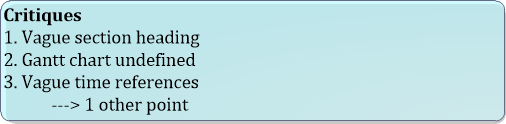
Vague section heading:
Before: A cat’s estimate
After: The cat’s project time estimate
Gantt chart undefined:
Before: I wondered if anybody ever read the Gantt charts. So I added a breakpoint in the middle of one — “the miracle occurs here.”
After: I wondered if anybody ever read the Gantt charts, which show project tasks and their times in a horizontal bar chart in date order. So I added a breakpoint task in the middle of one chart — “the miracle occurs here.”
The cat’s concept of time
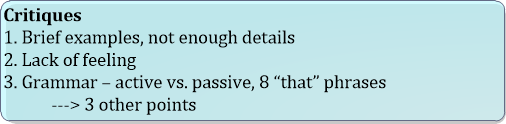
Example too brief:
Before: The person who originally built the app was a hero for getting the response time down to two minutes. My changes took it to 3 seconds
After: The person who originally built the app was a hero for getting the response time down to two minutes. During development, it took twenty minutes for the menu to first appear. My changes took it to three seconds, which pleased the people using the app immensely and me.
A second example:
Before: They changed the procedures so that I could never do something like that again. See my article Importance of Small Projects for full details.
After: After congratulating me on completing the project, the department head asked what service request-number I charged it to. I replied, “The one-day-consultation service request-number.” They assumed that the one-day number was set up “to find out what they want” so a new project request-number could be assigned. No more than 8 hours could be charged to it.
They changed the procedures to require all new apps, no matter how small, to have their own project number. That way, I could never build another whole new app without letting them know in advance.
The cat’s outside supporters
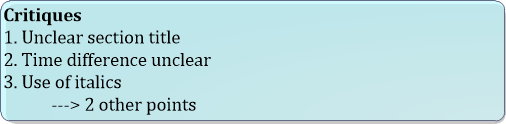
Unclear section title:
Before: The cat’s supporter
After: The cat’s outside supporters
Time difference unclear:
Before: At another time, I was out about 5 weeks for surgery in my last job before retirement. The London office provided backup support for Houston. That works only in an emergency, partly because of the time difference.
After: In my last job before retirement, I was out about 5 weeks for surgery. The London office provided backup support for Houston 5:00 PM and 7:00 PM publication deadlines. That works only in an emergency, partly because of the 7-hour time difference. The second deadline was 2:00 AM in London.
The cat brings his own toys
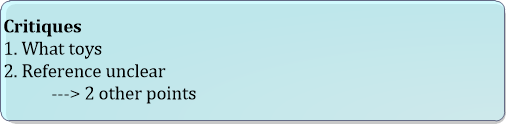
Before: After a couple of years of getting on each other’s nerves, I transferred from the regional location to the local account office.
After: After a couple of years of getting on each other’s nerves, I transferred from the regional location to the local account office under new management.
A focused, meticulous cat
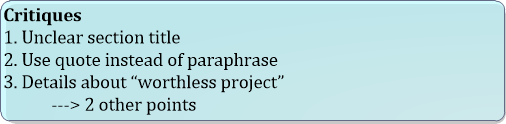
Unclear section title:
Before: A meticulous cat
After: A focused, meticulous cat
Before: He told me a few days later that he remembered two or three of the things that I told him. He also used 5 of those 23 pages to kill that worthless project.
After: A few days later he said, “I actually remembered two or three of the things on your list.” He also used 5 of those 23 pages to kill that worthless project pushed by the prior management.
Thinking like a cat
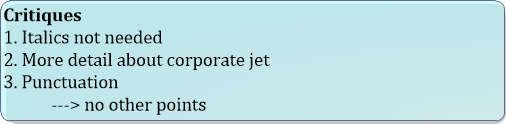
Before: I wrote the app and demonstrated it on Wednesday. On Thursday, the government stopped the project. I did not get to ride in the corporate jet to Puerto Rico.
After: I wrote the app and demonstrated it on Wednesday. They planned to send me, a technician to set up the computers, and a translator to Puerto Rico via the corporate jet on Saturday.
On Thursday, the government stopped the project. I did not get to ride in the corporate jet to Puerto Rico.
Ignored by the cat
(review slights and reprimands)
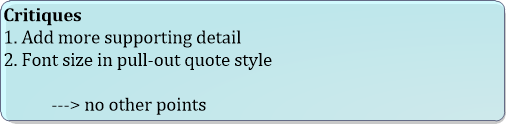
Before: He sat in the office across from me. On Monday, he gave me a long list of things to do. He wanted me to start on them by next week. When we met the following Monday, they were all done. He said: “When did you do them? You were never at your desk.” This was never mentioned during the review.
After: My manager sat in the office across from me. On Monday, he gave me a long list of things to do. He wanted me to start on them by next week. When we met the following Monday, they were all done. He said: “When did you do them? You were never at your desk.” I didn’t bother to answer.
He didn’t use this, or anything else, to show my high level of productivity during my review.
Once a cat, always a cat
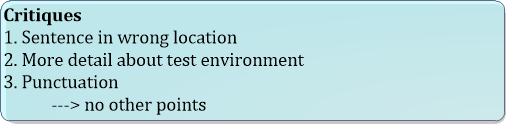
Moved the last sentence to the start of the section:
Before: Our receptionist asked me, “How did you get hired at age 65?” Well, the first 12 people failed the programming test.
After: Our receptionist asked me, “How did you get hired at age 65?” Well, the first 12 people failed the programming test. Also, I said during my job interview that the job sounded like fun.
Detail about test environment:
Before: The reporters entered data through programmed Excel spreadsheets. My first task was to learn all about those spreadsheets.
There was no test environment for users to test changes before they went live! When I suggested building one, my manager issued a direct order not to do it.
After: The reporters entered data through Excel spreadsheets with buttons programmed to upload the data to a database. My first task was to learn all about those spreadsheets.
There was no test environment for users to test spreadsheet changes before they went live! When I suggested building one, my manager issued a direct order not to do it.
Both before and after: I built one anyway in the first two weeks. There were a lot of unexpected benefits. See my article Importance of Small Projects for full details.
Is the cat really lazy?
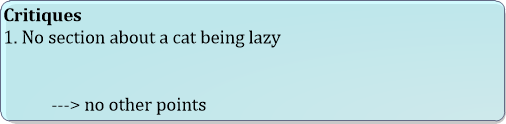
Before: nothing
After: One manager said, “You are the laziest person I have ever seen when it comes to avoiding any extra typing.” Later, he said, “You are the most prolific one-fingered typist that I have ever seen.”
We typed all of our own programs and user instructions.
I was not lazy, just efficient. For example, our entire house is designed to be easy to clean. We can do the equivalent of spring cleaning in three hours, and do it every two weeks.
The kitten — early signs
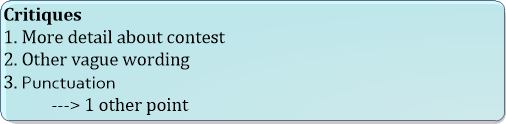
Before: I volunteered for the William Lowell Putnam Mathematical Competition, a 6 hour, 12 question test on a Saturday. Anybody could volunteer and everybody was ranked by the school. The top three who showed up was the school’s team.
After: I volunteered for the national intercollegiate William Lowell Putnam Mathematical Competition, a 6-hour, 12-question math test on a Saturday. Anybody could volunteer, then the school ranked everybody.
The top three on the list who showed up were the school’s team. Everybody else competed as individuals.
Conclusion
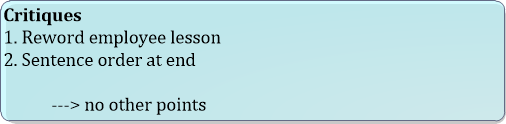
Before: Lesson for the employee — find your niche. Figure out a way to work with, not against, your manager.
After: Lesson for the employee — find your niche. Make sure what you do applies to the company’s goals. If you behave like a cat, you had better be very good at your job.
= = = == = = = End of Critiques & Examples = = = = = = = =
The writers club meets weekly. I usually have an article ready for review, although the number of readers vary and sometimes there isn’t enough time for everybody. So, this week I read a different article to the group:
The number of critiques has declined somewhat. Hopefully, I am getting better.