
ALL THINGS ARE POSSIBLE
How I Wrote a Book in 30 Days
And why it took almost two years to publish it?
Have you ever thought about writing a book? If you like to write, you most likely have.
What does it take to write a book?
In a single word: Content. You need content that goes into your book. Your content could be anything, fiction or non-fiction.
If it’s fiction, it could be romance, mystery, Sci-fi, or any one of the many genres. If it’s non-fiction, it could be collection poetry, essays, or personal stories. Think of the Chicken Soup For the Soul.
I decided to create a collection of stories. I had the notion of creating such a book almost 30 years ago.
After taking an adult education class in creative writing, my classmates and I were instrumental in starting a writer’s group. We had great chemistry in o class of 8 students and a teacher. I was the only male in the group. We felt that there has to be a way for us to continue meeting after the class ended.
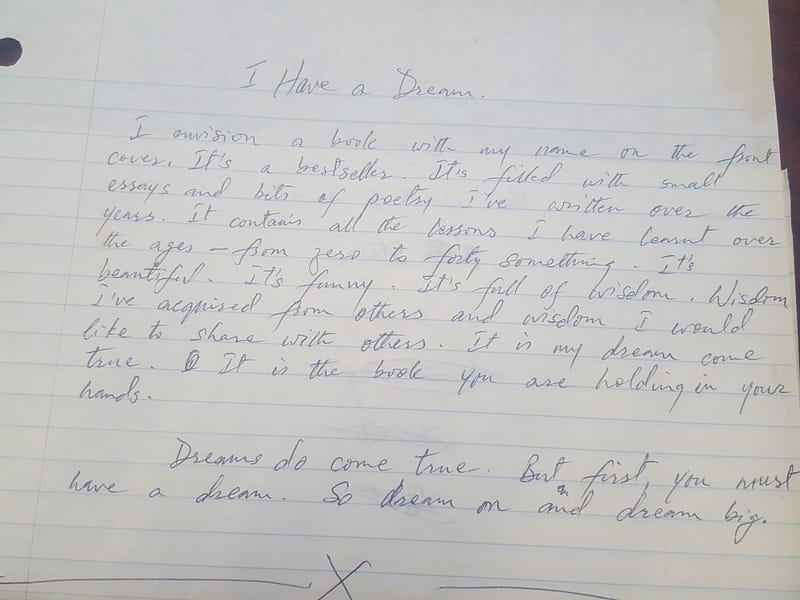
The result was The Woodlands Writer’s Guild. The group is still going after all these years. It was during this period that I wrote out my vision on a piece of paper.
How does an ant eat an elephant?
One bite at a time?
In February 2014, as I approached my 60th birthday, I had an urge to something remarkable and memorable. I decided to write a book for my 60th birthday by committing to writing 500 words every day for 30 days. That would give me 15,000 words, enough for a small book, and that’s what I did.
Every morning after breakfast, I would sit down and write at least three pages in the composition notebook I bought for the purpose. Most days, I wrote about an event in my life. Other days, I just let the moment take me where it would, and wrote a stream of consciousness essays.
At the end of 30 days, I had a collection of 30 stories/essays — all written long-hand. I am what you call a hunt and peck typist. I never formally learned to type. Even now, as I write this story, I am looking at my keyboard more than I am watching the screen.
I talked to my friend Cathy, who writes on here under the pseudonym Celebriticat. She kindly agreed to convert my chicken scratch into a Google Doc, where it sat on my Google Drive for almost two years.
Writing is only the first step.
I wrote the content, but it was not a book yet. I random stories without any cohesiveness. I learned that it takes more than writing to create a book. I needed to organize the content to read like a book. I needed an editor.
One day, I posted on Facebook that if I could find a way to organize my stories, so they made sense to someone who reads it, I would have a book. A freelance writer friend offered to take a look at it.
He performed a miracle.
When he finished, the stories blended into a flowing sequence. One story led to the next, all tied together perfectly into a coherent document. His genius shined when he edited my essay titled, Everything I know about God, the only one he chose to do so. It blew my mind.
Next, I asked some of my friends in the media to read it and give me testimonials I could use in promoting the book. Others helped me proofread it. One of my mentors, Ian (Croz) Crossley, agreed to write an introduction to the book.
Finally, I wrote a foreword and an epilogue. The final word count came in at just over 17k.
Publishing is a whole other animal.
Initially, I thought about publishing it as an e-book and sell it from Facebook and my website. I offered it on a pay what you want basis. I had a few takers, and they paid me well for it, but that was it.
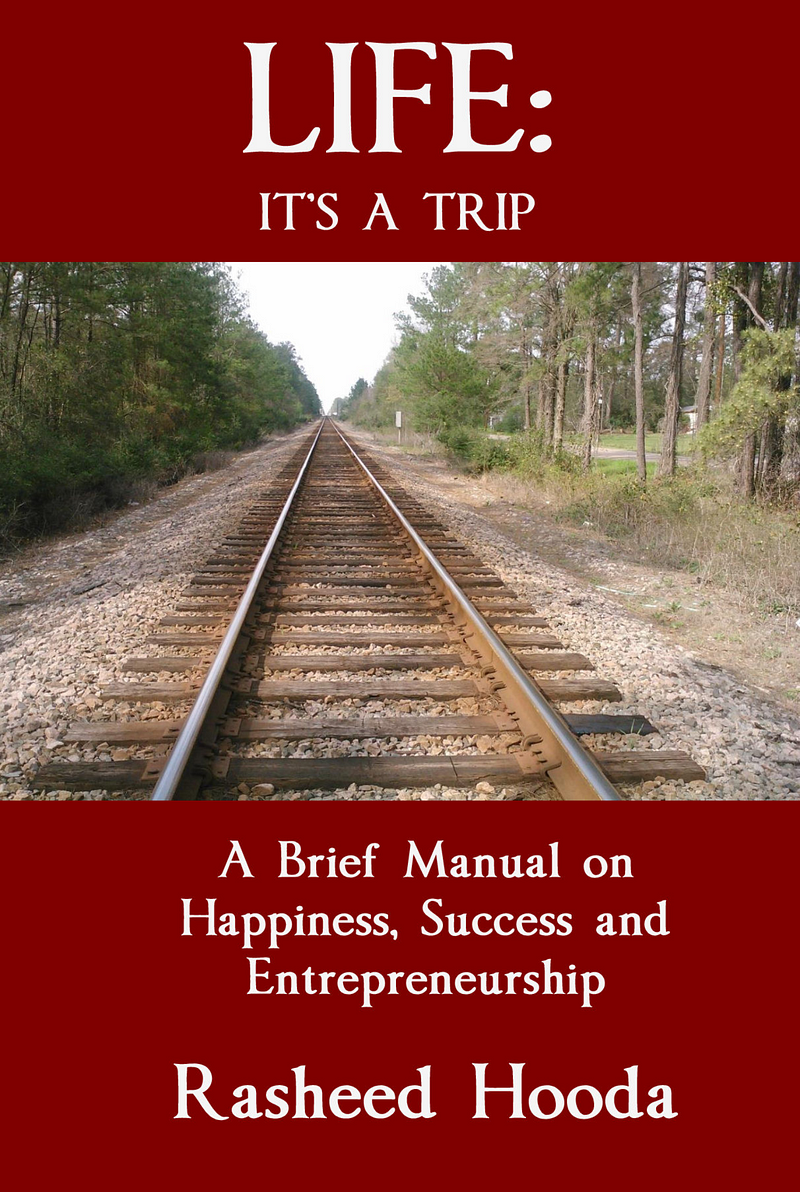
Next, I looked into publishing it as a Kindle book. I found someone on Fiverr to create a cover using one of my photos. I also got someone else to format it for me to meet Kindle’s requirements. I finally published it on Kindle on September 20, 2015. A year and a half after I wrote the stories.
When I started writing the stories, I had no idea what it took to publish a book. Then the imposter syndrome came into play that kept me from learning what I needed to get it done. I am sharing all this to help those who may be thinking of writing a book of their own.
Publishing the paperback
I am a Toastmaster, and I do a lot of public speaking. When I mention that I have written a book, the audience wants to know where they can get a copy of it? I would tell them it was on Kindle, and they can search for it. I wasn’t making any sales that way.
My mentor told me to get physical copies made and have them available whenever I have a speaking engagement. If the audience was asking where to get a copy, why not make it easy for them, and have it handy for them to buy.
For the paperback, I added a couple of more stories to update my progress since I originally wrote the Kindle version. I also changed the subtitle of the book to differentiate the two different versions.
Kindle Publishing offers a package deal to set up the book for publication on Amazon. Going the Fiverr route was much cheaper. Shop around and ask questions. Most of the people I contacted would refer me back to their profile when I asked a question. A couple of them answered the questions, which made it easier to choose the one I wanted to go with. She was a professional.
When Amazon sells my book, I receive 40% of the cover price. As an author, I can order my books at cost from Amazon. My expenses are less than 25% of the list price, and I get to keep all of the profits. Since the cover has one of my photographic images on it, I keep copies of the photos handy for additional income.
Marketing is where it’s at.
Having your book available on Amazon doesn’t mean anything if people can’t find it. Amazon has no interest in promoting books that are not selling. So how do people find out about your book? Well, that’s up to you, and I am trying to learn how to do that.
In the meantime, I am sharing some of the stories from the book here on Medium. Make sure to check them out.
Rasheed Hooda is a published author and a regular contributor to ILLUMINATION, a writers’ community on Medium where writers support each other.
He is a self-proclaimed weirdo who lives a Freedom Lifestyle and writes about related topics — Travel (a top writer), Personal Growth, Freedom, and entrepreneurship. (Get the Newsletter)
“You can let others tell you what it means to be successful, or you can decide it for yourself.”