
How I Went from 0 to 100-Mile Ultramarathon Finish in Less than Two Years
I took good care of my body
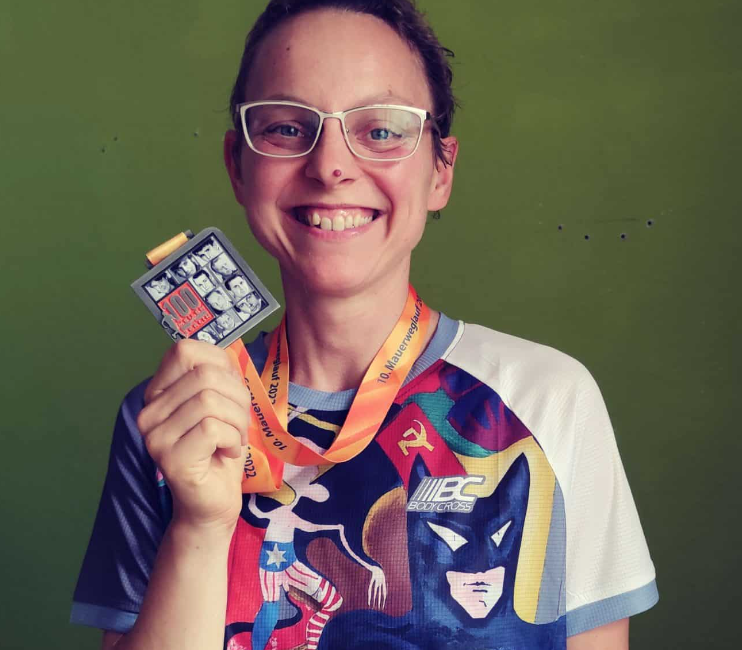
I was never athletic. Growing up, I was laughed at in school because I couldn’t perform a proper long jump, ran painfully slow, and sucked in almost every sport we played during PE.
However, I have always loved being outside. Growing up on a farm in a tiny village, I spent many afternoons plucking weeds, digging up the garden, and watering strawberries.
Later, when I studied forestry, walking through the woods was my favorite activity to clear my head. But other than walking everywhere in the small town I lived in, I didn’t do any other “structured” exercise.
Until one fateful day, I decided I needed to lose some weight and started running.
I quickly fell in love with running and was amazed by its powerful effects on my mind. I finished a few half-marathons, and in 2013, I ran my first and only official marathon.
Then I quit running but stayed active by swinging a kettlebell each morning and getting into strength training.
When I resumed running in 2021, I wanted a challenge. So, I decided to get into ultrarunning😁 .
I trained smart and consistently
When I returned to running in January 2021, I started with two to three weekly runs. Until May, I never ran more than 50 km per week. In June 2021, two months before my first trail ultra of 61 kilometers, I ran my first run of 40 kilometers.
Throughout the process, I reminded myself on every run that I needed to focus on getting in the mileage and staying healthy. Most of my runs were easy, and I often included walking breaks.
To avoid becoming overzealous when I felt good, I told myself repeatedly that I was training, not racing.
In June, I started to incorporate more structured speed work. A tiny hill in the park next to my home allowed me to integrate hill sprints, and when I ran through the forests, I often did fartleks. Those have since become my favorite workouts 😎.
Once I started running more, I reduced the time I spent strength training until I quit it altogether.
However, I wouldn’t recommend quitting strength training, and I have since taken up kettlebell training again. But at that time, my body and mind couldn’t handle both with my stressful work schedule.
I figured if I wanted to have a real chance of completing the 100-mile race, I needed to focus on running and get as much time running volume in as possible.
I also made it a point to run on soft surfaces as much as possible. This was not an easy feat to achieve living in Germany’s capital Berlin. Still, I made it happen by running endless laps through the park near my home and running the trails near my girlfriend’s home.
I listened to my body
Over the years, I have become much more in tune with my body and its needs. In my twenties, I would often train through injuries because I refused to quit.
I remember a training run many years ago when I would cry because of intense ankle pain. However, quitting or finding an alternative training program to let my ankle heal didn’t occur to me.
Instead, I told myself that “this will not stop me.”
I adopted a much smarter mindset when I resumed running in 2021.
Instead of trying to prove my toughness, I paid attention to my body’s signals and acted from a place of respect and love for my body.
That doesn’t mean I didn’t push myself. I did.
However, I slowed down when I wasn’t feeling well or niggles started to emerge. I shortened training runs when necessary and took extra rest days when needed.
I also tried to listen more to my appetite when making food choices.
I have experimented so much with different diets in the past that I forgot how to choose foods based on my body’s signals.
I focused on recovery
Funnily enough, I learned the most about running during the years I didn’t put on running shoes. Even though I didn’t run, I stayed mentally engaged in the sport through reading.
Through strength training and earning various certifications as a coach, I became much more aware of how the body functions and what it needs for optimum performance.
When I resumed running in 2021, I promised myself I would do everything possible to stay injury-free.
Since I strength trained either barefoot or in minimalist footwear, I decided to use barefoot shoes for running as well.
On top of that, I committed to daily foam rolling and stretching. This helped immensely with early IT-band issues and calf stiffness. I also spoiled myself with a sports massage a few times.
I also made it a point to fuel my body well. I rarely drink alcohol and focus on whole foods as much as possible.
Unfortunately, I have been dealing with IBS since my early twenties. I have also gone through horrible disordered eating periods in the past.
I am proud of myself for not falling into the old pattern of denying my body food to lose weight.
When those thoughts of self-hatred and body-shaming myself started to creep in, I was able to distance myself from them and told myself that I needed to fuel myself well to run well.
I wish I were also ensuring I had enough sleep.
The truth is that I am a terrible sleeper who wakes up often during the night and sometimes only gets 5 or 6 hours for days on end.
However, maybe being an insomniac and having erratic sleep patterns is an advantage for running even longer ultramarathons. I will find that out in 2023 when I will attempt to run 215 miles across Scotland 😁.
I prepared my mind
Once I caught the running bug again, I devoured everything I could about the topic. I completed an ultrarunning coach certification (affiliate link); I listened to audiobooks and podcasts.
I sought out stories of runners, and race reports to better understand what people go through during an ultramarathon.
And I prepared myself for the worst.
Accounts of being unable to walk for weeks after a 100-mile race, hallucinations on the trail, gut issues during a race, and feet covered in blisters made me expect immense pain and struggle.
At first, I was scared.
But my runs got longer, and I practiced not quitting when being fatigued. Always listening to my body’s signals, I completed long training runs where I was mentally ready to stop several times.
During one run, I was so fed up with the boredom of running in a 1.5 km loop for 6 hours that I started crying. However, after the run, I knew I had broken a new mental barrier for me.
I kept focused on my why
During the lead-up to the race, I went through a lot of personal challenges. I was mentally exhausted from work and ready to quit the company I had put my heart and soul into for the last 5 years. My liver showed signs of declining health again, and my girlfriend and I went through a very challenging time.
And while running taught me how to tune into myself and process my emotions, my training suffered. A lot.
In the past, I would have easily drowned my sorrows in wine.
Now, however, I kept focused on my why.
I knew that my fundraising project for MQ Mental Health was not over yet and that I wanted to raise much more money for this fantastic charity.
Luckily my relationship with my partner improved since we both dedicated much time to self-reflection and communication.
The night before the race, I went to bed happy because I could put on the lucky kit, which reminded me of her.
And whenever I had a low during the race, I reminded myself why I was doing this.
That I also wanted to finish this race for us.
My girlfriend has been with me since the beginning of my ultrarunning journey, and she knows how much running means to me. She is the one who pushed me to go for my dreams.
And yet, I knew that if I failed to finish this race, she would still love me the same.
To me, this is what really matters: to do what you love most with the people you love most.


