
How I Used ‘The Art of War’ To Grow Personally
15 Teachings That Changed My Way Of Thinking
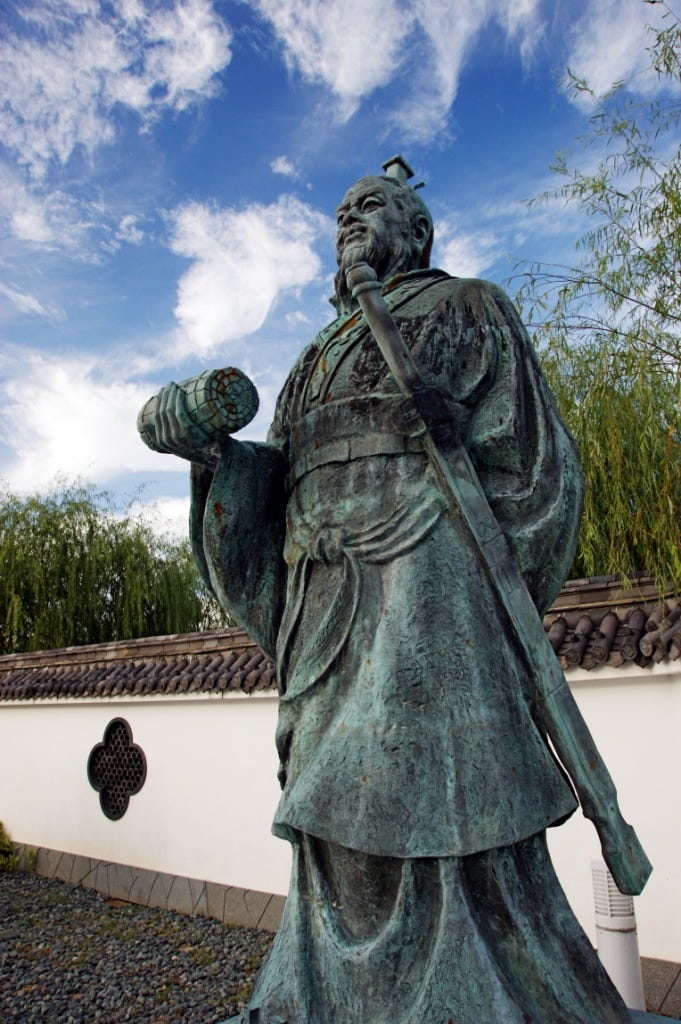
Sun Tzu (pinyin: Sunzi) was a Chinese poet, strategist and military general of the province Wu. His teachings left their mark on history and are to this day a prime example of strategies and tactics that help in achieving victory even when the odds stand against you.
I was fascinated by the many tactics and lessons offered. First from a military point of view.
True, I’m not at war. I’m not a general of 30,000 men, trying to defeat an opponent who commands ten times as many. But many of Sun Tzu’s teachings are applicable in my own life, in the way I interact with the people around me and myself.
I want to share these applications with you.
15 Valuable Lessons From The Art Of War
The following lessons opened my eyes, once I learned to apply them to my life, which might not have any war in it, but conflicts and opposing forces none the less.
1. “If you know your enemy and you know yourself, you need not fear the results of a hundred battles.”
Knowledge is power. I know myself, so I can draw from my strengths and minimize my weaknesses. If I know my enemy, then I can use his weaknesses against him and undermine his strength.
Knowledge creates self-assurance. And self-assurance will be perceived as confidence and strength by others. As long as I analyze the situation I find myself in thoroughly, I need not fear any problems.
2. “Our only enemy is fear itself”
My fear often gets out of control. I fear negative results, repercussions, criticism. The fear wraps itself around my neck, paralyzing me before I even tried achieving my goals.
I know that the fear is my true enemy. That I can not — must not give in. Fear is meant to protect me from harm. But it too often does more harm on its own.
3. “Supreme excellence consists of breaking the enemy’s resistance without fighting.”
I can win the upper hand in a discussion or an argument, which I’d call a victory. By winning, I take the lead over the group. But it’s even better to take the lead without any need for justifying or validating myself.
If I can stand my ground with confidence and beyond all doubt, I’ll win without a fight. Haters will fall silent. I don’t care for their negativity. Their criticism does not awake any emotions. I’m better than that.
4. “Appear weak when you are strong, and strong when you are weak.”
Deceit is a powerful tool, helping me to stay at the top. If I show weakness, others will try to step on me. If I show strength, others will follow and enemies will avoid me.
I need to hide my doubts. And if someone wants to trick me, I’ll lure them into a trap of false insecurity. By not knowing my true strength, my opponent’s own arrogance will become his demise.
5. “Treat your men as you would your own beloved sons. And they will follow you into the deepest valley.”
I understand this as a call to empathy and trust. If I treat those around me with love and affection from the heart, they will return with unprecedented loyalty.
Sure, you can have friends. You can even buy friends. But much like mercenaries, they will abandon you on the first sight of fleeting funds. The same counts for coworkers. If you just help someone to get help in return, not much will grow from that. But if you help out of sincerity, they will greet you with the same sincerity in return.
6. “When you surround an army, leave an outlet free. Do not press a desperate foe too hard.”
This teaching quite literally explains how a desperate warrior without chance of escape will not accept defeat. If death is certain, he’ll fight as fiercely as he can until he draws his last breath. But if you leave an outlet, even the most brave of warriors will choose escape over death.
But this is a mental issue that applies to any desperate situation. If I force someone into a corner, he’ll feel the same. If I now offer him an alternative (an escape route), he’ll accept. But if I offer none, he’ll just turn stubborn and oppose me in every way.
7. “Excessive rewards are a sign of desperation. Excessive punishments are a sign of exhaustion.”
These both extremes are good hints that your opposition has realized imminent defeat. Whether someone tries to make you an offer you can’t refuse, or if they try to punish you as hard as they can; it shows that they are at wits end.
This means I have full control over the situation. I dictate the terms. Someone in this situation is easy to manipulate.
8. “If your enemy is secure at all points, be prepared for him. If he is in superior strength, evade him. If your opponent is temperamental, seek to irritate him. Pretend to be weak, that he may grow arrogant. If he is taking his ease, give him no rest. If his forces are united, separate them. If sovereign and subject are in accord, put division between them. Attack him where he is unprepared, appear where you are not expected .”
Sun Tzu saw arrogance and emotional impulses as the greatest weaknesses of the human mind. I agree. Too often do we fog our minds with such thoughts, losing our ability to make clear and smart decisions.
It’s important to know who I am facing; his strengths and weaknesses. If I try and face him in a discipline he’s well versed in, I will perish. But if I pull him into a fight he has no experience in, I will come out on top. Especially inciting a bad temper is an easy way to stay above. Because angry people don’t have a clear mind.
9. “Meet disorder with order and impetuosity with calm”
Another point towards avoiding emotional impulses. If I can keep a clear mind and sharp focus, then even a heated debate won’t break my composure. Even better:
If my opponent loses his composure at the sight of my unbreakable calm, he’ll get even more stressed, likely making more mistakes in the process. I don’t defeat him. He defeats himself.
10. “Anger may in time change to gladness; vexation may be succeeded by content. But a kingdom that has once been destroyed can never come again into being; nor can the dead ever be brought back to life.”
That’s a very poetic way of saying “don’t do anything you might regret later”. Who hasn’t said something awful in the middle of a fight with a friend, colleague, or loved one? Or someone who has been falsely accused and convicted of a crime he didn’t do? He won’t get the years back he spent in prison.
For Sun Tzu, the important lesson here was to understand the value of a human life; to not waste it out of short-lived anger. My actions might not cost lives. But if I don’t tread carefully, I might hurt someone. My feelings come and go in the blink of an eye. But the things I do will accompany me for a lifetime.
11. “There are five dangerous faults which may affect a general: (1) Recklessness, which leads to destruction; (2) cowardice, which leads to capture; (3) a hasty temper, which can be provoked by insults; (4) a delicacy of honor which is sensitive to shame; (5) over-solicitude for his men, which exposes him to worry and trouble.”
These mistakes affect not only generals but every leader. Those who are inconsiderate risk high losses. Those who are cowards quickly give up and lose. Those who have a high temperament, will quickly lose their composure and be provoked too easily. Those who have too high an ego will fold in the face of shame. And those who act overprotective will lose focus and waste too much time dealing with minor problems on the way.
I need to stay focused and avoid all human emotions that could negatively affect me. The points Sun Tzu mentioned here are all weaknesses that offer no gain. They only cause problems. I need to get rid of false pride.
12. “Whoever is first in the field and awaits the coming of the enemy, will be fresh for the fight; whoever is second in the field and has to hasten to battle will arrive exhausted.”
Another fancy way of saying “the early bird gets the worm”. I need to prepare rather sooner than later. If I wait too much, I’ll put myself under unnecessary pressure; others may have to wait for me and I will lose their trust and respect.
And whatever battle I may have to fight (mostly mental ones), I’m off way better if I take the lead. Grab any opportunity as soon as it arrives.
13. “If those who are sent to draw water begin by drinking themselves, the army is suffering from thirst.”
At first I thought this had something to do with greed. But it in fact describes how one can draw a good conclusion about a larger group by observing its individuals.
Here the soldiers drink as soon as they arrive at the well. So they must be so thirsty that fulfilling their own need is more important than bringing back water to the rest of the army. This must mean that the rest of the army is in a similar condition, waiting desperately for the soldiers to return with water.
14. “He will win whose army is animated by the same spirit throughout all its ranks.”
Teamwork and morale. Where all work in unity and aim for the same goals, success will follow. But when each one has their own expectations, opinions and goals, chaos will break out.
It’s important to keep morale up and work as a team. All need to be on the same page. If I work with other people, we all need to make sure of being on the same page. Or we will fail.
15. “Hold out baits to entice the enemy. Feign disorder, and crush him.”
For Sun Tzu, this meant that an enemy will attack when he assumes victory, and retreat, when he assumes defeat.
And we do think like that even in modern life. We get incited by summer sales and limited offers. We want to take advantage. And we avoid unpaid overtime and other disadvantageous things. For me, that means I need to offer value to win people for my cause. If I only bring disadvantages, people will avoid me.
And if someone wants to damage my reputation, then that person will wait in ambush until I make a mistake they can call me out for. But if I can lure them into a trap, I can turn the table and get the jump on them.
Growing mentally
These teachings have helped me. I think the biggest benefit I had is to notice and understand my own biggest weakness: My fragile ego. I’d take criticism to heart in an unhealthy and negative way. I’d let people embarrass me, sway like a straw in the wind at every notion. Lose arguments out of shame or because my emotions got the better of me.
I learned to accept myself and to see through these people. Why they act the way they do. Their true intentions. And how they’d just act in a specific way to cover up their own weaknesses.
I no longer fear conflict. I stay on top of it. I protect my weaknesses and at the same time pick on the weaknesses of my opponents. The moment you throw me a petty insult, I know I have twisted your guts, gotten under your skin. You can no longer hurt me. I learned to not see your weaknesses as strengths over my own insecurity.
And I hope that by reading this, those who have the same issues as I had in the past can take something from it and grow. Become a warrior.
Don’t let others get the better of you.
Thank you for reading!
Kevin is an editor and writer for the ILLUMINATION publication. Follow him on Twitter and LinkedIn.