
How I Used Pain Point Marketing to Generate an Extra $13,000 In Sales
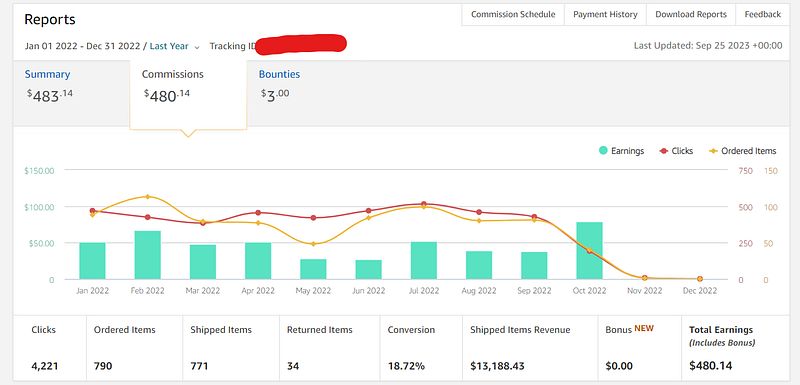
It had an 18% conversion rate

This is such a simple technique that I never see bloggers talking about — pain point marketing.
Niche site content takes two forms: Money content that sells products and info content that gives the reader information they need.
Most bloggers get hung up on these being two completely separate entities. But this leaves all your info content earning measly amounts from ads.
I have a smoking gun for you. If you master pain point marketing, you can sell on any article.
What’s a Pain Point Marketing
I’ll give you an example of what it looks like in practice:
A customer has a question and Googles it.
The customer lands on your article answering the question.
You realize that the customer is asking a question because they have a problem they want solved.
In the article, you say, “Buy this doodad. It will solve your problem.”
The customer is surprised and delighted that you’ve read their mind and presented a solution to their problem.
The customer happily buys doodad.
This is pain point marketing. Understanding your readers and the problems they are facing that led them to your article. Once you understand their problems, aka their pain, you can help them solve it. And if you can solve their problems, you can make money.
How I Used Pain Points — an Example
I once wrote an article about whether or not you can use a paper filter in a French press coffee maker.
The article zipped onto page 1 of Google and started getting traffic and ad earnings. Yay. Time to try and double-dip
I stopped and asked myself — What’s the reader’s pain here?
Easy. I’m familiar with the coffee niche and know people don’t want gritty coffee. And the French press is the worst for leaving you with a gritty mouthful of coffee at the bottom. Plus, I knew French presses are a pain in the neck to clean.
I also knew that a product existed that solved both problems: a brewing bag. So, after the introduction of the article, I added this section:
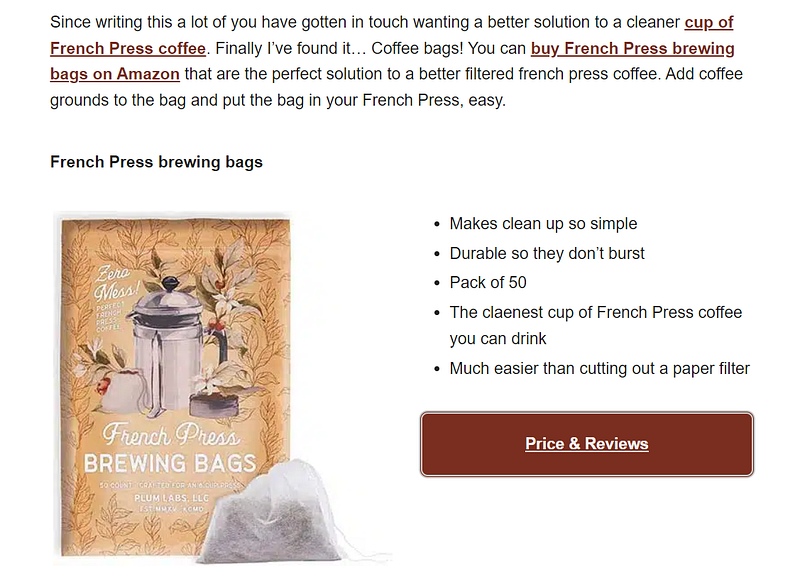
I published the new section, and sales started immediately. The reader is delighted to have this product presented to them they didn’t know existed, and they buy it.
I went through this process on my ten most popular articles on that coffee blog, and in the ten months before I sold the blog, it generated over $13,000 in sales.
How Not to Do This
Some of you with blogs and niche sites won’t get this. You’ll go, “Great! I can promote the most expensive product to earn the biggest commission!”
That’s your pain point. Not your reader’s pain point.
Say someone is drinking a gritty cup of French press coffee. They’re wondering if there’s a way to stop it happening and end up on my article.
It’s not very empathetic if I just go, “Stop drinking French press and buy an expensive drip coffee maker instead!”. Eyes will roll because it’s obviously a sales pitch. That’s not their pain.
Focus entirely on the reader. Understand the pain they have and then try your hardest to solve it.
Taking It One Step Further
I used this to promote affiliate links. But you can use this to promote physical products, an ebook, your course, coaching, or even an app.
Nat Eliason famously wrote an article about lasting longer in bed. He then developed an app based around male kegels, which he promoted in his post. That netted him 10s of thousands of dollars.
He clearly understood the reader’s pain and then created a solution that didn’t exist. There’s nothing “salesy” about it. It’s about helping people with their problems. What could be better than doing that?
Final Thoughts
I spent one-afternoon doing pain point marketing across the 20 posts with the highest traffic on that blog. It ended up netting me a solid $50 in commission every month for years and added $2500 to the final sale price.
It even upped the final multiple of the sale because the buyer was impressed at the tactic. On the call with the buyer, he mentioned it specifically.
People will pay to have their problems solved. If you can figure out their problems, you can make money.
Join my mailing list to get the best advice on the planet for growing your podcast. Sign up here.


