
How I Turned My Epic Battle With Stubborn Wasps Into Personal Triumph
What yellow jackets taught me about resilience, rigidity, and overcoming exhaustion
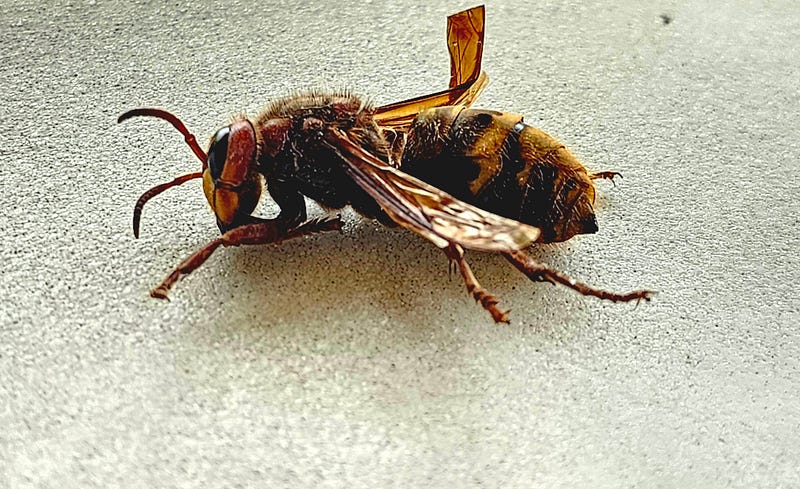
I recently experienced a monumental confrontation with some yellow jacket wasps that wouldn’t die or leave the corner of my house. The area was repeatedly saturated at night and sprayed with a spray bottle during the day. They’d fly away, return, and swarm the location where they built their nest.
The next day’s activity seemed as busy as before, flying in and out repeatedly.
They were persistent little buggers. Even with their nest partially destroyed, the survivors immediately rebuild. If the queen died in the attack, no problem. They replaced her with another one.
They don’t think about it or argue with one another, and there’s no mourning process. They move forward with what needs to be done, no questions asked. The quintessential representation of resilience. Or is it?
Resilience or Rigidity?
What if you’re so resilient you become inflexible to adapt to changing situations? Resistance to improvement leads to stagnation. One of my previous bosses had been at the university for nearly 30 years. He started as an undergrad and worked up to director. Colleges and universities go through many different leaders at all levels with average tenures of five years in many significant roles.
He once told me, “They always come in with all their ideas and new ways of doing things. But if you wait long enough, they move on, and things go back to ‘normal.’”
Since he had been with the college so long, he believed he offered more value on committees than his employees. He would be left picking up the pieces if things didn’t turn out as planned. A year after I moved to another department, everyone else working for him transferred or left the university.
But why? He became so resilient, taking everything on, thinking only he could provide solutions. He underutilized his staff because of it. Eventually, we quit giving input, and morale declined until we all departed.
The trick is recognizing balance in your resilience — knowing when to persevere and when to redirect. My old boss was only interested in pivoting if it meant returning to the status quo. He did everything to maintain that.
He was no different than my wasps, focused on rebuilding each time I damaged a bit of their home and shot down their fellow waspers. Instinctually, it’s what they know and are supposed to do. But in the end, it will be to their detriment because, ultimately, I will eradicate the entire hive.
Now, imagine if one of the wasps reasoned with their peers.
They pulled them by the wings and said, “Hey buddy, this crazy lady will not back down. Let’s pack up and move on. It’s not worth sacrificing our lives and the extreme mental duress we’re experiencing. We deserve better!”
Knowing when to pivot and change directions makes adaptable individuals who thrive. It’s not about giving up but finding creative paths to success when encountering roadblocks. Being overly resilient equates to rigidity and single-minded commitment, even in the face of impossible odds.
In the case of my wasps, their decision to stay put instead of leaving escalated the situation to full-blown waspageddon. For my old boss, he experienced massive turnover.
“Insanity is doing the same thing over and over again and expecting different results.” — Albert Einstein
Resilience or Exhaustion?
I quit my 14-year job a year ago. Unlike my wasps, I hated taking orders or doing what I was supposed to do. I innovate to be more efficient and effective. I love problem-solving and learning the latest technology. But, my colleagues and the organization preferred how things had always been done, even when it no longer made sense.
I fought for change to make things better for my students. Many times, I won the battle. But in the end, I didn’t win the war. My work was questioned. Accused of being an obstructionist, I received a negative performance review once. I documented my numbers. But data doesn’t matter in toxic organizations.
I continued serving my students and coming up with innovative ideas. After 14 years of battling for every notion, suppressing my feelings, covering my ass, and watching my back and front, I could barely get out of bed to drag myself into the office. Extreme resilience leads to overexertion and burnout.
I was no longer innovating and problem-solving but in survival mode. I became like those wasps, returning to the nest without question. The problem: I’m inherently a critical thinker who loves to learn and grow. Being forced to act against my nature by going along to get along made me miserable, and it was time to leave.

Where did I go wrong?
I STOPPED showing up for myself. That means different things to different people. For me, it meant suppressing my emotions and needs. I never wanted to be a cog in any wheel. I wanted a work environment where I could provide feedback to contribute to bigger and better outputs.
I fought the norm to develop better systems and make things more effective for my students, but I took some bullets for my effort. I didn’t realize how numb I had become until I left my job and started working on and for myself.
Initially, I stayed to finish my Ph.D., and then Covid happened. I was in my 40s and thought I could make it several more years.
Spoiler alert: That didn’t work.
I tried various techniques that consisted of doing the bare minimum, ignoring emails, taking mental health days, working on personal projects during work time, being grateful I had a job, retail therapy (that provided some incredible short-term relief), and reminding myself it’s just a job to pay the bills. None of that worked, either.
Why? By resisting my innate needs and instincts, I became perpetually frustrated.
It would be like expecting those yellow jacket wasps to reason with one another to find another place to set up shop to survive. It went against every fiber of my being to be a half-assed worker, and in the end, I couldn’t and didn’t.
“The most common way people give up their power is by thinking they don’t have any.” — Alice Walker
What did I need?
After some self-reflection and getting back in touch with myself, I concluded the following were my non-negotiables to avoid overexertion and burnout, whether at work or other parts of my life:
• Personal growth and continual learning
I’m happiest when using psychology and working on myself to discover those aha moments. One way I accomplish this is by watching different types of YouTube videos on personal development that include my three favs:
- Thais Gibson (excellent information about attachment styles)
- Brendon Burchard (all-around good motivational advice)
- Dr. Ben Hardy (how to 10X your future self).
• Connection to my emotions and others
Journaling lets me stay aware of my moods and thoughts. I use social media, texting, and phone conversations to stay in touch with the world, friends, and family.
Writing as part of my life to express myself: Publishing my material on Medium and LinkedIn gives me joy. Nothing is better than the writer’s high I get when I finish and publish a piece. I get so giddy that falling asleep takes me a long time.
• Control and freedom
I’ve always needed this, but I didn’t realize how necessary it was for my physical and mental health. I need to be my own boss to manage my time and work. I’ve had my share of horrendously incompetent managers to last me ten lifetimes.
“When you don’t show up for yourself, you feel drained, resentful, and empty. You can’t give what you don’t have.” — Oprah Winfrey
For those of you who prefer a general list (If not skip to the conclusion and for a wasp update):
1. Cultivate Self-Awareness:
Reflect on your strengths, areas where you could make changes, and how you’ve grown in resilience and critical thinking. Be aware of behavior patterns or thoughts that may lead to rigidity, burnout, or lack of adaptability.
2. Set Clear Goals and Priorities:
Align your personal and professional goals with your values and needs. To avoid burning out, prioritize tasks. Track your progress and celebrate accomplishments, big or small.
3. Embrace Lifelong Learning:
Always look for opportunities to grow by stepping out of your comfort zone. Incorporate interesting hobbies or new activities into your life, take online courses, and participate in meaningful discussions to challenge your perspectives.
4. Practice Adaptive Resilience:
Develop a growth mindset where setbacks become learning opportunities. Don’t be afraid to change directions when something isn’t working. You fail when you stop trying.
5. Cultivate Psychological Well-being:
Keep emotional balance by managing stress. This could include exercising, journaling, talking with friends, meditation, yoga, or working with a therapist.
Conclusion
The showdown with my relentless yellow jacket wasps illustrated the delicate balance between resilience and rigidity. I admired their grit and unwavering determination to adapt despite monumental challenges. It reflected their survival instincts.
Yet, relentless persistence can hinder growth and evolution — or, in human terms, times when you get in your own way. You doggedly stick to your limiting beliefs and stay in a job, relationship, or other situation long past the expiration date.
Remember, you’re not here to serve some queen like my doomed wasps.
You’re here to show up for yourself, and the only person who can stop you from doing that each and every day is you.
Update
Regrettably, wasps were harmed during the composition of this piece, and at the time of publication, they aren’t going down without a fight. Some have infiltrated my house, but it’s only a matter of time before the hive is neutralized.
***Sign up for The Copy Files to receive monthly recommendations of thought-provoking Medium articles, shout-outs to authors, copywriting -writing tips, AI info, motivational quotes + more.
Join me in fostering a community that appreciates multipotentialism & paying it forward 🙌


