MY TRAVEL DIARY
How I Took a Coracle Ride to See India’s Niagara Falls
Then I discovered it was a lot more than that.
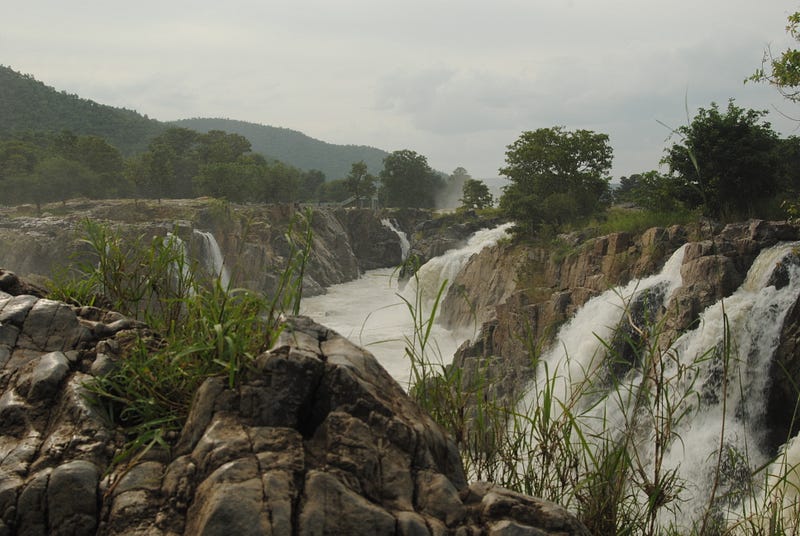
The Hoggenekkal Falls do not feature in popular lists of sights you must see in India. Yet most locals know them. In my hometown Bangalore, they are sometimes called India’s Niagara Falls. I wonder why.
Formed by the Kaveri River, which stretches across much of South India, the Hoggenekkal Falls break into a series of waterfalls at the rocky ravines that mark the flow of this mighty river between the two Southern states of Tamil Nadu and Karnataka. The water cascades with great force to the earth and is said to create the illusion of smoke emerging from the rock. That is how the falls get their name, which translates to smoky rocks in Kannada.
Hoggenakkal is an ancient site. The first reference to these falls in old South Indian literature goes back over 2000 years. The carbonite rocks here are the oldest in South Asia and are among the world’s earliest formations. This creates shared histories and contested legacies, as the Hoggenakkal Falls also draws a boundary line between two states in India today. Many old traditions are still preserved here. At Hoggenakkal, time stands still.
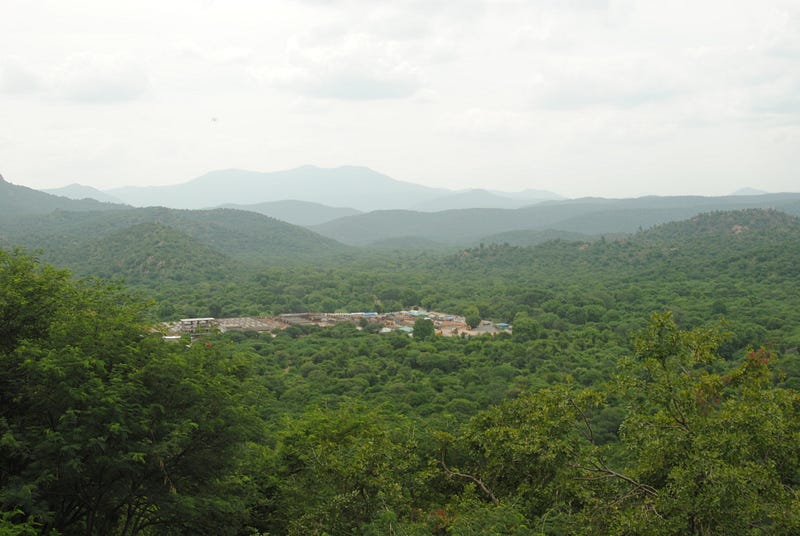
The beginning of a great adventure
We set out to explore the Hoggenakkal Falls one Saturday in November. The great Indian monsoons were behind us and all experts advised that this was the best time to see Hoggenakkal in all its glory. But Hoggenakkal had first set itself in my heart many years ago. I had just turned 21 then and was only beginning to discover my identity as a traveler. That was when travelers, whom I admired, returned with stories of their experiences at these falls. “You have to see Hoggenakkal,” they told me.
It had taken me a decade to get there. Mainly because the logistics of getting to Hoggenakkal were difficult. But when I finally did go, it was because my friend Doel who was new to the city wanted to see Hoggenakkal as well. It gave me just the final push I needed to put a full stop to endless procrastination.
Bangalore and Hoggenakkal still had to be connected by a public transport system. And as I was not a confident driver yet, four hours on the national highway seemed daunting. But we finally managed to track down a reliable private taxi service, negotiate a good rate, and set off at dawn.
The city traffic was soon behind and we were unfettered on an open country road. Hoggenakkal was finally around the corner. I still remember the anticipation in my heart.
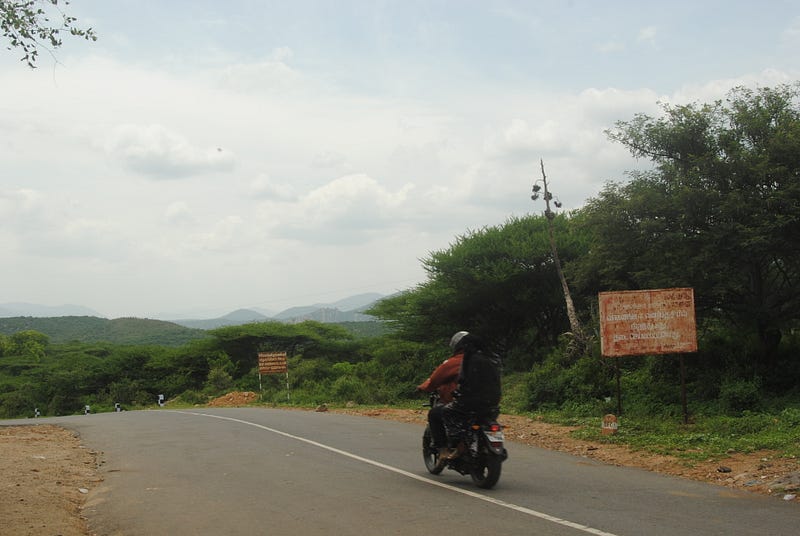
Going on a long coracle ride
You discover the real India only when you step out of its cities. I could see it unfolding all around us on the road to Hoggenakkal. Before we knew it, we could see the outlines of the town in the distance, emerging through the mountains. As we neared it, I felt I had stepped back in time.
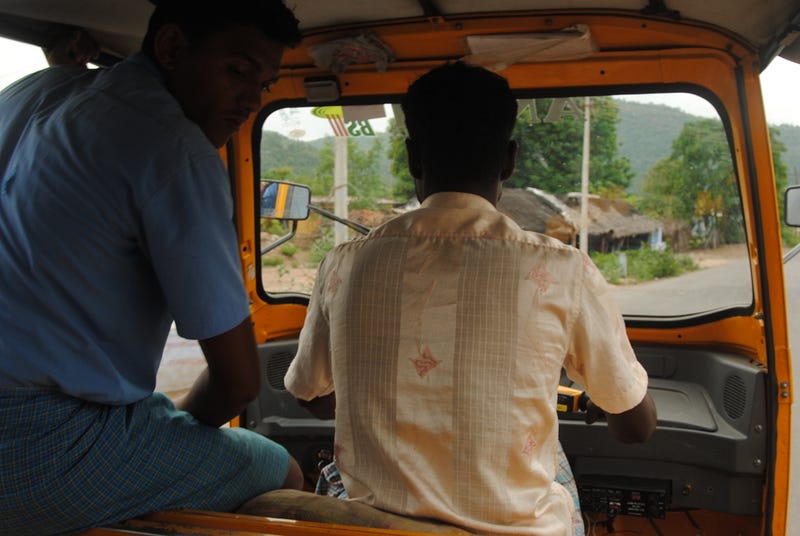
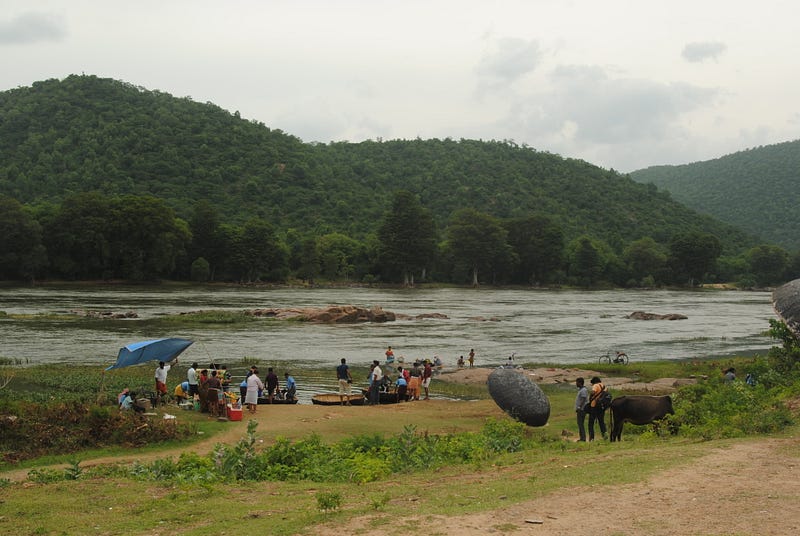
From here, we had been told we would need to get to the banks of the River Kaveri and make the trip to the falls by boat. But the taxi could not take us to the river bank. This part of the journey had to be made in an autorickshaw, as a tuk-tuk is called in India.
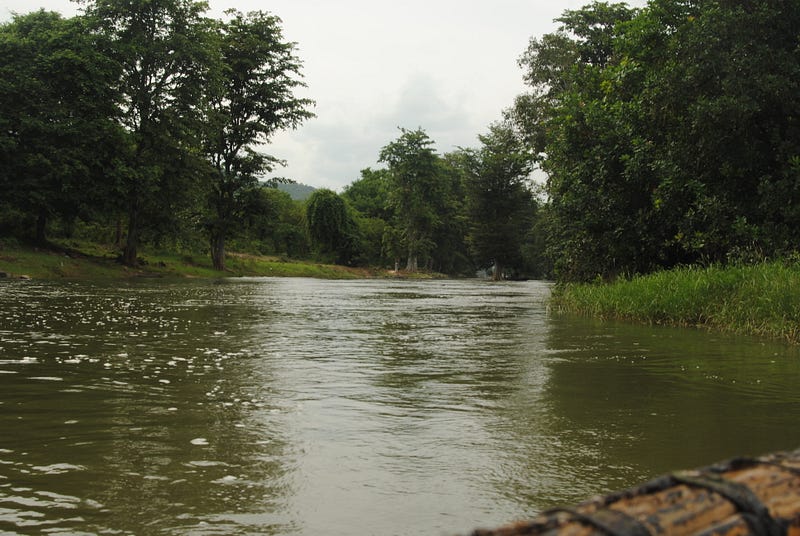
At the river bank, we boarded a coracle. These traditional boats are the only mode of transport allowed on the Kaveri River to the Hoggenakkal Falls. My travels in India have taught me that these boats made of bamboo and animal hide, usually built in just a day, look misleadingly fragile. A standard coracle can carry up to eight adults. I have watched coracles carry motorbikes up the river quite easily.
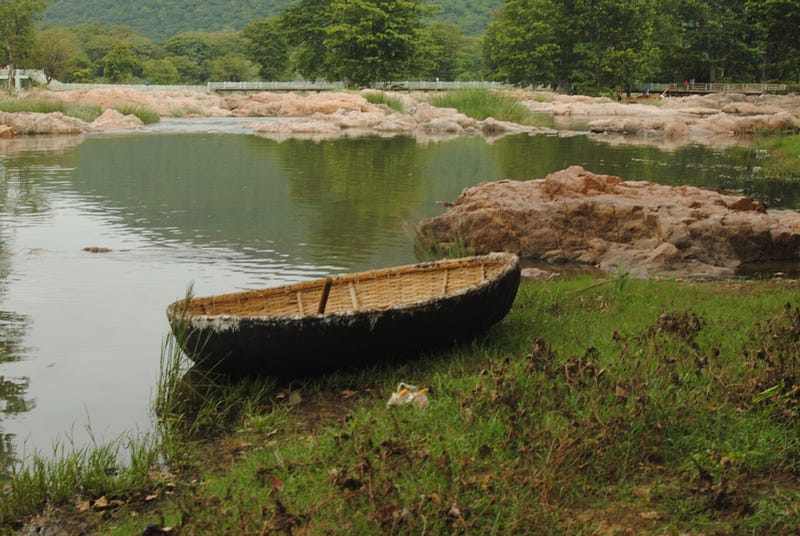
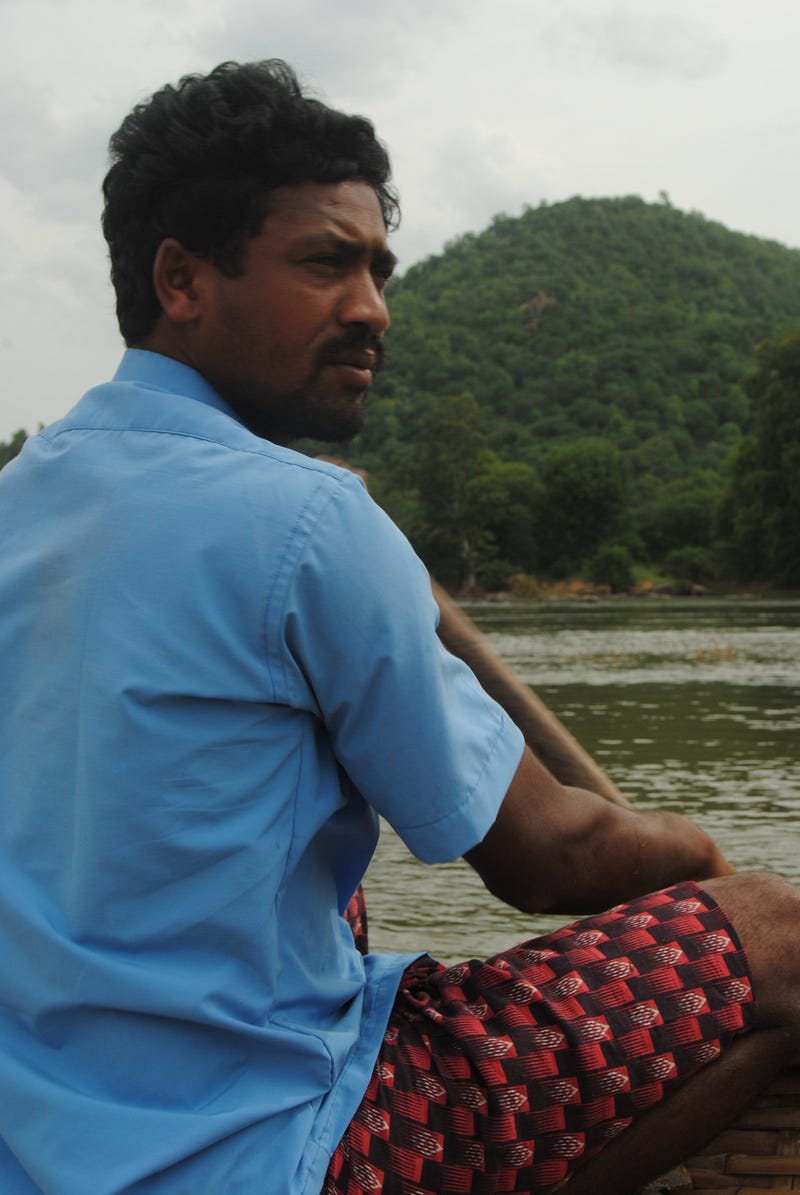
One of the legendary parts of a coracle ride is when boatmen give their boats a spin, making them move in circles. Ours gave us a demonstration. We could see other boatman indulging their passengers too.
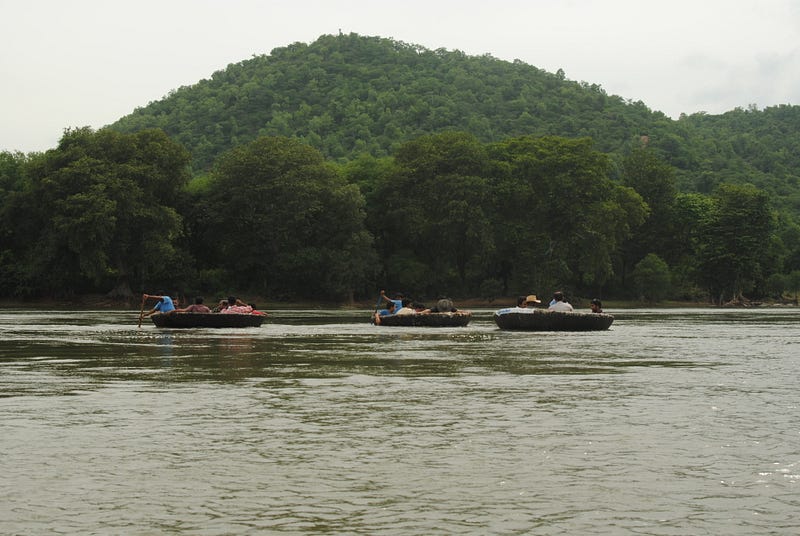
Then we let ourselves take in the vastness of the Kaveri as the boat made its meandering path up the river. As the other boats faded into the distance, we felt one with the hills, the wide expanse of trees, and the waves.
Walking on smoky rocks
But the stillness was deceptive. A deeper rumbling was gaining momentum and drowning out the stillness. It sounded like low, intense thunder. As we looked into the distance we could see the river gaining momentum as it plunged down the ravines. The stillness was transformed into a thundering explosion. As the waves seemed to froth in the power of their descent, I could see why this was called the smoky rocks.
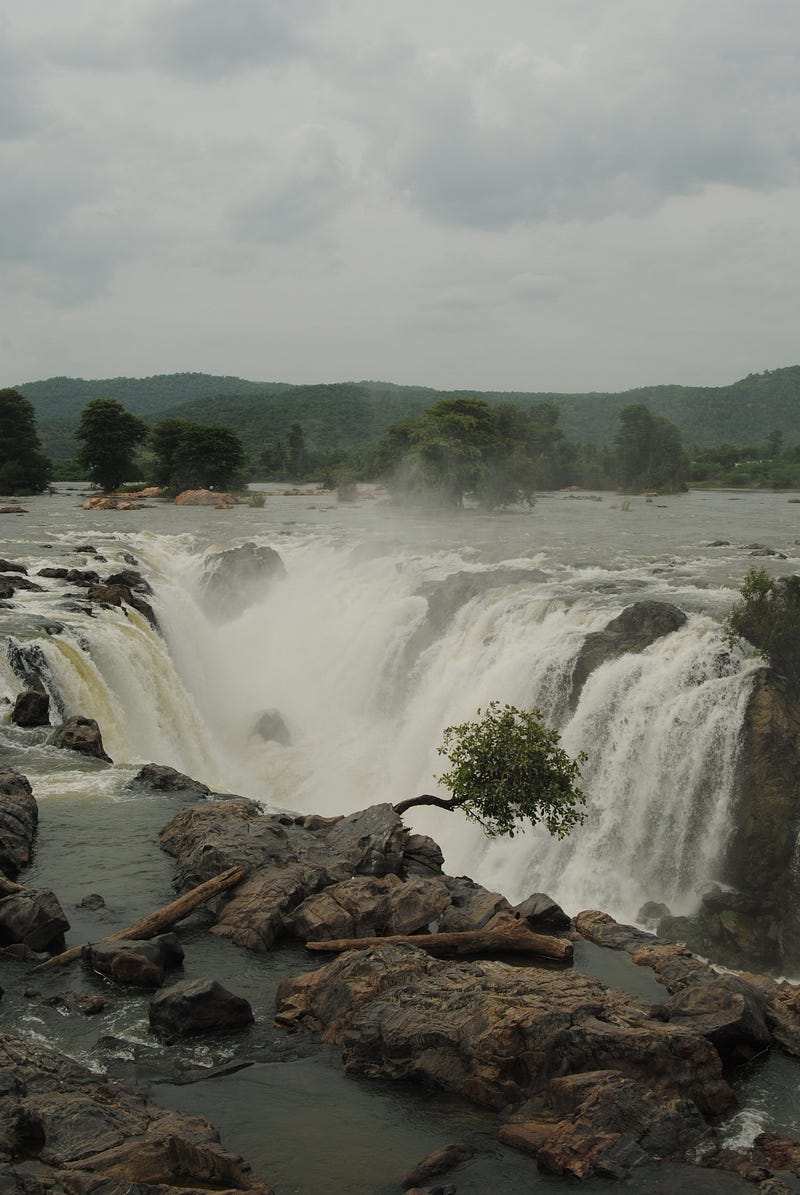
This was the first point of Hoggenakkal Falls. The coracle came to a halt by the side. Now, we had to clamber over the rocks to the second point. As we made our way over the stony and sometimes slippery path with care, it lived up to its name of being the smoky rocks, sometimes drenching us in its spray.
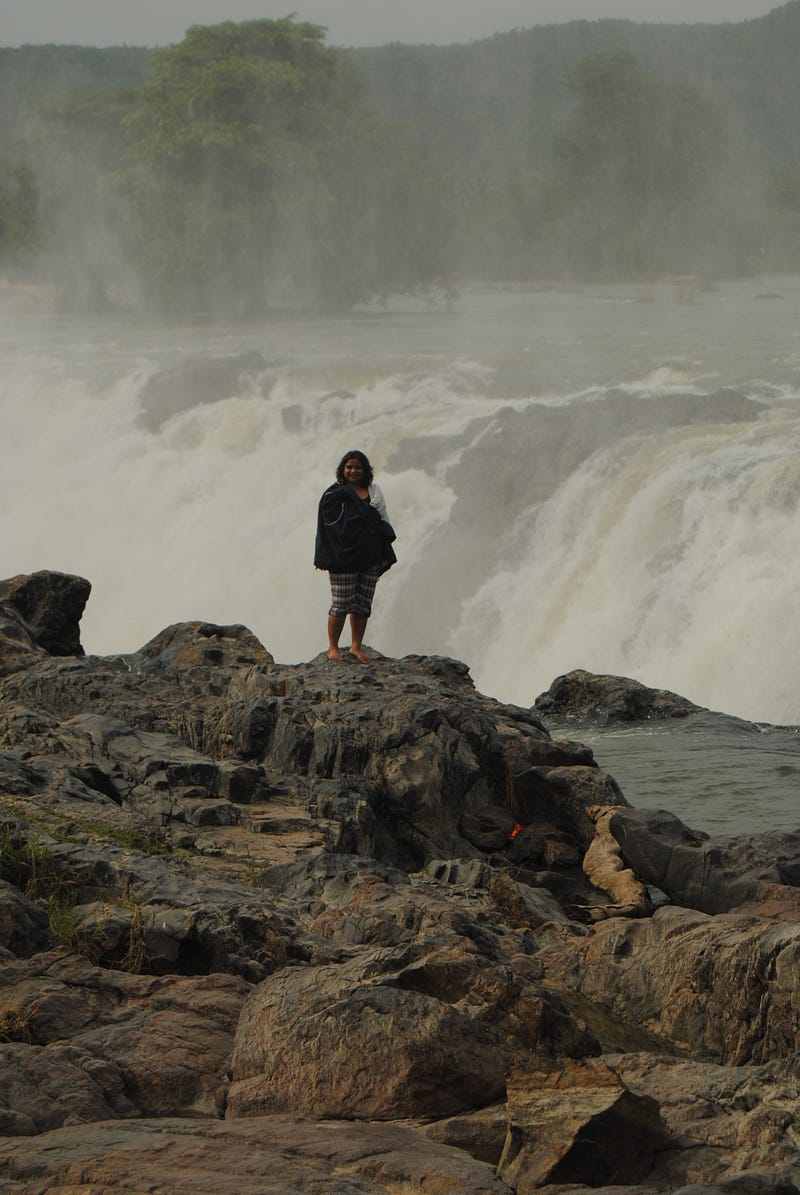
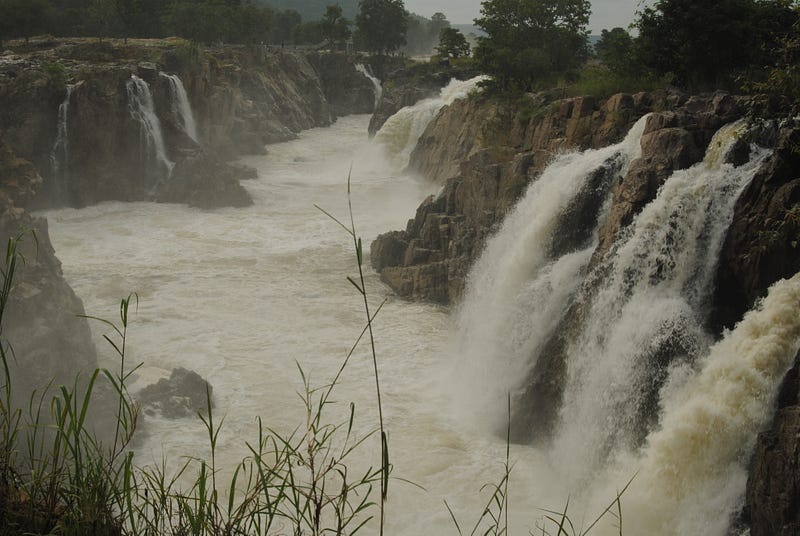
But when we crossed this stretch, we saw a series of falls one after another that stretched into the horizon, each outdoing the other, both in scale and intensity. I saw then that this made the Hoggenekkal Falls special, Not height, though all of these were thundering down towards the rocks in unison from between 15 feet and 65 feet. But the Hoggenakkal Falls was a tiered waterfall, which broke into numerous waterfalls as the Kaveri ran over rocky terrain. If we had witnessed the Kaveri in all her serenity, we were now experiencing her in all her power. It was a spectacle we carried in our hearts long after the day had passed.
Onward home and beyond
Later in the evening, we returned to the coracles and made our way over the Kaveri to the village. We were exhausted, but satisfied.
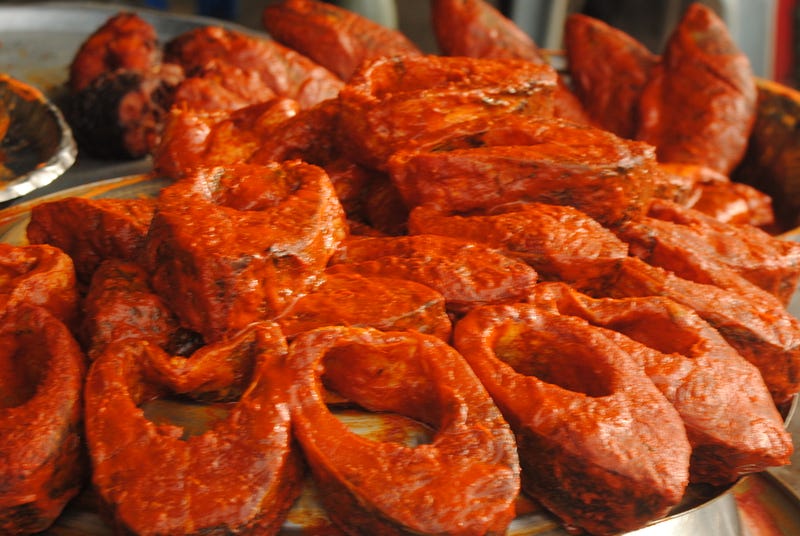
We also stopped by one of the shops here for another old village tradition. When visiting the Hoggekkal Falls, it is customary to eat fried fish, freshly caught from the river and prepared in the local style. This too would become part of our memories of visiting Hoggenakkal. Our visit had been all that we had expected and more. My heart felt full.
Now, it was my turn to share anecdotes of our journey with other travelers to India. “You have to see Hoggenakkal,” I would tell them.
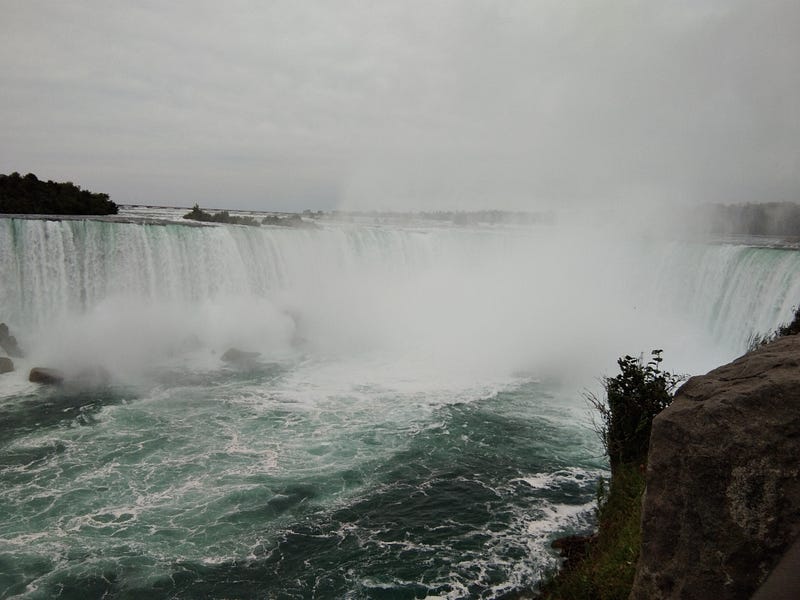
Some years later, during my first solo trip to Canada, I would finally see Niagara Falls, which Hoggenakkal Falls is said to replicate. But I could see no similarity between the two. See below, and judge for yourself.
Also, read these fabulous accounts by Purbita Chakraborty and The Travelling Programmer. The first is written from the American side and the second from the Canadian side of Niagara Falls.
Both the waterfalls are spectacular, but they are also spectacularly different.
This post was written in response to the March Monthly Challenge from Anne Bonfert.


