
How I Survived a 51-Hour Train Ride in Russia
If I did it, you could too.
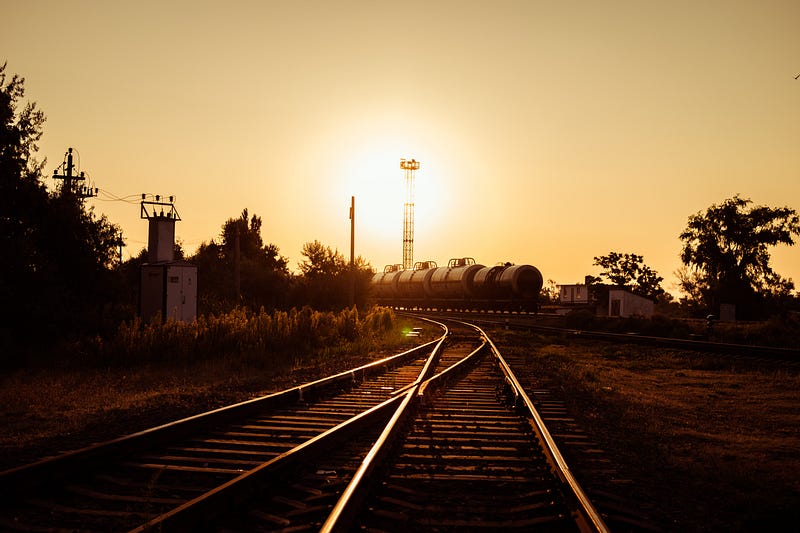
64 minus 13 is 51.
It’s a fifty-one-hour train ride from Khabarovsk, a city in the Far East of Siberia, to Ulan Ude, a Buddhist city that is also one of the two gateways to Lake Baikal.
Before I was on that train, I was on another: from Vladivostok, the eastern end of the Trans-Siberian Railway, to Khabarovsk, a city right on the border with China. This journey was short. Only thirteen hours.
It was a night train. In my train car were a bunch of guys walking around without shirts. But with military pants. And military bodies. An American friend of mine is a fan of well sculpted Russian boys. She was studying for her PhD in Russian studies in Moscow. She wanted me to take pictures. I wanted to survive, so I didn’t.
The next morning, two of the aforementioned Russian military boys were standing in front of the toilet door. They thought it was so cool that I was traveling the Trans-Siberian Railway. I thought it would be pretty cool if they got out of my way.
In Khabarovsk, on the waterfront, I waved to China, a country where I had studied and worked, across the river as Backstreet Boys blared overhead (As Long As You Love Me).
That’s all for Khabarovsk. Fifty-one-hours is preferable to sixty-four.
The Actual 51 Hours
On the day of my train to Ulan Ude, after snapping a group photo with a few members of the hostel team (I was pleasantly surprised at the request), I had lunch at Khabarovsk Railway Station: soup, rice, meat, and vegetables.
It was the last real meal I would have in nearly three days. In the sweltering summer, finding my berth left me sweating. Finding out this was the emergency row and the windows wouldn’t open left me swearing (inwardly). The Russians seemed cool with the circumstances (don’t they always?).
The guy who had the upper berth split the time between sitting on the end of the lower berth (mine) and lying down on his own. The mother and son across from me quickly opened their lunch after the train started moving. I don’t remember what they were eating. I was too busy trying not to taste my own sweat.
Not wanting to be that American with decadent values (plenty of families were onboard), I kept my T-shirt on the entire time and wiped the trickling perspiration off my face with another T-shirt about once every twenty minutes. Or fifteen.
Many passengers had brought knives onboard with them, which in the U.S. might have sounded terrorist alarms. They were just using them to cut sausages and cheese, which were much better meals than what I ate.
I subsisted mostly on rice crackers that were big and round, granola bars that were nothing like the Stateside variety, and aloe vera juice imported from Korea. I would not succumb to the temptation of instant noodles until later in the trip.
With fifty-one hours, assuming I kept a steady pace of two-hundred-and-fifty words a minute, I could’ve read such Russian classics as War and Peace and The Brothers Karamazov. (I didn’t.)
Other than the pressing matters of feeding myself, relieving myself (only one toilet for the entire car), and rejuvenating myself (sleeping), there was also the pressing matter of looking wistfully out the window at the passing scenery as the train trucked along.
The Russian landscape is dynamic. Gazing out the window, I saw pine trees before me, pine trees in the distance, pine trees flanking villages, pine trees on top of hills, pine trees on either side of tunnels, pine trees waving like fingers tickling the setting sun.
The first time the train stopped to let passengers take a break (for smoking, for shopping, for strolling), we rushed out into the cool air like inmates into the yard.
I didn’t smoke or care for shopping, so I took a stroll. I was definitely not in Moscow anymore. The sunset was gorgeous.
Lights out was about ten at night. I cleaned myself up with wet wipes and changed into pajamas, preserving my modesty in the process with the blanket draped over my legs. If you’ve never been on an overnight train ride before, you’d be surprised at how much it improves your mood just to change into different clothes before going to sleep.
The next morning, though I felt a strange sort of peace, I wanted the ride to be over as soon as possible. The morning after, I woke up and thought, “I could probably do a few more days of this.” If a moving train could keep passengers hostage, was this Stockholm Syndrome?
There are, as far as I can tell, two reasons the ride is so long. One: the distance. Two: the number of stops. (I guess another obvious one is the speed of the train.)
It was bittersweet waving goodbye to fellow passengers who were getting off before Ulan Ude. When we finally arrived at Ulan Ude, by which time the mother and son had long disembarked, we were like comrades-in-arms who had gone through a major battle together.
So, here is the actionable takeaway: Forming a community helps you survive a 51-hour train ride in Russia. In fact, especially while traveling, it helps you survive most things.
Dash Ip actually considers his train journeys in India to have been more exciting. Both countries have appeared in his novels.