
How I Supplement My Medium Income with Robinhood
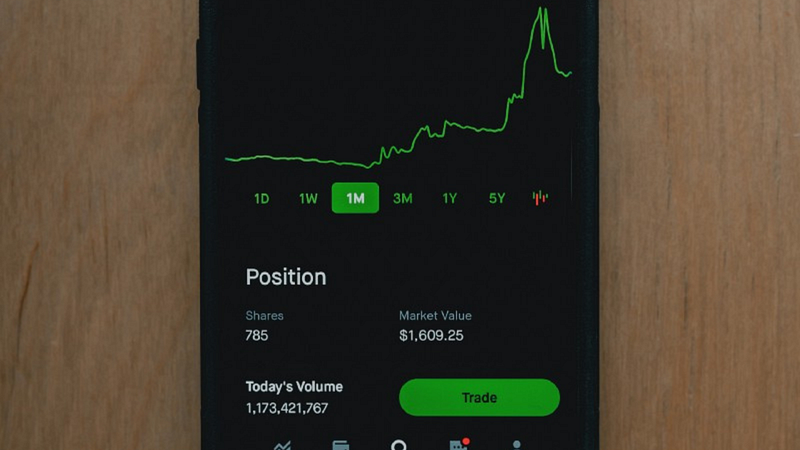
I don’t write a whole lot, but it looks like I may pull in about $10 for the first two months of 2021, writing on Medium. I would of course like to earn more, but I’ll take what I can get. Around the same time I started writing on Medium, I began trading stocks using the mobile app Robinhood.
I was excited to be able to trade stocks without having to pay fees. Previously, I had used Fidelity to complete my trading, but at the time they charged me something like $8 to buy and $8 to sell. The Fidelity platform was really designed for the long term investor, and so I adopted strategies where I bought stocks in larger quantities and held them for much longer before selling. It was slow going, and my enthusiasm waned.
The Robinhood mobile app changed everything around for me. It allowed me to adopt a different strategy that was more in line with how I wanted to trade stocks. Later, I learned the method I was using was called swing trading, and for the next several months, I experimented with this new strategy.
Swing trading is short term investing. It takes advantage of the swings in price of a given stock on any particular day. The basic premise is to buy when the price goes down, and wait to sell when it goes up higher than what you paid for it. The difference between this and day trading is the length of time that passes between the buying and the selling. With day trades happening generally within the same day, swing trading occurs over days, weeks, and even months, but not necessarily years.
Because of the various rules and requirements (account size) for day trading, swing trading is a more affordable option for new traders. With swing trading you can buy a stock just before closing on day 1, and sell it just after opening on day 2. The fact that the transactions take place across two different days removes it from being considered day trading, and you won’t worry about having your account restricted for rules violations.
Robinhood might not work for you, but here are some of the things I did to get it to work for me.
- I downloaded the Robinhood mobile app to my phone and created an account, linking my bank account so that I could transfer $20 to start.
- I added my name to a waiting list so that I could buy partial or fractional shares of stock. I don’t know if there is still a waiting period for new accounts, but either way, I waited, and now I am able to buy partial shares of almost any stock on Robinhood.
- I used Fidelity’s stock screener tool to create a list of stocks that fit criteria with which I desired in a stock. Things like price, volume, and analyst opinion.
- I used the results and entered those stocks in a list on Robinhood’s app. This became my potential buy list. I currently have about 85 stocks on this list, but it has been as high as 95.
- About an hour before the closing bell on the stock market, I rank my buy list by greatest to least losses for the day.
- I start buying around somewhere between numbers 6 to 10 on the list and try to buy in even dollar amounts, until I have used up all of my buying power. Being able to buy partial shares comes in handy. I can also add money to my account to increase my buying power if I want.
- That’s it for day one.
- On day two, usually about 30 minutes after the opening bell, I look at all of my purchased stocks with the Total gain/loss option on the Robinhood App.
- I begin to sell everything that shows a gain, highlighted in green by the app.
- If the stock shows a loss, I leave it for later, the next day, week, month, etc.
- An hour before the closing bell, I check one more time for the opportunity to sell stocks that show a total gain.
- After that, I once again rank my buy list by greatest to least losses for the day. and repeat from Number 6 on down.
Depending on how much you invest in each stock will determine how big a gain you are looking for. These days I usually buy in $50 dollar increments, so I will sell anything with a gain of 25 cents or higher. At this rate I am simply collecting quarters, but if you do it every day, they will begin to add up.
Earning capital gains this way is by no means consistent. Sometimes it 25 cents, sometimes it’s a little less, sometimes it’s a lot more, sometimes its nothing. But I add any small daily gains to my buying power. And when those small daily gains begin to generate daily gains of there own, that’s when it gets interesting!
Last year I made about $350 in capital gains, largely through experimentation with the Robinhood app. This year so far, my gains are up around $560. That is a nice little bump for my 15 to 20 minutes per trading day.

What about taxes?
I use TurboTax. It has the ability to link to my Robinhood account and pull any information it needs to help square away my taxes. This is really helpful, because swing trading will generate a ton of tax documents. Because I have worked hard to streamline my Robinhood trading method to require minimal time, I certainly didn’t want to be bothering with all these documents during tax time.
I am not affiliated with Robinhood, Fidelity, or TurboTax, but I do use their technology to my advantage. These advantages are available to you just the same.
I’ve tried to make my process easy to understand, but do not mistake it for being easy. Research the stocks you will add to your buy list. Get expert opinions and compare those opinions to each other. Take the time to review your list often for necessary changes.
If a stock experiences a dramatic drop in price, it doesn’t necessarily mean it’s just gone on sale. Find the latest news for that stock. It could be trouble that will keep its price low for a long time. And those types of deals are not for the short term investor.
Buy conservatively over a wide range of sectors, but try to buy often. Do not try to buy down your cost per share by sinking more money into a stock that is stubborn to rise. Rather, set a limit on how much you will invest in a single stock, and hold fast to that limit. Most importantly, do not trek carelessly into the hyped-up stock of the moment, unless it is backed up by several industry experts you have come to trust. Taking action on the hype of a stock is a sure way to lose your money quickly.
Thank you for reading and good luck.

Thank you for reading. You can subscribe to my future content here. I share my articles on Leadership and Management and their application to your world on my publication, The Endeavor Perspective. You can also check out my fantasy and fiction publication, A Bit of Madness, as well as its non-fiction counterpart, A Bit of Genius.


