
How I Strengthened and Developed Noticeable Abs
A core training guide for women
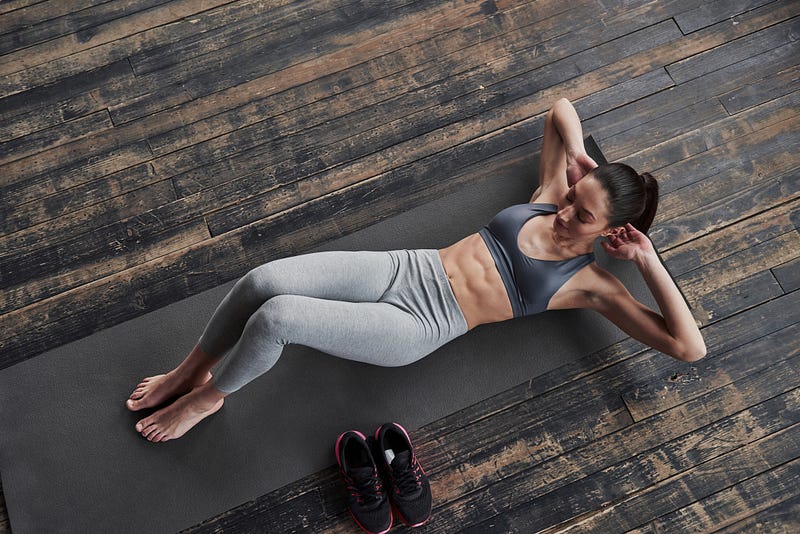
For as long as I can remember, I wanted to develop abs that were noticeable. Popularized in society as the symbol of “fitness,” having the defined abs look is, for most, an elusive goal. As superficial as it may sound, I yearned over this look for a very long time. In fact, I regularly write “get noticeable abs” on my yearly goals list, as if it’s something I can just go out to the store and purchase. As each year wraps, I’m slapped in the face by the palm of disappointment — despite my best efforts, I constantly failed to get the stomach I’ve always wanted.
Over the past year and a half, I did a complete overhaul when it came to my nutrition and training regimen. I built around five pounds of muscle over the course of the year while trimming down the fat, which I’ve attributed to consistent training, calculating macros, and counting calories using Myfitnesspal.
I saw transformative results with my upper body: more definition, more vascularity, and improved strength and muscle endurance.
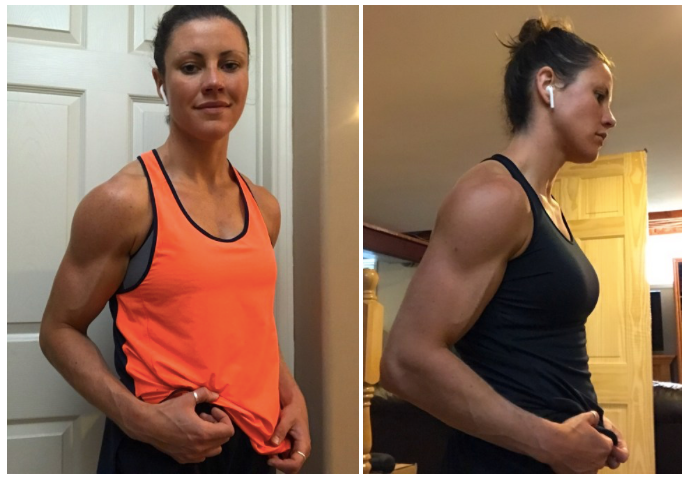
Here’s the thing — I trained my core the exact same way as my upper body, yet my results weren’t nearly the same. When I press into my tummy with my fingertips, I can feel the muscles underneath… but these muscles are buried under a small layer of fat. Although I have been able to tone my stomach and fine-tune my oblique muscles, I’ve found it nearly impossible to get rid of that annoying belly fat. It’s like the worst game of hide-and-seek ever… my abs are always throwing a big “F-you” to me.
You may scoff and decide to not read the rest of the post (I get it, it may seem superficial), but I need to explain some fundamental truths when it comes to achieving a six-pack as a woman. From my own personal experience, there is nothing more discouraging than feeling like you’re doing everything right only for your efforts to be moot.
In this post, I want to address some truths about the “six-pack” look on women, outline my current training plan, and discuss the results that I achieved. I also reached out to Pro Physique Coach and YouTuber Paul Revelia who has provided valuable insights from a certified professional’s standpoint.
My training ethos is that there isn’t a “one size fits all” strategy to achieve the results you want. I am a non-disabled cis woman, and what works for me may not work for others. Experimentation and consistent effort over long periods of time are two of the main ingredients for how I achieved results. That being said, I encourage you to be open to trial and error, and if a part of this post resonates with you, feel free to use it in your own routine.
Before I get into my training regimen, I want to set the stage with a few housekeeping items. First…
Sex Differences
There are so many articles and videos on achieving a six-pack that are tailored around cis men. I’ve had a really hard time discovering valuable training and nutrition advice specifically targeted towards cis women like myself.
Men usually have more testosterone, can build muscle more quickly, have less body fat, and undertake a different path — both in terms of ease and strategy — to achieve a sculpted look. Women tend to carry more body fat. Of course, there are exceptions and caveats to consider with these statements.
Through a strategy lens, there are also differences in the way men and women optimally train. I’m not going to go into too much detail here, but the article 9 Reasons Why Women Should Not Train Like Men provides some really good insight. Menno writes:
Most women are intuitively aware of their strengths in the gym, but they are often told to train like men. As a result, they don’t fulfill their athletic potential. Women are naturally much more inclined to do steady-state cardio, lift with a more controlled tempo, perform higher reps, take shorter rest periods and do more total work.
The main point here is that it’s important to acknowledge that the road to your health and fitness goals won’t always parallel the path that most men undertake.
Body Differences
I was definitely discouraged and confused as to why I couldn’t get what some would refer to as “washboard abs.” After sifting through all of my health and fitness resources, and spending hours skimming YouTube videos, I realized that it wasn’t just my fitness routine that was posing difficulties — it was also my body type.
We all store fat in different places on our bodies. Some women carry weight in their lower body, some in their arms, and for me — I carry fat in my chest and stomach area.
That being said, when I intensified my workout routine, I noticed that my arms and legs were the first to tone. Despite working on my entire body, I was seeing minimal progress with the extra weight on my stomach. My legs and arms got leaner, my boobs shrunk a bit (wah), but my body fat took out a second mortgage on my stomach… we were in it for the long haul.
Unfortunately for us, and despite how much targeted training we do, losing weight isn’t à la carte. We can’t choose exactly where on our body we want to lose fat.
The fact is, if we want to get the “shredded look,” we need to get our body fat down. From Paul Revelia’s experience, he notes that:
For women to get on the leaner side, it requires getting around 15–17% body fat, whereas for men, they need to get down to around 10% to see their abs, for the most part. If women get under the 10% mark, that look is extremely shredded.
We need a formula of nutrition + training + losing enough body fat for the muscles to show. BUT, what I’m trying to say here is that some women achieve noticeable abs before others based on their genetic make-up. Everyone’s fitness journey is different, so don’t get discouraged if you feel like others around you may be making quicker progress.
My Core Training and Nutrition Program
Now that I’ve laid some of the groundwork, we can get into some training methods that I have used to build muscle around my core area and the strategies around diet and nutrition strategies that helped me trim down the fat around my core.
In the article How I Naturally Transformed My Body Composition in 1 Year, I outlined a detailed strategy of how I altered my physique by breaking down my training splits and nutrition plan. If you haven’t read it, I’d recommend starting there as a foundation and weaving your way back to this article. Don’t worry — I’ll put a bookmark in place for you.
In order for me to provide advice moving forward, I want to first acknowledge some of the misconceptions around weight loss that I previously believed and acted on. Naïve and foolish, I used to try and work my abs every day doing very high reps and never feeling a goddamn thing. On the inverse of this, I’ve also tried doing ab work haphazardly/whenever I felt like it… which was practically never. Spoiler alert: None of these strategies worked (go figure).
After learning about other fitness regimens, I was inspired to try out new core exercises and scheduling — which proved to be sustainable, efficient, and enjoyable (well, kind of enjoyable… it’s still ab work). I now consistently train my abs twice a week (Tuesdays and Thursdays) and will choose 5–6 different exercises per session. Each session will last around 30 minutes or so. That’s it. That’s all. That’s all she wrote on my abs.
But don’t just take it from me. In Paul’s video Six Pack Abs for Women, he mentions that the core is a stabilizing muscle and will automatically be worked while you’re training other body parts. He recommends training abs about two to three days a week, max.
To achieve week-over-week growth, I applied the principle of progressive overload, making each session more difficult by adding more weight, taking less rest, and/or doing more reps. For example, I will add increased weights (sometimes a kettlebell) when I’m performing Russian twists and side bends. Purchasing 1.5-pound ankle weights was also a great investment and has amplified the intensity of my workouts.
The combination of core exercises I include each session target a medley of different areas — obliques, upper abs, lower abs, and middle abs. Every few weeks, I’ll try to keep things fresh by mixing up the order of my training or introducing a new exercise into the line-up.
For each exercise, I’ll aim for 8–15 reps. Although this is a median range, I sometimes will go as high as 20+ reps during the first circuit, and then drop down to 8–12 reps during the latter half of the set.
I repeat each exercise three times. I have stuck to this training split for over a year now, but it wasn’t until the six-month mark when I started to really notice a change and began seeing definition in my obliques and abdominal muscles.
My Core Training Split
I’m the kinda gal that likes details and depth, so I’ve provided a snapshot of what my core training plan looks like. Here’s what I have planned for this week:
Tuesday
YouTube video Intense 5 Minute At Home Abs & Obliques Workout (warm-up)
Exercises include:
Lying Leg Raises Suitcases Russian Twists (w/ 20-pound weights) Bicycle Crunches Starfish Crunch (holding 2.5-pound weights)
Thursday
YouTube video Intense 5-Minute Middle Abs (warm-up)
Followed by the following exercises:
Side Bends (w/ 50-pound weights) Flutter Kicks C-Sit Hold Toe Touches Reverse Crunches
Cardio
Although some lucky individuals can get away with just incorporating strength training and healthy eating to lose stomach weight, the majority of us need to incorporate some sort of cardio.
Based on my experience, cardio expedites the process while also allowing me to eat more during the day. Say, for example, I burn 500 calories on my daily run. That means I can eat another 500 calories over my deficit calories (which I will outline in the following section) on that particular day. Momma loves to eat, so momma does the cardio.
In a previous article of mine (mentioned above), I outlined in detail the cardio routine I regularly perform. I’ve included it below for ease of reference:
Monday — Steady-state run 8km/5 mile run (outdoor or treadmill) Tuesday — High-intensity interval training treadmill 8km/5 mile run Wednesday — Steady-state run (lower mileage day usually 5–7km) Thursday — High-intensity interval training treadmill 10km/6.25 mile run Friday — Steady-state run 8k run (outdoor or treadmill) run Saturday — High-intensity interval training treadmill 8km/5 mile run Sunday — Slow long run (+10k/6.25 miles)
Running is my number one priority (and love). Sometimes when I’ve finished my ab circuit, I notice that my legs can get a bit sore, which can hinder my pace. If you find yourself in the same boat, then I would recommend sticking to low intensity, steady-state cardio after completing your core training. You want to ensure you’re giving your legs a break, but still slot in your daily cardio.
My Nutrition Plan
One of the biggest mistakes I made was intuitively eating without tracking my calorie intake. I’m not trying to chastise anyone that follows eating intuitively, because it works for many. It just doesn’t work for me. As soon as I started to track everything I was putting into my body, I realized that I was in a calorie surplus on most days, despite eating healthy and clean over 80% of the time.
I think this is a general error that a lot of us make. I’ll be the first to admit that counting calories can be tedious. Fortunately, Myfitnesspal makes it easy. If you’re a creature of habit and find yourself eating the same (or slight variations of) meals, then you’re able to manually input this into the app and store it for future use. Meaning, you only need to enter the meal once!
Once I started tracking my calories, I purchased an inexpensive food scale to help me measure out my portion sizes. After numerous food weigh-ins, day in and day out, I gained the ability to eyeball portions with accuracy. This can be a super valuable way to quantitatively account for what you’re eating each day, but it’s important to flag that you don’t need to be extreme with it. My friend’s aunt, for example, will measure every single piece of food she consumes. I’m talking about measuring the circumference of her apple. For me, a rough estimate is enough.
Let’s get to the math. With a starting body weight of 140 lbs, I first needed to figure out the calories I should be consuming in order to lose body fat.
In order to lose 1 lb per week with an active lifestyle, I needed to consume 1,600 calories — which includes any calories I may have burned from exercise. This, by the way, can be calculated automatically in most calorie-tracking apps. 1–1.5 lb/week is manageable. 2 lbs or more is aggressive, and for the most part, not recommended.
I focused on getting ~120–140g of protein per day. Then, I split up my fats and carbs from there.
The formula I used to calculate protein was pulled from YouTuber and fitness expert Mike Thurston’s video: Current weight (63 kg ) x 2g of protein = ~126g of protein per day.
My current macro split that I aim for is ~35% protein/40% carbs/25% fats. I operate better with higher carbs, perhaps attributed to the heavy cardio I do on a daily basis, whereas others operate better with higher fats. I’d encourage you to experiment with your macros and see what works best for you, while also keeping in mind your mood and energy levels. Here’s a quick snapshot of “a day in the life” of my macro breakdowns:
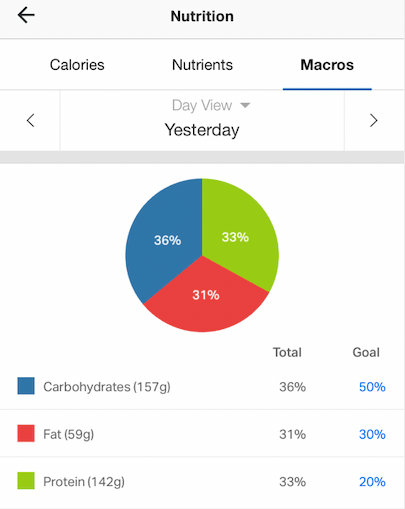
During the weekdays, I eat in a deficit, and on weekends, I do refeed days where I’ll be in a surplus 1–2 days per week (Saturday and/or Sunday). I’ve found this works for me. I’m still able to make progress without feeling deprived and hungry all the time. If I eat in a deficit for too many consecutive days, then I find myself at the mercy of low energy and low moods. Compromising my mental health is never worth it.
The key takeaway is to experiment with your macro split, avoid aggressive weight loss goals (+2lb per week), and look into tracking calories to keep yourself on the right path and accountable.
“Abs are made in the kitchen”
I’m sure you’ve heard this motto pumped out of every fitness blog, video, or influencer’s mouth. In fact, when I first pitched this article topic to my sister, her immediate response was reciting this same overused phrase. I’m not dismissing this philosophy entirely, as there’s definitely merit in it, but I think it’s important to acknowledge that despite having discipline with your calorie intake and despite how healthy you eat, abs aren’t just one more kale salad away.
At the end of the day, you need to be in a calorie deficit for a long enough period of time to lower your body fat for abs to show. But, you also need to simultaneously train your abs and build muscle in your core (just like every other body part) in order for your abs to become noticeable. For some (including myself), you need to cross some mental barriers to get your body fat % to a level to get that shredded look and for some, it’s just not worth it.
A warning
When I was in second-year university, I developed an eating disorder. I became obsessed with my diet, not allowing myself to consume any sugar, fat, or alcohol. On average, I was consuming less than 50g of carbs a day and was instead indulging in heavily processed foods, such as sugar-free yogurt, diet pop, etc. I worked out six days a week and would sometimes frequent the gym twice a day. If I slipped up and had a cheat meal, I chastised myself for days.
Sticking to this regimen for months, I lost a lot of weight, but I found that my mental health was suffering significantly. My body then started sending clear signs that my current regimen was disrupting my hormonal process. I stopped getting my menstrual cycle and I felt constantly lethargic. Month after month went by until I reached a full year without getting my period. Something was wrong.
Amenorrhea is a condition where you’ve missed your menstrual cycle for a prolonged period of time. It can be caused by a multitude of factors (most commonly pregnancy), but can also occur during rapid weight loss, new eating habits or exercise regimens, and low body fat. You may think that losing your period sounds like a dream (adios bitches) but in fact, this signifies that you may be in a dangerous position. Amenorrhea can lead to infertility, hair loss, and osteoporosis, among other problems.
I’m so happy to have escaped that nightmare and allowed myself to loosen up, enjoy cheat meals, and live an overall healthier lifestyle that lets me live. But I know from firsthand experience how easy it is to slip back into that obsessive behavior.
Paul also recommends using a diet break:
As you get leaner, stress becomes more impactful. When you’re really lean, cortisol levels can remain chronically high and leptin can be low which can have long term effects.
He recommends using a diet break where you bring calories back up to maintenance, reduce cardio, and focus more on recovery (based on maintenance). The result is staying leaner longer through the use of adjustments during that time.
The Results
After dropping the old routine of doing abs practically never (LOL), adopting the 2x per week plan, and following my nutrition plan for approximately one year, here are my results.
Before
Training abs 1/2x per month/never, eating intuitively, and not counting my macros.
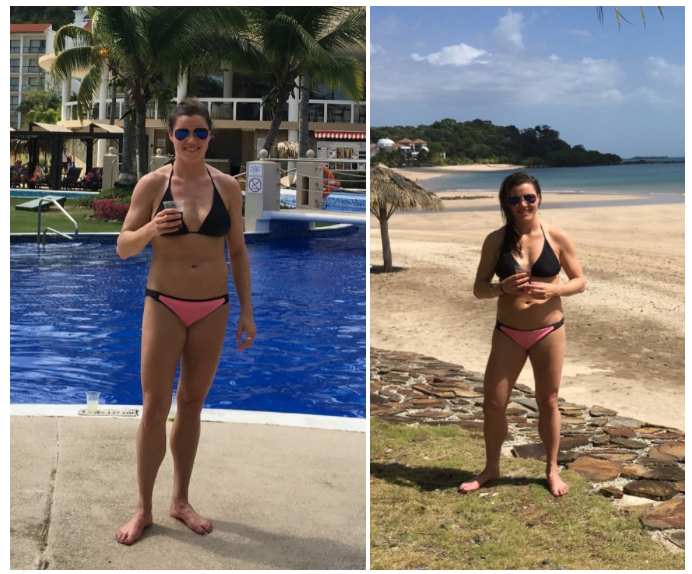
Current physique
One year since adopting the 2x per week ab protocol and tracking my calories + macros.
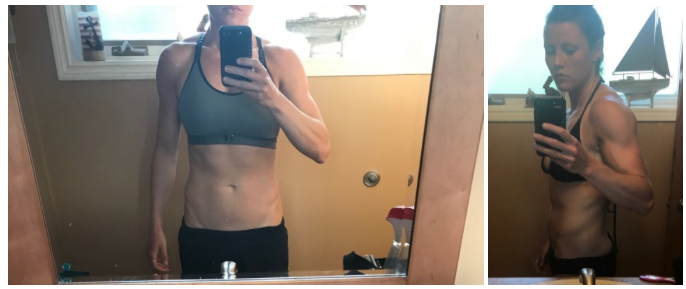
Although it may seem and feel impossible, developing abs is certainly obtainable for most women—though it will come easier for some than others based on many factors.
Abs will come with consistent training over time (not overtraining), applying progressive overload, and eating in a calorie deficit over long, sustained periods of time. The formula is a combination of building muscle and losing fat, but it’s important to enjoy the process. Of course, it takes discipline to reach your fitness goals, but that doesn’t mean depravity. What’s helped me become more cognizant of my mental health along my fitness journey is tracking my energy level and moods and seeing how my calorie intake and macro splits affect this.
Listen to your body and ensure whatever plan you undertake is safe and healthy for you. If abs are your end goal, great, but make sure the road to achieving those results isn’t harmful. You can do this!
*My new book Find Your Stride: A Personalized Path to Sustainable Nutrition and Training is now available everywhere books are sold. If you enjoy my Medium my articles, you might dig it. Follow me on Medium to access more of my latest articles or you can connect with me on Instagram.