
How I Stopped Being Old and Became Vintage
Do not go gentle into that grey life
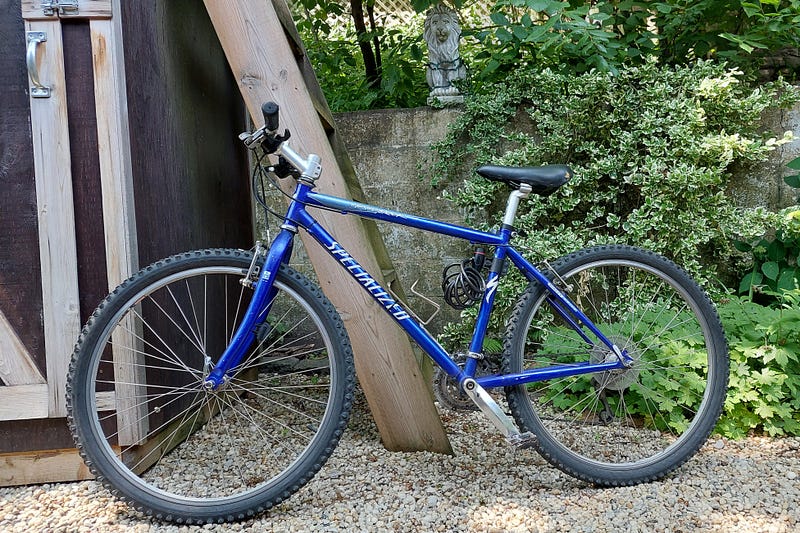
Last week I was waiting at a light on my bicycle, and a guy walked up and said “Cool vintage bike”.
I was surprised because I never thought of my bike as “vintage”. It’s not a penny-farthing or anything. I just think of it as a regular modern bike, like regular youngish people ride.
If pressed, I might admit that it’s a little long in the tooth.
It’s got twenty-odd years and thousands of kilometres under its bar. The paint is chipped, the vinyl seat torn, and everything that could fall off without rendering it unrideable is long gone; reflectors, fenders, and clips have vanished, smashed to atoms under bus tires or decorating the den of some avant-garde raccoon.
But the bike is as functional as the day I got it.
Traditionally I haven’t been a fan of the word “vintage”. It was just a fancy way of saying “old”, meant to drive up the perceived value and associated price tag.
Old was comfortable. Old was cheap. Old was real. It might be worn and ratty, but it did the job — whatever the job was — and I could buy it for five bucks at Goodwill.
“Vintage” was pretentious, twee, and showy. “Vintage” was hipsters in non-prescription John Lennon glasses, and teens wearing t-shirts advertising concerts their grandparents moshed at.
Fuck that, I’d say to myself, rebelliously. I’m authentic, man.
I’m rethinking that philosophy, or at least my understanding of the word vintage.
I want to be vintage.
See, when that dude on the street — who turned out to be a bike mechanic — called my old workhorse of a bike “vintage”, I felt flattered in a way that I wouldn’t have if he’d just said “Cool old bike.”
“Old” is a description. “Vintage” is a compliment.
Entering my seventh decade, it doesn’t serve me well to refer to myself as old. Say it too much, and you’ll start to believe it. Everyone else will start to believe it.
I don’t see myself or my bike as old, and I’d just as soon the world didn’t either.
But vintage? Yeah, ok.
Even though we’re both ruggedly handsome when viewed in the proper light and from the right angle, I’d be lying if I said time and experience haven’t left a few marks.
But every scratch in the paint, every wrinkle on the brow, marks a story about a new road ridden, or a friend well and truly loved. About obstacles overcome, about perseverance against a hill that seems too steep, or a headwind too strong.
Vintage is character, resilience, and durability. Old is just old.
Even if I’m shuffling around the park with a cane or a walker, I want to wear my leather jacket and a black t-shirt. I want a mod bullseye sticker on my mobility scooter. I want to hang out with the other old people and be as loud and as funny and as silly as we want to be.
Maybe vintage is pretentious, but I’d rather be a little pretentious than be ancient, boring, and afraid, wrapped up in some dour, self-righteous “authenticity.”
I don’t want people to look at me and think “Poor old guy.” I want them to think “That dude has done some shit.”
And more to come, I’d add.
I will not go gently into that grey life. Cheers to the vintage decades.


