
How I Quit Smoking the Buddhist Way
There’s the nicotine, and then there’s our peace of mind
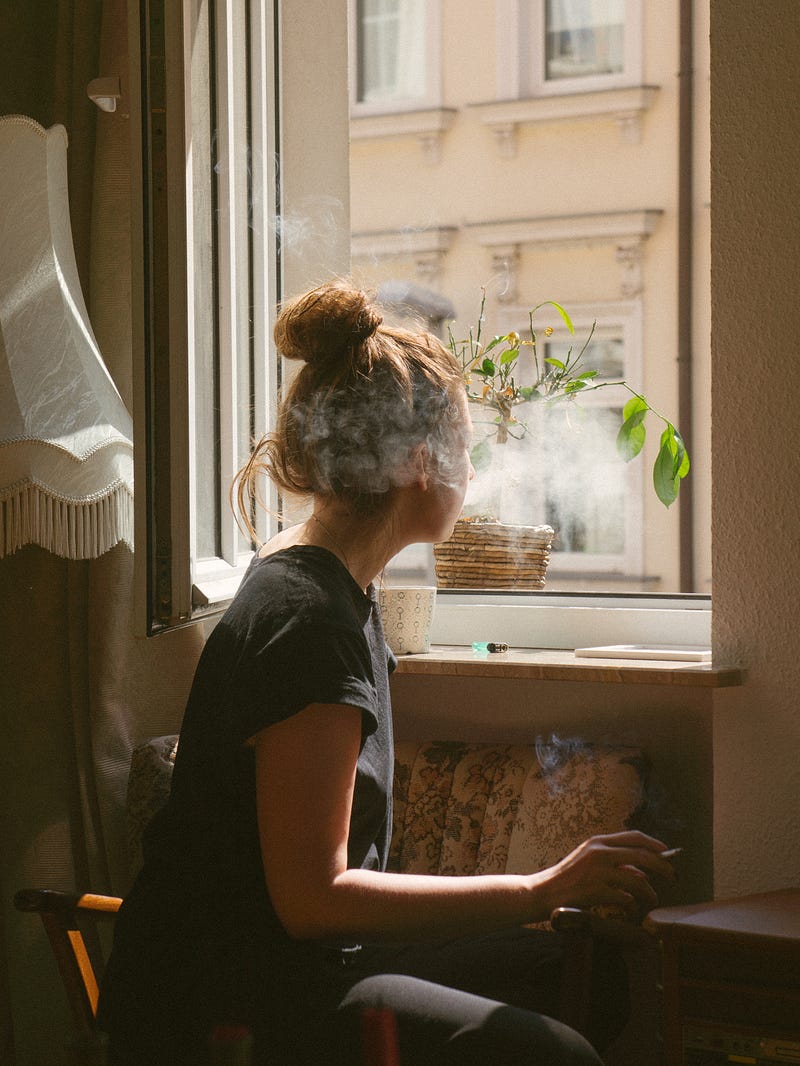
When I was 13 years old, I went to Paris with my parents for the first time. I was fat, low in self-esteem, and melancholic.
The French girls I saw all had tall noses, beautiful blonde hair, red lips, and they all smoked. That was 18 years ago, so people were still smoking indoors, outdoors, everywhere.
I was mesmerised by the poise of one particular French pianist in the bar we visited. She was skinny and wore a grey, minimalist halter-neck dress. Her fingers were dancing on the piano and became elegant and still when holding a cigarette.
After spending a week in Paris, I picked up three things when I returned to Hong Kong: French language, impressionism and smoking. I sneaked into my dad’s study and stole his cigarettes, waited until my parents left for work, and smoked on the balcony.
I was 13 years old.
A few years later I moved to the United Kingdom and have stayed here since. Over the years, the magic puff transported me to that piano bar in Paris, and I transformed into that blonde pianist in grey.
But recently I quitted because I don’t need to escape anymore. Here’s how I ended my smoking addiction of 18 years. It started from meeting a bunch of Buddhist nuns in the Southwest of France.
What happened in the Southwest of France
I love France, the food, the memory, the wine, the language. I go to France, Paris mostly, quite often, and it was only in the Southwest of France I encountered a different image of the fashionable country.
There’s a Buddhist centre called the Plum Village near Bordeaux. It was set up by the famous Buddhist monk Thich Nhat Hanh.
I spent a week there and opted to set up my own tent in the vast grassland there. Although it was June, the weather wasn’t that warm. I wrapped myself in layers of jumpers, down jackets and sleeping bag at night, waking up to the fierce rain hitting my flimsy tent.
Every morning we woke up to exercise with the nuns, meditated, then had breakfast in silence. I didn’t smoke (but I had them with me), it just didn’t feel like a place that needed cigarettes. People from all over the world gathered, but there were many French people.
They weren’t trendy at all, not like Paris. In fact, it’s not easy to be “trendy” at the Plum Village, we were asked to wear plain and modest clothes, as well as comfortable shoes for hour-long walking meditations.
When the 7-day retreat was over, I stayed in Bordeaux for a few more days before returning to London. It was very strange. Bordeaux is famous for their wines, and I didn’t feel like drinking or smoking, I walked around town quietly, enjoyed the old architecture, and I felt a new sense of peace.
Let go of suffering
“People have a hard time letting go of their suffering. Out of a fear of the unknown, they prefer suffering that is familiar.” ― Thich Nhat Hanh
One of the topics Buddhism and many other religions and philosophies talk about a lot is the concept of suffering. By looking at my life, finding escape and feeling guilty about my cigarette addiction, I realised I have been suffering so much.
Cigarettes gave me great joy for that particular moment, but quickly it added to my suffering and a worsened sense of self.
I wanted to be pardoned from suffering. I didn’t want to suffer anymore. The recurring pain and joy from smoking was exactly what Thich Nhat Hanh meant by “prefer familiar suffering”.
This was the reason I went to Plum Village, and in that place I’ve found the way to let go of suffering and become peaceful.
That was June 2019, and I haven't really been smoking since (there were a few relapses, but so far, I’m proud).
Here’s how we can do it.
Ask yourself: how did it all start?
There must be a reason we were enticed to begin a certain habit. To quit, it’s essential to go all the way back. Do you remember why you picked up this particular habit that later became an uncontrollable addiction?
I didn’t start smoking because ‘it looked cool’, which is what most people assumed. In fact, very few people have ever seen me smoking because of how unpopular it has become. If it’s only because it looked cool, I would’ve quitted easily as most people have stopped smoking in London.
My version of ‘cool’ wasn’t current, it traced all the way back to Paris, 2003. I hated myself for being fat and ugly, so I used smoking to transform myself into a French girl.
It’s an escape
If you struggle to answer the above question immediately, it’s normal. Our life is intertwined with many stories and experience, it might not be clear immediately.
From what I have observed and talked to many people, whatever we are addicted to, we are trying to escape from something else. So there’s the push factor of a certain reality, so much that we are pushed then pulled into the addiction.
A model Christian friend of mine is addicted to masturbation and porn to escape that super righteous image he has created accidentally for himself. Another friend is addicted to work (and/or prostitution) to avoid going home to his estranged wife. Another successful friend buys Chanel, a lot of Chanel, to escape from the fact that her mental health is falling apart.
Things that we escape from is the push factor. Things we escape to is what feels good. Being able to buy Chanel makes us feel rich and successful, Working long hours promise bonus and promotion. Jerking off gives us orgasm. Smoking suppressed my appetite and made me feel skinny.
Now we have got both the push and the pull factors, that’s clarity.
Clarity is half of the success
It’s important to note that when we reach clarity, we have already transformed. Most people are addicted to things because they don’t want to know what’s going wrong within themselves and with others at all. We pick addictive behaviour because it’s a flight response, as long as we can escape, we are good.
Addictive behaviour itself is only the surface of a much deeper problem. However, as addiction becomes worse, say we become bankrupt from gambling addiction, or we become an alcoholic from over-drinking, they also become a problem in its own right. These problems also created shame, guilt and self-hatred, which most likely worsen the underlying push factors.
Addiction is just a mechanism, a presentation of what’s underneath. Think of it as the colour white — it is “what we see when all wavelengths of light are reflected off an object”. So we need to know what our addiction actually reflects to successfully overcome both our addiction and the underlying issue.
Making choosing happiness a habit
When we have clarity, we can make decisions to choose happiness and peace over suffering. We can now see what suffering means for us, it’s not only the addictive behaviour but also what lies underneath it.
When a recovering alcoholic proudly says “I have been sober for this amount of time”? That’s an accumulation of overcoming one after another instance of temptation.
We can start small by making the intention that “the next time I feel I need a cigarette, I choose peace and happiness”. It’s not radical, and if the next time you have succumbed to smoking, then you let that go (because by getting annoyed with it or trying to set a record, that’s just more suffering), and set the intention again.
It’s no different to building any habits. Like doing exercise, reading books, choosing happiness is a positive habit. We don’t even need to think about “quitting smoking”, the focus is shifted to “choosing happiness”.
Slowly, we let go of suffering, we don’t even take notice of it. Slowly, choosing happiness becomes a familiar feeling, one that feels really good and peaceful that we won’t choose anything else.
Without actively quitting, I chose happiness, health and peace. When the craving comes, I will go outside and breathe in the fresh air and do some star jumps or stretches.
I have also done more work on loving myself because I realised the beginning of my addiction to smoking was from envying French girls (nothing against them), my self-esteem was so depressingly low.
The focus has shifted, the familiar feeling of suffering become estranged, one intention at a time.


