How I Quit My Job to Play With Whales and Dolphins
Turn your passion into your dream job in ecotourism
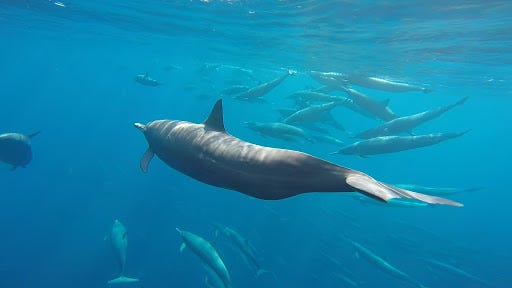
Picture a tropical paradise. The sun is glinting off the water, and a cool ocean breeze is rushing past you. Enter thousands of spinner dolphins. Humpback whales jumping and lob-tailing. Enormous killer whales prowling the seas. Now imagine that you never have to go home.
When I first moved to Drake Bay in Costa Rica, I never imagined that I would end up making a living doing the thing I love most in the world. But almost eleven years into my tropical adventure, my travel business continues to provide me with new and thrilling experiences, sharing our local population of whales and dolphins with travelers from around the world. And to think — I used to be a banker.
It might sound scary, but uprooting my life and becoming a whale and dolphin tour guide is the best thing I have ever done. And it wasn’t just a lucky break. My experiences over the years have allowed me to hone my skills and identify real, and achievable steps that you can use to start your own whale and dolphin tours.
It won’t happen overnight. It took me almost five years for the business to become sustainable, and I certainly made some mistakes along the way. But swimming with dolphins? Isn’t that on everyone’s bucket list? Imagine if you could do it every day.
Study the Industry to Choose Your Location
Over 119 countries worldwide have whale and dolphin watching industries. From the freezing waters of Iceland to the balmy tropics of Hawaii, there are cetaceans to be found. A whopping 38% of whale watching occurs in the USA alone, with over 6 million visitors per year.
It might be tempting to go where the people are. After all, more tourists equals more money, right? However, environmental organizations such as the International Whaling Commission have shown that high-traffic areas have decreased the population of cetaceans, reduced calf survival, caused habitat abandonment, and even increased aggressive behavior. Not exactly a great experience for travelers or whales.
When I left Ohio to search for my paradise, I went the opposite route. Drake Bay, Costa Rica has fewer than 1,000 residents and sees just 1% of the nation’s tourism business. It might seem counter-intuitive, but what I have found is that the fewer tourists, the better the whale and dolphin watching. You can offer a truly unique and spectacular experience to your guests, and at the same time increase your word-of-mouth advertising opportunities.
Over the past few years, I have shared adventures with my guests that are straight out of a David Attenborough documentary. The vast Pacific Ocean with no other boats in sight, surrounded by thousands of dolphins, leaping yellow-fin tuna, and swooping frigate birds. In short, it seems that it is better to go where the whales are.
This comprehensive online tool allows you to explore more than 30 different whale and dolphin watching nations. From here, you can view the potential cetacean species, hotspots, peak times of the year, and national regulations. Costa Rica, for example, shows 34 recorded species of whales and dolphins, many of which are year-round residents.
Armed with all of this information, you can take the first step into finding your dream location. And here is where we come to the first caveat. Although it might be tempting to get your heart set on one particular spot, I highly encourage you to have several back-ups in mind. I visited nine different countries before finally settling on Costa Rica. Sometimes things look better on paper. Which brings me to the next step.
Get to Know the Locals-Go on Tours and Volunteer
When I moved to Drake Bay, the first thing that I did was to become a volunteer at Corcovado National Park. Not only did it allow me to experience the intense biodiversity of the Costa Rican jungle, but it also allowed me to gain valuable contacts.
As a foreigner in a small community, it was vital for me to be seen as an asset for the village, instead of a threat. Demonstrating my work ethic and willingness to learn helped me a long way in this goal.
Not only that, but it also gave me time to assess the local economy before committing to running my own business. I have seen many people come and go over the years who jumped in with both feet on their dream business without considering the demand. Just because you desperately want to become a goat yoga instructor in the Maldives doesn’t mean that there will necessarily be a viable place for you within the local tourism industry.
Meet as many people as you can, and go on as many tours as you can. Get a feel for how the economy operates. Make notes about potential gaps in the market, and identify new ways that your guests could experience the whales and dolphins in the area.
When you are changing your life radically, it is important to be brave, but it is equally important not to rush the process. I have met many people who visited Costa Rica seasonally for years before committing to living here permanently. Even after eleven years, I still rent my house. In the tourism industry, it is crucial that you remain mobile and adaptable.
Above all, don’t be too hard on yourself if the first location you test doesn’t work out. Taking your time with this step will allow you to find the best place for your business and your life. If your new home fills you with joy, it will be infinitely easier to motivate yourself for the next step — setting up your successful whale and dolphin company.
Setting Up Your Business — “Don’t Buy a Boat, Have Friends With Boats”
There are several excellent reasons not to buy a boat when you are setting up your fledgling business. Not least of which is the huge amount of maintenance and money that will be required. Keeping your overheads low, especially at the start, will lower your level of risk and keep things simple. You can easily factor in a flat rate cost of a charter boat into the price of your tour, without having to worry about gas prices or repair costs.
The second major reason for chartering a boat and captain for your tours is local knowledge. No matter how much boating experience you have, you are going to fare better with a captain who knows the waters. This way, you will have more success with finding whales and dolphins right from the start. You can also use this opportunity to learn from your local captain about weather patterns, whale and dolphin behaviors, birds to look out for, and other points of interest. You can then begin to incorporate this knowledge into your conversations with guests.
Last but not least, your boat captain will be well acquainted with local regulations and permits involving whale and dolphin tours. In Costa Rica, the bureaucracy is notoriously labyrinthine, and it can be easy to get caught with your pants down if you don’t have someone by your side who knows how local authorities operate.
Questions that I had to answer before taking guests out on the water included:
- Do you need a guiding permit or certification?
- What taxes do you need to pay?
- Are there any day permits required (for example, in marine conservation zones)?
- Is it mandatory for guests to wear life jackets at all times?
- What safety equipment is required?
- What are the laws about swimming with whales and dolphins?
You can find answers for your specific location on your Ministry of Environment website or local tourism authority. The Costa Rican website is called MINAE. You can also find general environmental recommendations on the International Whaling Commission website.
Once I had the basics set up, I began by inviting friends and family out on the seas. Mostly for cost price. This allowed me to fine-tune the tours and get honest feedback, without risking bad reviews for silly mistakes. Having said that, I definitely made plenty of errors during the first few times. Which brings us to the next part of the story.
Provide a Unique Service: Observation, Learning, and Experimentation
The biggest stumbling block that people face when running nature and adventure tours is managing customer expectations. When I first started out, I was so excited about seeing the whales and dolphins that I sometimes “over-sold” the tour. When you are talking to potential customers, by all means, highlight the best experiences you have had, but it is vital to explain that they will not be visiting a zoo. Every day is different. Sometimes we see seven different species of cetacea. Sometimes we see one rare, amazing species, such as a sperm whale. Some days we might only see a small pod of spotted dolphins.
Essentially, never promise more than you can deliver. Even on slow days, you can speak passionately about the animals and the enthusiasm will be contagious. After all, a “bad” day on the ocean is still better than a good day anywhere else.
Read everything you can about your local species, including birds and other marine animals such as sea turtles. I often make use of iNaturalist, an amazing citizen science website, which provides real-time sightings of animals and detailed information on each taxon. I also make use of printed and online field guides that I bring along on tours to provide extra visual and educational aid.
The next big learning curve in my whale and dolphin journey was environmental etiquette. Over the years, I have seen many captains engage in inappropriate behavior such as “chasing down” whales, approaching dolphins from head-on, and getting between mothers and babies. Not only does this scare the animals, but it also reduces the quality of the experience for your guests. Being respectful of these amazing creatures will allow you to get closer, play for longer, and immerse yourself in the marine ecosystem.
Humpback whales are en excellent example of this. In Drake Bay, we receive two large families of humpback per year that come to breed and have babies. I have found that by approaching the mothers and calves slowly, and diagonally from behind, the whales are far more likely to become curious and hang around the boat. On occasion, we have sat in one area for over 30 minutes, gradually developing a trust bond between us and the mother whale. This approach has resulted in some truly incredible opportunities, like whales that actively swim towards the boat and even a baby whale breaching and jumping less than five meters away.
Working with a boat captain that you trust is essential to providing a unique service like this. Our regular boat captain knows what our guests want, what the whales need, and listens to me when I tell him to point the boat away from the sun for the best photo ops. You do not want to skip this learning process. You will have many tourists who are biologists and/or environmentalists. Thus, you need to be able to demonstrate respectful behaviors and explain them to your guests with confidence.
Apart from environmental practices and customer expectations, there are a few other things that you will need to consider. Two of the big ones that I often forgot when I was first starting out were: how to use snorkel gear, and where is the lunch.
If you are lucky enough to be in an area where you can offer snorkeling as part of your tour, you need to protect your equipment. In the first year, I lost more than five sets of snorkeling gear because I did not explain how to use it properly. In rural Costa Rica, this is a costly mistake. Never assume that your guests are adept swimmers or snorkelers. Now, I always make time to make sure everyone is comfortable with the gear and how to get in and out of the boat before we arrive in dolphin territory.
The next thing that can make your tour stand out from the crowd is food. In my area, I discovered that almost all tours provided the same packed lunch. Think ham and Wonderbread sandwiches, tinned tuna salad, a packet of chocolate cookies, and some kind of neon-colored Kool-aid.
It might sound like a small thing, but especially on a slow day, the food can really make an impression on your guests. After experimenting with various local producers and ingredients, we now offer a variety of homemade recipes, fresh juices, and fruits. We also provide fresh ginger lemon tea for those with seasickness issues. It has totally eliminated plastic waste from the tour and provided a real wow-factor in comparison to other businesses in the area. Make sure that your guests know where the cooler is, and make them feel comfortable to ask you for food or drinks at any time.
Overall, this step to success is about developing a checklist of information that you will explain to guests. Experiment and observe which explanations and answers are the most effective. Remember that it is not about what works for you, it is about what works for the guests. Learning about whales and dolphins is a process that never truly ends.
Use Online Marketing to Build Your Brand
Once you have a truly incredible product to market, you are going to want to expand your customer reach. A great website can provide a huge sign for your business, without having to pay for office space or other front-of-house costs. There is a huge caveat here. If you do not have any web design experience, I do not recommend using free web builders like WIX or Weebly. It’s tempting, it’s cheap, but you will reap the rewards if you invest in a custom-built website. In this space, you get what you pay for. You should expect a minimum of $1,000 for a basic site, which should include training for you on how to update it. You should also expect an annual cost of approximately $100 for web hosting and your domain name.
I am lucky enough that my spouse is a web designer, so I must give her huge credit here for teaching me the ways of online marketing. What I have learned is that it is much better to drive for direct bookings than it is to use secondary websites. Paying for Facebook ads, Google ads or premium listings on sites such as TripAdvisor have never gained me much business. I use my regular social media network, in addition to an authority website and word-of-mouth to generate leads.
A final and important note about marketing is how to price your tour. I have seen many people, when they are starting out, offer “discounts” or lower prices to undercut the competition. In my experience, this is not a sustainable business model. Make things easy. Take the amount of money it costs you to run the tour, add the amount that you need to make, and that is the price. It is easy to explain to your guests that you offer the best price possible. Don’t be afraid if it sounds expensive to you. If you have followed all of the steps and can provide a truly unique experience, you will find clients who will pay for it.
How Whales and Dolphins Transformed my Life
Before I came to Drake Bay, Costa Rica, I was an executive banker. My life was about money and career advancement. I spent over a decade ignoring my passion for marine wildlife. What I discovered about starting my own business in the jungle of Costa Rica was that a six-figure salary does not constitute happiness. My goals have changed. These days, my goal is to see a blue whale.
I hope to be able to teach readers how to start their own businesses and experience everything that our oceans have to offer. If you research your location, spend time with the locals, and are committed to learning, there is no reason why you won’t have a successful whale and dolphin tour business. Your passion can become your job. Don’t expect to be a millionaire. Expect to have an incredible life.