
How I Qualified for the Boston Marathon
And you can too
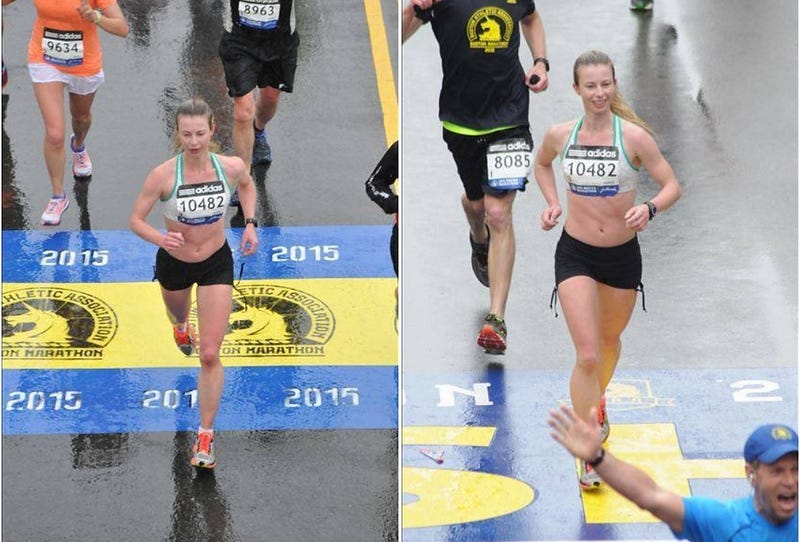
Many runners dream of crossing the finish line of the Boston Marathon. I know this because I was one of those runners. When I was fifteen, I saw the Boston Marathon on TV and became inspired. Ever since then, it was my dream to run it. Then, finally, in April 2015, ten years after I first saw the race on TV, I lived my dream.
To say that crossing the finish line of one of the world’s most iconic races was a life-changing experience is an understatement.
Despite being about 50 minutes too slow to qualify for the Olympics in the Marathon (the Canadian standard is sub 2:30), completing the Boston Marathon temporarily made me feel like an Olympian. There were so many people watching the race and cheering for all of us. Although I was nowhere near the elites, I still got a lot of support from the huge crowds. The atmosphere and the community were absolutely fantastic.
It also took a lot of effort and sacrifice for me to get there. When I toed the start line of my first marathon, I never thought I would qualify for the Boston Marathon but I really wanted to.
Then, I actually surprised myself and qualified on my first attempt. When I first told people I wanted to qualify for Boston, they thought I was joking. They also told me it was “wishful thinking.”
Even if you have been chasing a BQ for the past few years, please don’t despair. Although I may have qualified on my first attempt, I overcame a lot to get to the start of my first marathon. Maybe, qualifying on my first attempt was beginner’s luck.
It wasn’t easy.
The reason why I qualified on my first attempt is because I spent so long preparing for it. I had a bit of anxiety leading up to my first marathon because I had no idea what I was getting myself into. I was scared that, in spite of all the preparation, my race could have gone bad. I could have still failed because race day is never guaranteed. I was worried that “what if those people who said I couldn’t do it were right?”
By the way, I believe that anxiety before your first marathon is totally normal. You are venturing into the unknown.
Please don’t beat yourself up if you don’t qualify on your first attempt. Sometimes, it takes more than one try before you succeed.
Here’s what I did to qualify for the Boston Marathon on my first attempt:
1. Reviewed the qualifying standards carefully. Once you review the qualifying standards, it’s important to understand that to guarantee your spot in the race, you must run at least 5 minutes faster than the qualifying standard for your age and gender. There are a lot of people applying to run the race. Therefore, running a 3:34 when your standard is 3:35 will likely not get you in. Even meeting the qualifying standard doesn’t guarantee you an entry.
I’ve seen so many of my fellow runners feel disappointed when they met the qualifying standard but got rejected because too many other people ran significantly faster than the qualifying standard. My heart breaks for those runners which is one of the reasons why I didn’t want to run the Boston Marathon again for a while.
2. Figured out what pace per mile (or KM) I needed to run to be able to achieve that goal time. I had to make sure that it was realistic for me to be able to run that pace, which at the time was sub-5 minutes per km. Once I knew what my goal pace was, I was able to train at that pace. Sometimes, I did parts of my long runs at that goal pace to make sure that I could hold it. Once I finished my base-building phase, I was able to hold my goal pace much longer and with less effort.
3. Picked my qualifying race carefully. An ideal course would be relatively flat with minimum sharp turns. It would preferably be done as close to sea level as possible and in temperatures that are not too hot and not too cold.
I ran my personal best (3:18) at the Victoria Marathon, which I think is a great course. It is not particularly flat but there are some great long stretches of road where I don’t have to turn. Although the Victoria Marathon is not a net downhill course, I chose it because I live in Victoria so I would get to sleep in my own bed before race day. I also got to eat foods that I’m familiar with and I knew all the people who were in charge of organizing the race. I also knew that many of my running friends would be there to cheer me on even if they weren’t running.
I know that I wouldn’t do well running a marathon in a hot and humid environment, even if it was a net downhill course. I’m OK with hills but I’m not OK in the heat. Sometimes, I do better on undulating courses as long as the temperature isn’t bad.
4. I gave myself enough time to train before my goal race. I believe that an ideal length of time to train consistently for a marathon is 6 months.
The first two months helped me gradually increase my mileage to 70–85km per week without risking injury. After that, I was able to add hills and speed work to my training routine. I also did some training at my race pace or even faster. Then, I had a three-week taper. I felt super fresh on race day (at least at the beginning of the race).
You cannot rush your marathon training if you want to qualify for Boston. Rushing your marathon training can lead to injuries.
6. I never skipped my long run. When I was training for my first marathon, I really emphasized the long run. Not only did I need to be physically prepared for running 42.2 km, but I also had to feel mentally prepared. The only way I knew how to mentally prepare myself for that distance was to actually do the distance (or close to). My longest run prior to my first marathon was 39km. It was exactly 4 weeks before my race day. After running 39km, I felt ready to tackle 42.2km. I don’t think I would have felt ready if I only ran 34km for my long run. The long run gave me the confidence I needed to make it to the start line.
7. I made friends with hills. I used to not like hills, but I learned to love hill workouts. I forced myself to do hill repeats even when I didn’t feel like it. In the beginning, hills were hard. However, things got better and I noticed that my running efficiency improved substantially.
Hill training helps increase leg strength and power as a result of the resistance that hills give you.
8. I focused on the task as opposed to the end result. I tried not to stress out about qualifying for Boston. Instead, I focused on finishing my first marathon in one piece. I made it a priority to avoid injuries during my training.
I knew if I was healthy during the training cycle and was consistent with my long runs, hill training sessions, race pace runs, and strength training, then the race results would likely reflect that. I had to make sure I did everything I could to make the race go the way I hoped.
I could control what I did to prepare for the race but I could not control every aspect of the race.
9. I tried to enjoy the journey as much as I could. I made my workouts fun. I added a social element to my runs. Sometimes, I did plyometric workouts and cross-trained in order to reduce the risk for injuries. I sometimes listened to inspirational podcasts during my long runs.
If you want to run the Boston Marathon, I hope you get the opportunity to do so. I urge you to never give up on your dream.
It won’t be easy but it will be worth it.
I can’t wait to see and hear other people’s Boston Marathon stories because it is other runners who inspire me to keep running and writing about it.


