
How I Mobilize My Body Daily Towards Graceful Aging
5 ways to start your own mobilization science-backed program
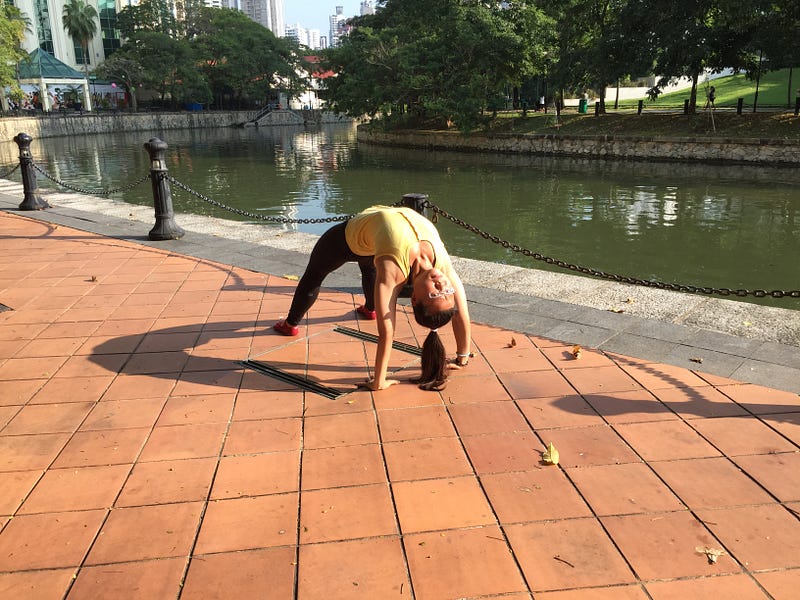
I started bodybuilding at age of 19 with the “boys”. My training program was mostly split body parts. On any single workout day, I will train a particular body part, as if the human body moves like a machine, pushing myself beyond my pain, numbing myself to what my body was telling me.
All I wanted was to build a lean, “mean”, “sexy”, flexible machine capable of moving any way my heart desires.
Bodybuilding-style training became my primary goal to carve a lean-and-mean body. And the good ol’ stretching became the companion to bodybuilding in the hope for me to attain the “flexible” body I had my eyes set on.
I didn’t care about the consequences of how I trained. I didn’t care about how wrecked my body joints were or how I consistently felt lethargic.
I ignored the weird sensation of my ligaments being pulled nor that one time I felt a lower back spasm that had be semi-bed-ridden for days.
Almost 20 years have gone by now, while I have achieved “lean” and “flexible”, perhaps “mean” and “sexy” too, I never got them all at any one point in my life, not to mention without having to suffer chronic joint aches and pains along the way.
As I came to discover more about human movement through expert movement practitioners, such as the Israelite Ido Portal, with his Capoeira-dancer-like moves in a gymnast-physique, and my Pilates training with Polestar, I moved away from the rigidity of bodybuilding-style training and the old-school stretching.
Now while I am preparing my body into the 40s, it became imperative for me to incorporate proper mobility in my daily routine regardless of what my fitness goals may be.
If you are pretty much stuck at home due to this pandemic or have been feeling sluggish or trying to figure how to get started, here are 5 tips to start your own mobilization science-backed program.
1 - Think Sling Action of the Body
Thomas Myers, the author of Anatomy Trains, one of the best-selling books in the manual therapy field, and possibly the first man who systematically and brilliantly combines all of the great works in the field of myofascial release, movement, and manual therapy into one, described slings as “long, cooperative continuities of muscles and fascia that span the body from head to toes”. He also highlighted how the human body moves in slings as a whole unit, and not in muscle group parts.
In other words, the most effective way to train our bodies is to move them in slings.
In general, there are 4 main types of myofascial slings we can focus on when coming up with training exercises to do. (There are actually lots more but to keep things simple, we begin with 4.)
They are:
i) Posterior Oblique Sling (POS)
This is like your body acting as a slingshot with elastic bands, ready to launch. Think like you are ready to throw a javelin and how stable your body is when “pulled” far back, and how much power you can transfer to propel the javelin when released from your hands.
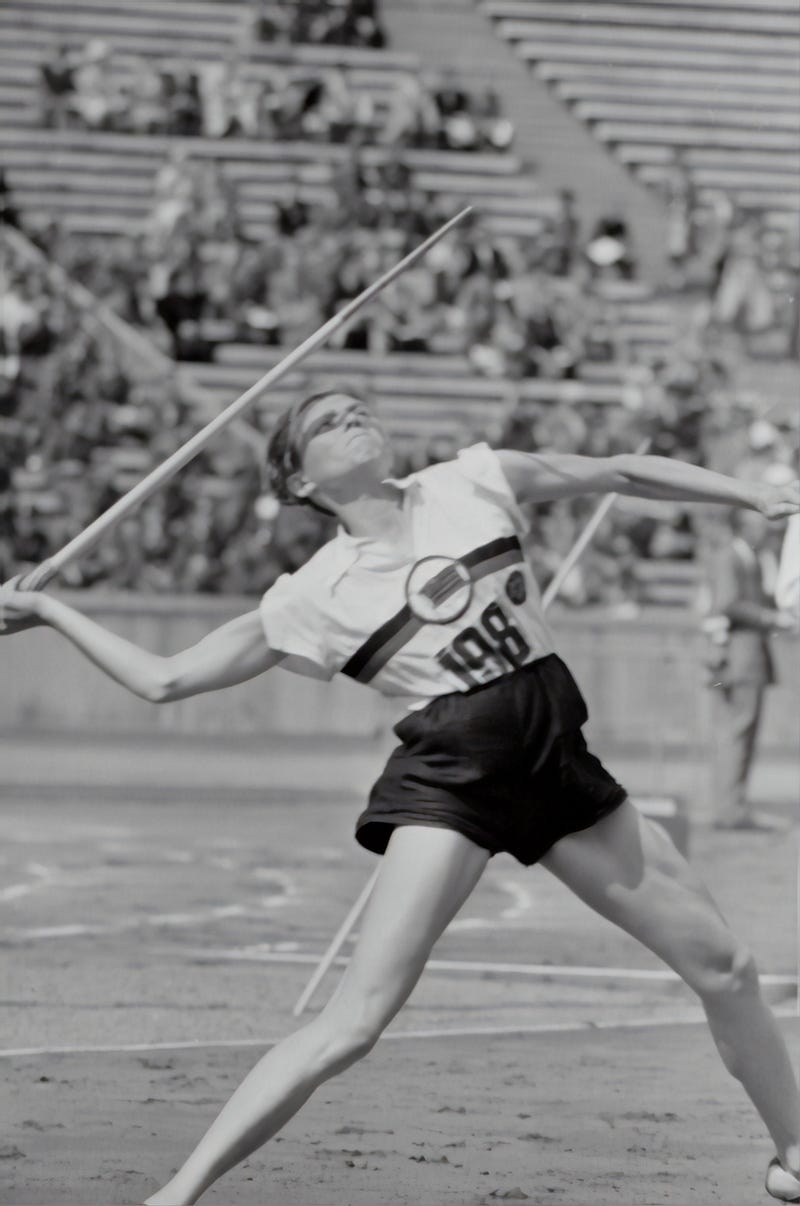
To work on the POS: The Bird-Dog movement-like exercises are great to begin, starting with the variation on both knees. Once you have gained more core control and body awareness, you can challenge the POS in standing upright positions. The Prehab Guys have a beautiful video on this!
ii) Anterior Oblique Sling (AOS)
Antagonistic to the POS, the Anterior Oblique Sling works more in stabilizing and mobilizing our bodies in synergy during our walking/running activities, as well as in accelerating and decelerating the bodies during a change of direction, for example, as commonly seen in games of basketball or football, or rugby, where athletes are always changing directions swiftly across the field or court.

To work on the AOS: Bird dogs are once again a favorite. Wood Chops in Lunge positions are an excellent way to incorporate too. So are Medicine Ball Side wall-toss in split-stance positions.
iii) Lateral Sling (LS)
The lateral sling generally covers the sides of our lower body, from the hip downwards. It primarily helps to move and stabilize the body when going side-to-side, especially in maintaining hip and leg stability during walking, running, and climbing. It also helps to prevent the knee from “caving-in” during squats.
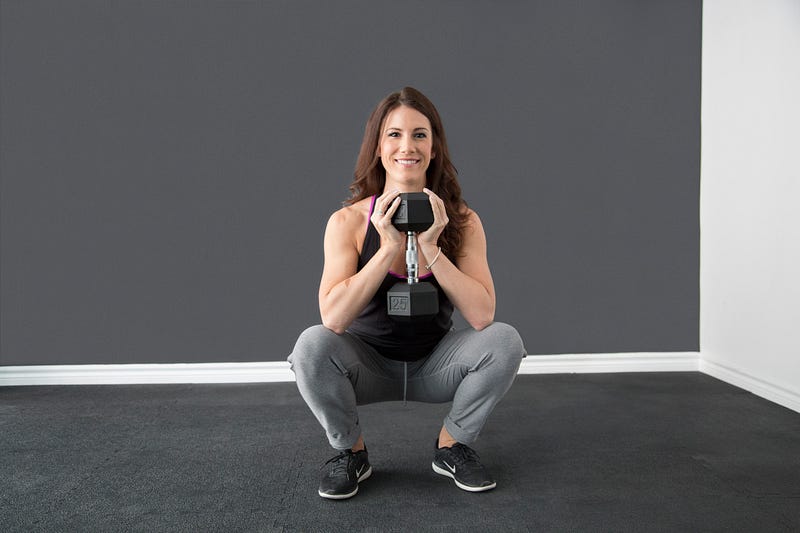
To work on LS: Pistol squats variations are great for this. So are glute bridging exercises and any side-lying glute series. Adding resistance bands are excellent to really get that lateral bum muscles burning too!
iv) Deep Longitudinal Sling (DLS)
The deep longitudinal sling runs along the back lines from the neck down to the back of the calves. It basically helps to maintain stability when your body is moving forward and back. It acts as a force balancer around the pelvis, depending on the movement involved.

To work on the DLS: Bird dog exercises again are great for this. Side plank exercises too. Walking lunges and sled pulls are excellent to progress to.
In a nutshell, each sling recruits multiple muscle groups for each movement, thereby effectively working on many muscle groups simultaneously.
Talking about the efficiency of your workouts here!
On top of that, it also trains the muscles to work in synergy, and that also translates to a better mind-body connection! ( i.e. your brain is more alive and at work while your body moves in sling patterns which is actually a natural way of movement anyway.)
2 — Start slow then gradually work on improving range first, followed by loading
Many times, we let our ego take over when working out as we become impatient with our performance-driven minds. When working on mobility programs, it is crucial to work in synergy with every joint of our body.
Focus on seeing improvements in joint range of motion, before adding more weight/resistance.
Take a simple glute bridge exercise, for example.
Are you able to fully extend your hips without compensating the movement with an overarching lower back? Are your rib-cages flared up, or are your heels/toes coming off the ground?
These are signs that your body is not ready for adding more resistance. Doing so will run a risk for body injuries as you get older.
Be patient. Don’t force into a movement.
3 — Move like an animal
If you have followed Ido Portal or the AnimalFlow ground movement, you will see them incorporating lots of animal-like movements such as bear crawl, lizard crawl, elephant walks, etc.
Jokes aside, these aren’t gimmicky moves that are preparing us to live in the jungle, although you can, if you want to.
Look at the natural development of a human, toddlers begin their first movement by being on their stomachs, then learning to crawl.
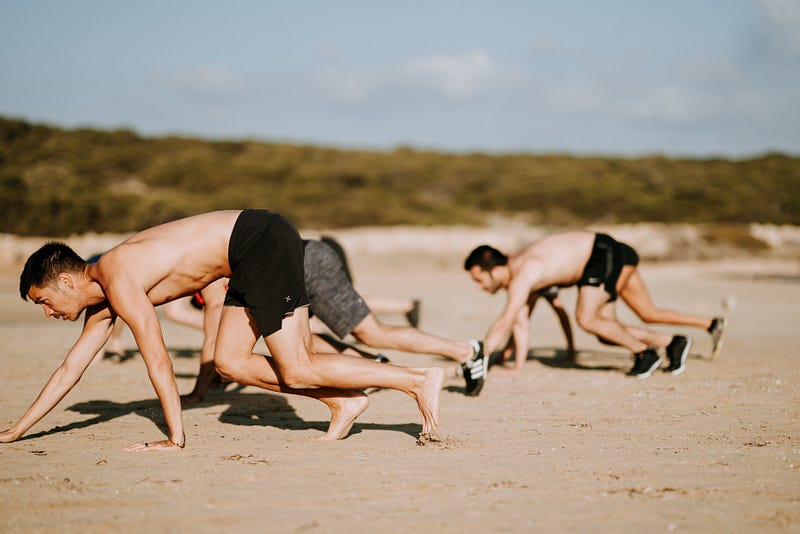
Crawling is such an important and useful movement to work on all the myofascial and muscular slings as mentioned above. All of which are important to achieving total core stability and mobility.
So incorporate simple crawls up-and-down in your living room as part of your daily routine.
4 — Go counter to your dominant posture
I use this simple idea of going counter when coming up with mobility exercises, dependent on your posture.
For example, if you are spending most of your time, typing away writing articles. Notice how you may be slouching after a while, into a “curly prawn” position.
To counteract this, incorporate movements that are supine, aka ceiling-facing. Some examples are simple glute bridges, hollow body holds, and my personal favorite — Table Rocks.
5 — Have you work on your wrists and fingers joints?
Never before have our wrists and fingers work so hard, no thanks to the increased use of our mobile phones and tablets.
We use so much of our thumbs pressing hard on our keyboards and screens, that we may neglect caring for our wrists until it may be too late.
As age catches upon us, we may inevitably have various degrees of osteoarthritis, one of the most known joint disorders, also known as the “ wear-and-tear” arthritis.
The good news is mobilizing our wrists and fingers isn’t too difficult as it doesn’t require much space and you can literally do it right now, at the desk, as you are reading this.
Here is an easy 2-minute video of myself demonstrating how I mobilize my wrists and fingers joints. Alternatively, you can just fill a bucket of rice and move your hands in circular directions around it, like some old kung-fu zen master.
TL;DR Key Action Steps You Can Do Today
- Move your body in slings, start with Bird-dog exercises and Wood Chops.
- Get the basic movement right before increasing resistance and speed.
- Start crawling around like babies and bears.
- Go Supine with Table Rocks and Glute Bridges. Add resistance bands when ready.
- Work those wrists and fingers, the kung-fu style.
As we all move into our next 30s, 40s, 50s, or even 60s and beyond, deep down we all have the desire to live free.
Free of body pains, free of financial burdens, free of being a burden to our loved ones and society.
It is never too late to start changing up our fitness routines and mindfully incorporate these mobility movements on a daily basis.
I know I have been reaping physical benefits ever since I started mobilizing. Some even commented that I still look like I haven’t aged one bit since college — a testament to my graceful aging “formula” perhaps?
If you like to receive bite-sized actions and stories, check out Yan’s The 3Min Club, where twice a month, you receive 3Ms (movement, mindfulness, mantra) you can do in 3 minutes.

You just read another post from In Fitness And In Health: a health and fitness community dedicated to sharing knowledge, lessons, and suggestions to living happier, healthier lives.
If you’d like to join our newsletter and receive more stories like this one, tap here.


