
From Memoirs of a Retired CEO
How I Managed to Be Productive at Every Level During My Employment
Time management by company level and why your time management strategy is failing
Typical time management strategies are taught with no recognition of position or responsibilities, which leaves most people needing help to make it all fit. In this story, I will give you an informed perspective based on my experience at all levels.
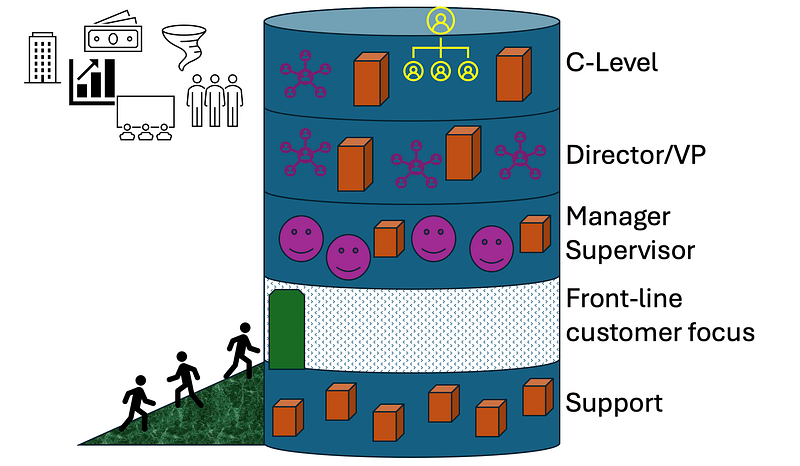
I started answering the phones in a customer service team and retired as a CEO. Every level I passed through brought its own set of challenges and opportunities. With every move, I had to revamp my time management strategies. Sometimes, it was because I was in a different life season.
My children had gotten older, so there were fewer daycare emergencies and more after-school activities. I graduated or returned to school, so I had to squeeze in class projects and homework. Every role and season came with a different set of time management challenges.
While the personal seasons always added more to do, they didn’t change the method as much as the work level changes.
I will start with the generic time management strategies. Then, I’ll look at how those strategies need to be augmented or adapted for each level in the company. For each level, I will explain the role, its key issues, and some specific tips on time management in that role.
Firstly, a good time management cadence applies to everyone regardless of the level.
Clear your desk at the end of the day. Clear your mind at the end of the week. Capture your accomplishments at the end of the month. Celebrate and open your mind at the end of every quarter.
Regardless of your job or level, you need a cadence to time management. Build the habit of consistently reviewing and documenting, and you will progress faster toward any goals.
At the end of the day, put everything in its designated place (a single notebook, planner, or online task tool). Toss the random post-its and slips of paper you jotted things down on from the day. It takes ten minutes and will save you hours of frustration when you need to find that one thing you did.
At the end of the week, write down everything that’s still left to do and figure out what you will do the following week. That means walking into the weekend without worrying that you’ve forgotten something.
At the end of the month, write a monthly report, even if you aren’t required to. You need to remember what you’ve accomplished. A simple bullet-pointed list of what’s been done will help you feel more in control and will help you show your value.
At the end of the quarter, write a report that celebrates all you’ve accomplished. Then, spend 15–30 minutes figuring out what the next quarter’s focus should be.
A solid cadence keeps you moving forward and reminds you what you’ve already accomplished. Very few people build this kind of discipline, so just having this simple process can make you stand out. Now that we’ve got a good basic cadence let’s look at the differences by role.
1 — Support Functions — The Foundation

Functions that don’t directly interact with customers, like Human Resources, Information Systems, Facilities, Marketing, Compliance, etc. These are the typically unseen but critical functions that keep the company running. While their successes often go unnoticed, a single failure creates pandemonium. Ever had an email outage? Remember the mayhem that ensued? How about when the air conditioning goes out in August? These functions are critical to keeping things safe and running smoothly.
Key Issues
These functions often run on a ticket and project basis. (In these images, orange blocks represent projects.) Ticketing systems vary from email submissions for HR or Facilities to the relatively automated IT ticketing systems. Projects also range from pen and paper to highly collaborative project management tools.
While each project feels different, most have repeatable elements. If you are still running on paper, you first need a good, solid project management tool. Using a project management tool like Trello, Asana, Clickup, or Monday.com allows you to keep track of your tasks and helps you see repeated patterns.
If you can identify a pattern for certain types of projects, you can automate much of the process. It will feel like extra work the first time, but having a project you can duplicate every time a new employee has to be hired will save you tons of time in the long run.
Having things in a visible and repeatable tool also allows you to see when other people are holding up your tasks. Your manager can also more easily see when your workload is consistently too heavy.
Remember, your work is likely to go unnoticed unless you fail. It’s up to you to make sure your successes and progress are visible. Commit to, meet, and communicate success on the milestones in your project. Learn enough about project management to know the best way to handle a project.
Keys to Time Management Success
- Keep your workload and progress visible.
- Work across functions to identify projects and success criteria.
- Break projects into milestones to help with communication and visibility.
- Don’t wait for projects to be assigned! If there is a project you are interested in doing, like cleaning up code or redoing your employee documentation, build it out and suggest it to your manager. If you need to develop a particular skill, find a project that will allow you to learn and ask to work on it.
2 — Front-Line Customer Focus
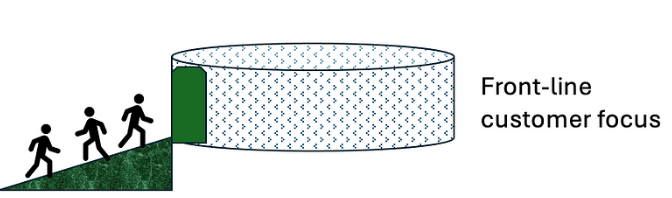
Functions that directly interact with customers, like customer service, sales, or front desk. These are the people on the phones, manning the front desk, and interacting with the customers daily.
They are the most visible in the company and to your customers. No marketing in the world can overcome a bad customer service team, but a good team can overcome the lack of marketing. They are the eyes and ears, and they drive growth results.
It was by far the most emotionally demanding job I held. There were days when every call was a problem, and every problem was somehow our fault. It can be exhausting. Please have patience and empathy for any customer service person you interact with or manage.
It was also one of the most fulfilling jobs I had. There’s nothing better than being able to solve a problem for someone who started out scared or confused and ended the call asking how they could ever thank you. It’s a job I think everyone should have at one point in their career.
Key Issues
You don’t really get to “manage” anything in this kind of role. You have to respond to whatever the customer wants or needs, and customers are notoriously unpredictable. You can’t easily manage your time. You are simply trying to surf the waves. A few key thoughts and tools can help, though.
Keys to Time Management Success
- Customer Relationship Management tool (CRM). The most hated tool in corporate America, the CRM is your key tool in customer service. Logging your calls and visits will: * Help you remember. Calls are repetitive; each customer has a pattern. By keeping track, you are a mind reader and can solve problems faster. * Help you remember part 2. You are probably accomplishing more than you think. Learn to pull reports to help you show how many calls you take each week. * Help your team. If you don’t log a call and then they answer the phone, your team looks incompetent. (Bonus: this helps you catch dialers-for-answers, where a customer repeatedly calls until they find someone who will make an exception.) * Protect your company. Many companies record calls but don’t keep all of them. If you have good notes available, they can be used to help the company in case of lawsuits where you did exactly the right things.
- A clean desk. This role benefits the most from clearing your space at the end of the day. Work with your team and manager to allow everyone 15–30 minutes at the end of the day to finish notes and make a to-do list for the following day.
- Company help desk and support. Get very clear on what problems go where. Companies often have a quagmire of people who assist with different problems. Learn what each team will take and their preferred method (help desk ticket, email, Slack message, etc). The faster you get someone an answer, even if you have to get help, the better you look.
3 — Manager or Supervisor
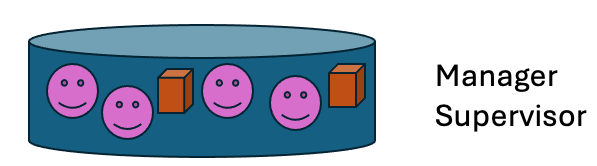
Functions that manage direct reports.
These are the people who were told they were now in charge. They are often promoted when someone leaves, not given much training or support, and often aren’t allowed to replace the opening they created when they took the new role.
They deal with constant demands from above and constant complaints from below. Be nice, helpful, and grateful for their efforts. They will (normally) return the favor.
Key Issues
This role typically combines the project role and the customer service role. Managers often keep some of their individual contribution role as they move into management, sometimes because they should (big accounts, difficult projects, etc), but often because there’s no one to replace them.
Keys to Time Management Success
- Your calendar is your lifeline. Learn how to use it. Learn to schedule meetings, including seeing other people’s time availability. Learn to timeblock. Putting tasks together will ultimately save you time. (Although batching all your one-on-ones is exhausting and not recommended!)
- Learn to say no. You finally feel “included,” but that means your schedule will rapidly fill up with meetings where you get no helpful information. Don’t feel obligated to attend or take on things that won’t help you.
- Build a cadence for one-on-one meetings with each direct report, your manager, and a weekly team meeting. I know it feels like you don’t have time for these, but you will waste more time cleaning up if you don’t get this cadence right.
- Build a method for delegating. Your job is now getting things done through other people and not doing them yourself. That means you need a method to delegate things and keep track.
4 — Director or Vice President

Functions that manage managers may still have some direct reports.
Most of the time here is spent finding, building, and fixing how teams work with one another. This is also when you begin to shift your focus to the outside. Vendors become more vital as you look for solutions, and customer feedback becomes actionable. At this point, you likely need more work you can drive alone.
While that can be incredibly frustrating, it can also be incredibly rewarding. By breaking down silos and getting people working together, you can solve problems that many people couldn’t. Because of the increased scope, you can impact employee satisfaction and customer purchases more than any other level.
Key Issues
There’s never enough time. Every team has problems to address. Customers are so angry that they have to be escalated to you. And every vendor has the one tool that will “solve all your problems,” except for that pesky problem where people don’t actually want to learn a new tool.
Keys to Time Management Success
- Listen to leverage your time. While listening is essential for every role, it is especially important at this level. You are at a place where every team reporting to you will have a different version of events. You have to seek out these alternative versions from your teams, your peers’ teams, customers, and other outside parties. You need all the versions so that you can synthesize the truth. Otherwise, you will waste your time chasing the wrong problem.
- The calendar and delegation processes you built as a manager become even more critical here. You need a consistent cadence of meetings to stay connected and visibility into how things are progressing. You can’t keep it all in your head anymore. If you haven’t built those systems already, you need them now. It’s easier to push your managers to use a single system or tool, but if not, keep very close tabs on how they manage, delegate, and follow through. Your one-on-ones should be about how they work, not the tasks themselves.
- Personal CRM or contact log. This is the point in your career where you need to build your network. You will meet many people at conferences or workshops outside your company. You require a way to capture who they are, their personal and professional contact information, their current title and role, why you found them interesting, and how well you connected with them. LinkedIn is an excellent tool for this. Ensure it is attached to your email, not your work email.
5 — C-Suite Level
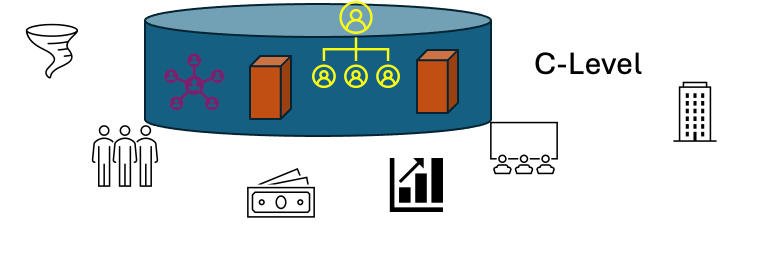
The group or person responsible. Often, they have direct reports, personal projects, and directors reporting to them. Instead of having one manager, s/he often reports to the Board of Directors, which means you have multiple managers. And you are still beholden to tradition and change and to the most important people — your employees.
At this point, your time shifts to 80% focus outside the company and 20% inside, so you’d better make the most of that 20%. If you skip some steps along the way, you will be lost.
You have to manage your time, your calendar, your reports, their reports, the Board of Directors, and the vendor relationships. You must understand the competitive landscape and your company’s strengths and weaknesses.
While progress is always slower than you want, you are the first to see changes happening. Don’t forget that it is imperative that you constantly communicate those positive changes! It is the company's most frustrating, challenging, and rewarding position.
Key Issues
Travel — most of it delayed, late at night, and yes most of it in coach. It will mess up all your efforts to manage your time.
Meetings. Most of them poorly run with no agenda and no information. Sometimes though, you get an occasional burst of insight or information that can change the success or failure of your company. Those bursts make attending worth it.
There is a lack of data and information from the inside and a lack of insight into the outside environment and the competitors’ strategies.
These roles are often depicted as being on the top of a bald mountain with their eyes shaded, looking off into the distance to see the future. It's a romantic idea. It’s more like hacking your way through the jungle with a butter knife while the company awaits your futuristic insight. Think Rambo in a suit.
Keys to Time Management Success
Strategic focus: You can set the agenda. Set it. Then, ensure that 95% of your time is focused on the key gaps between your vision and reality.
“A CEO focuses on only three things. He sets the overall vision and strategy of the company and communicates it to all stakeholders. He recruits, hires, and retains the very best talent for the company. He makes sure there is always enough cash in the bank.” (Trey Taylor, A CEO Only Does Three Things)
- Control your calendar. Review it regularly and prune anything that doesn’t move you forward.
- Make time to talk to employees. It would help if you met personally with every employee at least once a quarter. It can be breakfast with the CEO, roundtable meetings, or one-on-ones with key individuals (not just high potentials identified by others, but those in key positions that can make or break your progress). But you need time to hear what’s happening, communicate where you are going, and build real connections.
- Make time for yourself and your family. While this goes for everyone, it’s especially critical when you reach the C-Suite. Everything feels more urgent when you see what’s coming and can’t necessarily share it with your team, at least not at the time. It would be easy to work yourself into the hospital—schedule time for whatever self-care you need. There were times when 15 minutes with an Excel spreadsheet digging into data refreshed me in a way that let me be more creative and engaged. At one point, a 30-minute lunch walk became my lifeline to sanity. Find your moments.
Conclusion: Take Control
Regardless of your position in the company, take control over the time that you can control. Learn to use the tools and resources available to you at every step. Always remember to schedule recovery time for yourself and your family. It is, after all, just a job. You can be passionate, driven, ambitious, and productive without sacrificing your health or family.
Thanks for reading. If this is helpful or interesting to you, I’d appreciate your feedback. If you want to improve your company’s time management processes or need help, please contact me at [email protected].


