
Body 2.0
How I Make 10,000 Steps a Daily Routine: 5 Micro-Habits That Keep Me Moving
Simple changes in my daily life that lead to consistently hitting my step goals

Walking 10,000 steps daily leads to lower mortality risk from all causes.
It reduces the risk of many heart diseases, lowers blood pressure, and positively affects mental health by reducing stress and anxiety.
As a busy consultant, I struggled to hit 10,000 steps consistently. If I am brutally honest, I even struggled to hit 5,000.
This had adverse effects on both my mind and body.
My body was fat and tired.
My mind was stressed and anxious.
As a consequence, my blood pressure went through the roof.
This trend continued when I embarked on my entrepreneurial journey.
The days simply run out too fast, dealing with all the uncertainty that a high-paced, high-stress job brings.
I knew walking was important, yet I still struggled to walk consistently.
That is until I discovered these five micro habits that allowed me to hit my step goal every single day.
Here is what happened.
Let’s first start with a bit of research
We all know that walking is healthy.
But do we know just how healthy walking really is?
Here is what science has to say about it.
A study published in the International Journal of Behavioral Nutrition and Physical Activity found that walking 10,000 steps daily significantly improved cardiovascular health, including blood pressure and cholesterol levels.
This is excellent news for anybody working in a high-stress, high-pressure job where increased blood pressure and cholesterol are a common challenge.
But guess what?
There is even more.
Another research published in the American Journal of Preventive Medicine suggested that hitting the 10,000 steps per day goal is associated with lower mortality risk from all causes.
What that means is that walking is not “just healthy.”
Walking also helps you live longer.
If you are not entirely convinced, here are a few additional benefits of a consistent walking routine.
Walking improves your overall fitness
Walking increases stamina and strengthens muscles.
When executed on top of your current lifestyle, it leads to weight loss.
The average person burns between 300–500 calories by walking 10,000 steps (This, of course, depends on your weight, walking pace, terrain, and metabolism).
Is there anyone out there who doesn’t want to burn an additional 300–500 calories each day without spending too much time?
Walking improves your mental health
Walking leads to reduced stress, anxiety, and depression.
It also improves mood, boosts self-esteem, and enhances cognitive function.
What a simple (yet effective) way to increase your personal and work performance (while eliminating burnout in the process).
But what happens if you don’t find the time to walk?
Here is where micro-habits come in.

5 Micro habits that allow me to reach my step goals
As mentioned at the beginning of this article, I was struggling.
My job always came first, which meant that my health never got the priority it deserved.
That includes moving my body.
My baseline steps were usually somewhere between 3000 and 4000 per day.
This means I was missing 6000–7000 steps each day.
The average time to walk 1,000 steps on flat terrain with a moderate pace (approximately 4.8km per hour) is around 10–15 minutes.
That means reaching my goal of 10,000 steps would take anywhere between 60 to 105 additional minutes each day.
I don’t know about you, but I personally don’t always have time to waste an additional 1 to 2 hours on top of my busy schedule.
Although I really enjoy sunset walks and try to do them every day, we all know how “life happens,” and many days, this is simply not feasible.
That is why I have come up with these 5 simple micro-habits that help me reach my step goal without sacrificing work performance.
Here’s my list:
- Walk 1000 steps after every meal (3000 steps)
- Walk during rest time in the gym (1000–2000 steps)
- Use breaks for short walks (1000–1500 steps; 200–300 steps per break)
- Walk during phone calls (300–600 steps; 100–200 steps per phone call)
- Take a short 30-minute evening walk (2000–3000 steps)
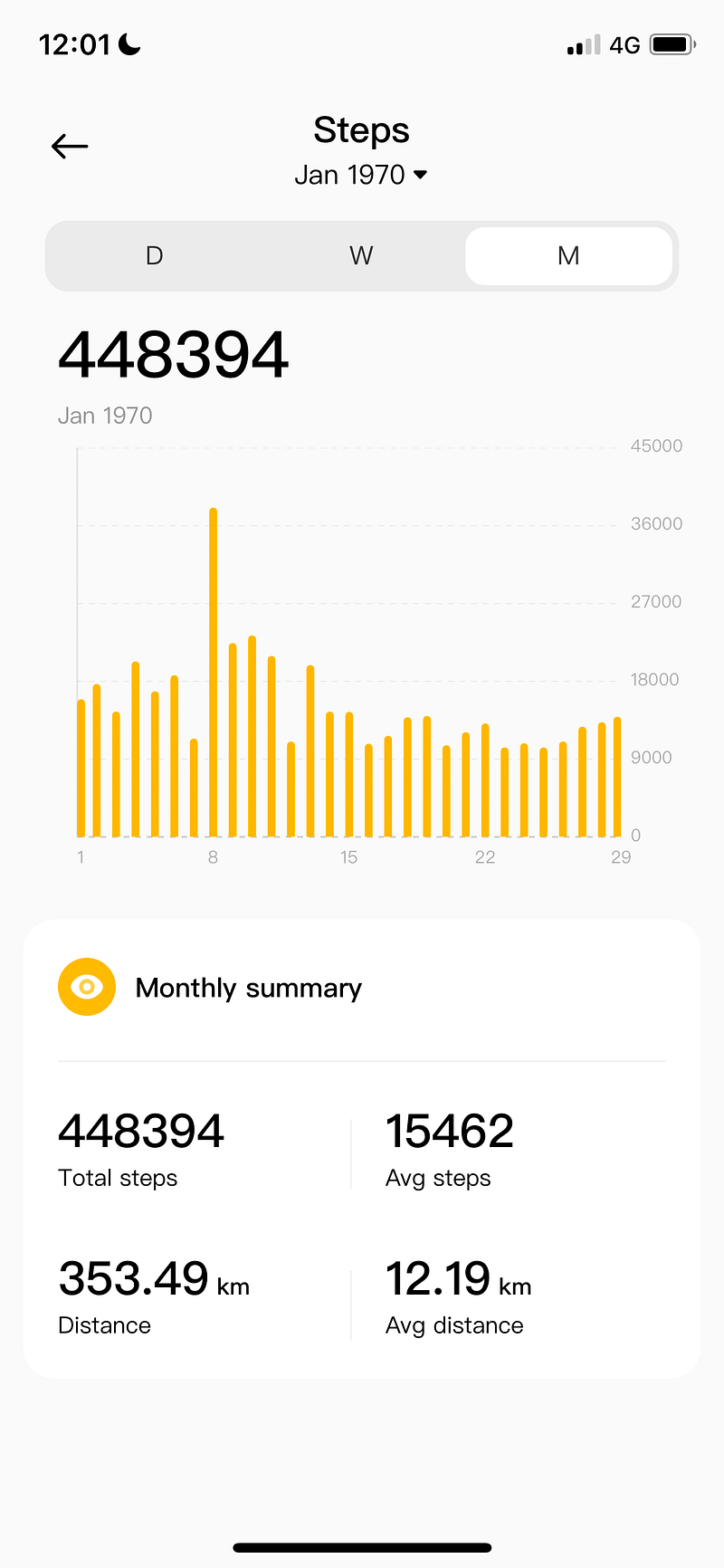
By simply adjusting my daily habits, I managed to add between 7,000 and 10,000 additional steps.
This gets me way past my daily goal of 10,000.
You don’t believe me?
Check out my average step count for February 2024 (I’m not sure how my watch got the dates wrong since yours truly haven’t even been born in 1970…).
I understand the days are not always perfect, and we cannot consistently achieve our goals.
Here are two pro tips to maximize your daily step count:
Pro tip 1: Take the stairs — Climbing stairs can significantly increase your step count. Instead of using elevators, opt for stairs. For example, if you work in a building with multiple floors, the stairs add around 100–200 steps per floor.
Pro tip 2: Organize walking meetings — Walking meetings combine business with pleasure. Even better, they add several hundred steps on top of boosting meeting creativity (especially if you take a walk outdoors).
Simple and easy tips to optimize your walking routine.
Now, it’s time to wrap this up.
Final thoughts
Moving your body is the easiest path to longevity and health.
Not everybody can start going to the gym every day.
Yet (almost) everybody can begin by walking 10,000 steps.
Leveraging five micro-habits from this article will help you achieve that without significantly impacting your daily lives.
Now, it all depends on you.
Are you brave enough to start today?
Let me know in the comments.
Did you enjoy the read and would like to get more practical tips on how to get in the best mental and physical shape of your life?
Click here to receive an exclusive Peak Performance Checklist and start maximizing your performance today (even if you are a regular guy like me).


