
How I Made Every Investment Mistake Possible in One Single Trade
What it cost me, what l learned and how you can avoid doing the same
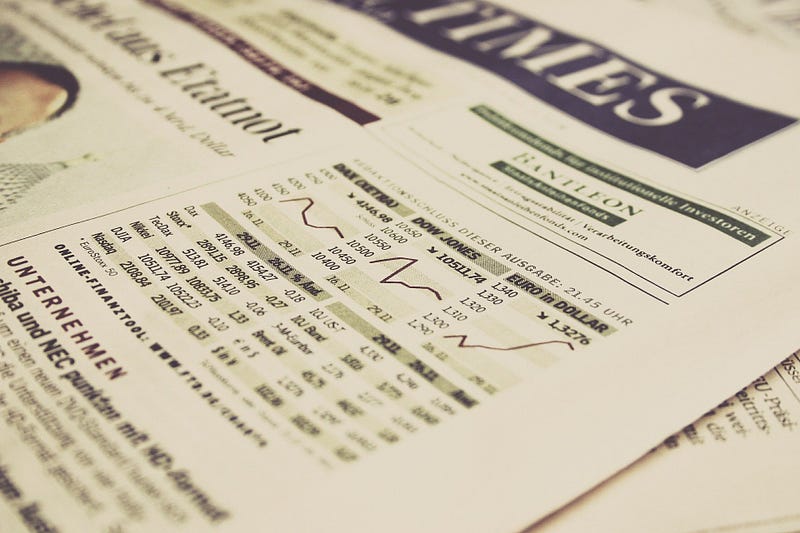
Whilst it may not seem possible in today’s more restricted banking environment, I can assure you this is an entirely true story. Even though some of the actions I took can no longer be executed in this fashion, the psychology and decision-making process that drove those actions is still as relevant today as it ever was.
In short, it doesn’t matter how the actual administrative process compares between now and then, the thinking and emotion behind risky trades can get you in trouble when you first expose yourself to them. So, if you’re new to investing or about to do your first trade, you will find this useful.
However, if you’re an experienced trader, I have no doubt you’ll be facepalming and shouting at the screen repeatedly, exactly like I do when re-reading it.
It was 1995. I was sharing a very nice house with three other lads and we were all earning very nice salaries in local corporate companies. All of those lads, in fact, would go on to be incredibly successful in their fields, including being CEOs of large and very well know companies.
I and one of the others had also been dabbling a little in share dealing. Nothing big — a hundred here, a hundred there — mostly in penny stocks that we’d learned about through our joint subscription to the Investor’s Chronicle, a weekly newspaper-style publication that focused specifically on providing recommendations for companies to buy and sell shares.
This was in the time before the internet, so information was harder to get and the actual buying and selling had to be done by calling a broker on the phone whenever you wanted to make a trade. It was also the time of free and loose banking rules, something that we now know would come back and haunt us globally a little over a decade later.
One of the companies we had been following was a (now defunct) Cambridge (UK) based company called Tadpole Computers, manufacturers of rugged military-grade laptops, servers, and thin client machines. At the time, this was the business to be in due to the insatiable growth of computing networks.
Tadpole was usually far too expensive for us, with its shares trading around 178p, but something had happened that had shaken investor confidence: the company had issued a product recall of one of its top-selling computer items.
I have long since forgotten the details of what precisely the issue was, but we were certain (from calling the broker every ten minutes to get an update) that the market had overreacted. The share price plummeted, first down to 134p and then 118p at the close of trade. Assuming we were right about this overreaction, we were convinced that this represented a short term possibility of profit. After all, it was not uncommon for rapidly plummeting shares to become oversold and then bounce back up again afterward.
Lesson one: Just because something has acted that was before, doesn’t mean it will again. It’s OK to use that sort of reasoning to start building a picture of a trade, but it’s not enough to rely on its own.
We’d learned how to find out about after-hours trading via our brokers and rang regularly through the evening to get the lists of trades that he would patiently reel off and we’d write down on a piece of paper. By 11 pm, it was clear that two things were going to happen: First, it was going to open even lower the next day, and second, we were going to make our move.
My friend had greater resources than me, but I had a cunning plan lined up that, if successful, would set me up very nicely indeed. It was also incredibly risky and borderline fraudulent, but I wasn’t going to let small details like that affect my chance of making perhaps even a thousand pounds or two with a single trade.
The next morning, as soon as I arrived at work, I rang my broker and requested that I made an ‘account trade’ for £10,000. (That’s £19,550 in today’s money). He would buy £10,000’s worth of Tadpole Computing shares at the current market price and I would make good on that £10,000 by the end of the accounting period, which would expire in exactly ten days’ time.
Of course, I didn’t have ten thousand pounds. I didn’t even have one thousand pounds. In fact, I was only in my first’ proper’ job after university earning a decent, but still unexciting £14,000 a year, but my gamble was that by buying AND selling the shares in one account trade period, I could pay back the debt and keep the profit I was certain to make.
Lesson two: NEVER invest more money that you can afford to lose and NEVER borrow to make a trade. EVER.
These were the days when banks didn’t really care as long as they were making money. Yes, they asked me if I had the money elsewhere and I said I did, but I was not required to produce any evidence of it at any stage and, frankly, they didn’t seem that interested anyway. Within minutes the trade was done. I now had ten days to hope this paid off. If it didn’t I was in a world of trouble, not that my youthful overconfidence would ever have acknowledged that.
Incredibly, it soon became clear that I had bought the shares at exactly the right moment, literally the exact bottom of the market. My £10,000 was rapidly becoming £10,500, then £11,000, as the recovery continued throughout the day. I was clearly a market genius, a stock trading savant. I’d made more money in a single day than I’d ever done so before and I hadn’t even spent a penny to do it. Wow, I was good.
Lesson three: You can never know the ‘top’ or ‘bottom’ until later on. Sometimes you’ll get it right, mostly you won’t, and in the end time is more important that timing. You are NOT a stock trading god just because you got it right once or twice!
I could hardly sleep that night with excitement and, once again, rang my broker late into the evening to see what the aftermarket sales were like. It all looked positive, the recovery was continuing. I finally fell asleep only a couple of hours before I needed to get up, dreaming of the fantastic things I was going to do with all my money.
At work the next morning, groggy, but still excited, I rang again and discovered that my £10,000 was now worth close to £13,000, a clear profit of £3,000 once the account trade was settled. I was literally dancing around the conference room I’d sneaked into to make the call, and I certainly couldn’t concentrate on my mundane meetings when all I could dream about was getting back to my desk and seeing how much more I was worth.
By the time I went home on day two, my profit had reached £3,500. I was exhausted when I got home and slept through to the next morning without waking.
I still had eight days to go. What could ‘I’ accomplish in that time? I had a fleeting thought that perhaps I should sell and lock in the profits like my friend had done earlier in the day, but the fact that he had missed out on some of the later gains had irked him. No, he’d made the mistake, I’d got it right. I’d hold.
Lesson four: Be clear about what your objectives and targets are and sell when you reach them without emotion, fear or regret, especially if you are in a very high risk, volatile trade such as this. You will rarely make as much as it is actually possible to make in real time — that figure is only revealed in retrospect.
The next morning I felt different, a little more subdued, almost as if I knew what was coming. That morning there had been another announcement from Tadpole. It seemed that the faulty component they had used in the recalled laptops was also present in another line of products which would now also have to be recalled or replaced. The shares, once again, started to descend. Rapidly.
I was still calling every fifteen minutes or so at work (something that was now attracting attention from the powers that be) and writing down the latest prices, watching with horror as my profits started to be wiped out. Could it really be that I would only now gain £1000 or so? That wouldn’t do. I would need to hold on and wait for the recovery.
Lesson five: Beware the double edged sword — the resistance to sell when prices are going up (“I might make more!”) and when prices are going down (“I’ll wait until they recover!”) Use your objectives identified in lesson four to understand your next action and execute it ruthlessly.
Of course, it really isn’t hard to see where this story is going and where, in fact, it did end up. This time the markets were brutal, there was no way they were going to forgive a second recall in as many days and the sell-off continued ever closer to my initial investment level.
Like the proverbial rabbit in headlights, I simply watched it happen, unable to act and unable to accept a loss. I was just hoping for a miracle now before the clock ran out. Of course, it never came.
Lesson six: It is hard to sell in the red and this is never normally a good strategy as it usually implies a panic or forced sell. However, there are cases when it makes strategic sense to prevent a bigger loss because some other factor is affecting the trade. Even the best traders don’t get this right all the time.
On day ten, my account was due to be settled. The markets had stabilized a little, but I still found myself nursing a £700 loss after selling the shares, roughly equivalent to £1350 in today’s money. I didn’t have it and had to go cap in hand to my girlfriend at the time to borrow it. It took me several months to pay it back.
I was bitter and angry, but not at the world, purely at myself. In the cold analysis that can only be done in retrospect, it had been clear I had been clouded by greed and my own self proclaimed genius.
My thinking and analysis actually hadn’t been far off, and having the sheer audacity to pull off an account trade of that size without any money was considered by some as an act of a real entrepreneur, although many, quite rightly, held the opposite view.
However, my downfall had been my complete inability to manage my emotions once the skin was in the game and, for the first time, I knew that I knew nothing about what I was actually supposed to be doing. It was a lesson that cost me over a month’s salary and a large portion of humble pie. Some would say I got away lightly.
But it was a lesson learned and an experience I refer to often as a reminder to myself how easy it is to get carried away. I still trade and invest quite actively and have done for all the twenty-five years that have elapsed since these events took place, but I never did another account trade without funding again.
Or hold any Tadpole Computing shares, for that matter.
If you enjoy reading stories like these and want to support me as a writer, consider signing up to become a Medium member. It’s $5 a month, giving you unlimited access to stories on Medium. If you sign up using my link, I’ll earn a small commission.
Want free access to articles, analysis, podcasts and training webinars? Why not subscribe to the ‘Bitcoin and Global Finance’ newsletter? Subscribers over 18, resident in Europe (see list on subscription page) & new to Bitcoin can claim £10’s worth of Bitcoin on joining! Unsubscribe at any time.
If you enjoyed this story, you’ll almost certainly enjoy these!
Eon Energy called me everyday for four years. Every. Single. Day. Here’s how I used their time.
Sadly, this story is entirely true. I am responsible for the permanent removal of priceless art from the planet by one of the 20th century’s most important artists. No, I’m not proud, Yes, I am still dealing with it.
Did I tell you I was a millionaire in my twenties? Well I was. Just not in the way you might think.
Disclaimer: The above is the opinion of the author based on the lessons he learned from his own experience. It does not form or should be construed to form financial advice. Always seek professional impartial advice before embarking on any financial investment.