avatarMarouane Bembli

Free AI web copilot to create summaries, insights and extended knowledge, download it at here

4324

Abstract

span> <span class="hljs-params">(c *calculator)</span></span> Calculate(num... <span class="hljs-type">int</span>) { ans := <span class="hljs-number">0</span> <span class="hljs-keyword">for</span> _, n := <span class="hljs-keyword">range</span> num { ans += n } fmt.Println(ans) }

<span class="hljs-keyword">var</span> Calculator calculator</pre></div><p id="c1d0">We exposed a struct which implements the method Calculate. This is required for the discovery and registration of the plugin. Now to compile this and make it a shared-object we need to build the library as a plugin.</p><div id="b6b4"><pre><span class="hljs-attribute">go build -o -buildmode</span>=plugin .</pre></div><p id="198a">After this, we will have a shared object file(in our case “<i>add.so</i>”) which we can dynamically load at runtime in our main application.</p><figure id="5129"><img src="https://cdn-images-1.readmedium.com/v2/resize:fit:800/1*HEBnzWVkvUP0JjhOsfOH7Q.png"><figcaption>updated file structure of the library</figcaption></figure><p id="5408">Now to dynamically load the library into our main application at run time we need use the plugin system of Golang.</p><div id="0960"><pre><span class="hljs-keyword">import</span> ( <span class="hljs-string">"fmt"</span> <span class="hljs-string">"os"</span> <span class="hljs-string">"plugin"</span> )

<span class="hljs-keyword">type</span> Calculator <span class="hljs-keyword">interface</span> { Calculate(num... <span class="hljs-type">int</span>) }

<span class="hljs-function"><span class="hljs-keyword">func</span> <span class="hljs-title">main</span><span class="hljs-params">()</span></span> { calculatorPlugin, err := plugin.Open(<span class="hljs-string">"/abs/path/to/shared/object/file"</span>) <span class="hljs-keyword">if</span> err != <span class="hljs-literal">nil</span> { fmt.Println(<span class="hljs-string">"error while opening shared object file"</span>) os.Exit(<span class="hljs-number">1</span>) }

symCalculator, err := calculatorPlugin.Lookup(<span class="hljs-string">"Calculator"</span>) <span class="hljs-keyword">if</span> err != <span class="hljs-literal">nil</span> { fmt.Println(<span class="hljs-string">"error while lookup"</span>) os.Exit(<span class="hljs-number">1</span>) }

<span class="hljs-keyword">var</span> calculator Calculator calculator, ok := symCalculator.(Calculator) <span class="hljs-keyword">if</span> !ok { fmt.Println(<span class="hljs-string">"unexpected type from module symbol"</span>) os.Exit(<span class="hljs-number">1</span>) }

calculator.Calculate(<span class="hljs-number">3</span>,<span class="hljs-number">4</span>) }</pre></div><p id="f4f9">In this case if we are making any changes to library, we don’t need to re-compile our main application. We only need to recompile the library’s shared object and rerun our main application.</p><p id="a32d">Due to the different characteristics, the advantages and disadvantages of static and dynamic libraries are also obvious; binaries that rely only on static libraries and are generated by static linking can be executed independently because they contain all the dependencies, but the compilation result is also larger. Dynamic libraries can be shared among multiple executables, which can reduce the memory footprint, and their linking process is often triggered during loading or running, so they can contain some modules that can be hot-plugged and reduce the memory footprint. Compiling binaries using static linking has very obvious deployment advantages, and the final compiled product will run directly on most machines. The deployment benefits of static linking are far more important than the lower memory footprint, that’s why Golang uses static linking as the default linking method.</p><h1 id="d290">Issues with Dynamic-linking (shared library plugins) in Go</h1><p id="91cd">Plugins using shared libraries and the plugin package work well for Golang, as the previous section demonstrates. However, this approach also has some serious downsides. The most important downside is that Golang is very picky about keeping the main application and the shared libraries it loads compatible.</p><p id="285c">As an experiment, try using different versions of a common d

Options

ependency in the plugin application and the main application, rebuild the main application and run it. Most likely you’ll get this error:</p><div id="443c"><pre><span class="hljs-comment">"plugin was built with a different version of package XXX"</span></pre></div><figure id="d928"><img src="https://cdn-images-1.readmedium.com/v2/resize:fit:800/0*ow5zqQqWHmQoZqaC.gif"><figcaption></figcaption></figure><p id="35aa">The reason for this is that Golang wants all the versions of all packages in the main application and plugins to match exactly. It’s clear what motivates this: safety.</p><p id="7b0e">Consider C and C++ as counter-examples. In these languages, an application can load a shared library with dlopen and subsequently use dlsym to obtain symbols from it. dlsym is extremely weakly typed; it takes a symbol name and returns a void*. It’s up to the user to cast this to a concrete function type. If the function type changes because of a version update, the result can very likely be some sort of segmentation fault or even memory corruption.</p><p id="80a8">Since Golang relies on shared libraries from plugins, it has the same inherent safety issues. It tries to protect programmers from shooting themselves in the foot by ensuring that the application has been built with the same versions of packages as all its plugins. This helps avoid mismatch. In addition, the version of the Golang compiler used to build the application and plugins must match exactly.</p><p id="74b9">However, this protection comes with downsides — making developing plugins somewhat cumbersome. Having to rebuild all plugins whenever any common packages change — even in ways that don’t affect the plugin interface — is a heavy burden. Especially, considering that by their very nature plugins are typically developed separately from the main application; they may live in separate repositories, have separate release cadences etc.</p><h1 id="bfc1">Alternative approaches to shared library plugins in Golang</h1><p id="c642">Given that the plugin package was only added to Go in <a href="https://golang.org/doc/go1.8">version 1.8</a> and the limitation described previously, it’s not surprising that the Go ecosystem saw the emergence of alternative plugin approaches.</p><p id="87e5">One of the innovative approaches involves plugins via RPC. In this method instead of loading the plugins into the host process we load them in a separate process which then communicates to host via RPC or just TCP on localhost. It has several important upsides:</p><ul><li>Isolation: crash in a plugin does not bring the whole application down.</li><li>Interoperability between languages: if RPC is the interface, do you care what language the plugin is written in?</li><li>Distribution: if plugins interface via the network, we can easily distribute them to run on different machines for gains in performance, reliability, and so on.</li></ul><p id="f78c">Moreover, Golang makes this particularly easy by having a fairly capable RPC package right in the standard library: net/rpc.</p><p id="4495">One of the most widely used RPC-based plugin systems is <a href="https://github.com/hashicorp/go-plugin">hashicorp/go-plugin</a>. Hashicorp is well known for creating great Golang software, and apparently, they use go-plugin for many of their systems, so it’s battle-tested (though its documentation could be better 😛)</p><p id="1a23">Golang-plugin runs on top of net/rpc but also supports gRPC. Advanced RPC protocols like gRPC are well suitable for plugins because they include versioning out-of-the-box, tackling the difficult interoperability problem between different versions of plugins vs. the main application.</p><p id="c8a4">However, this is also<b> not a perfect solution </b>as we talk about the fourth fundamental of plugin systems- “<b>Extension APIs</b>”. In a complex system, a plugin might make lot of Extension APIs calls which will end up increasing the latency if we are making network calls via RPC or TCP.</p><h1 id="1c76">Conclusion</h1><p id="03fb">Golang still has a long way to go when it comes to Dynamic-linking (shared library plugins). No solution discussed in this blog can be considered perfect. One needs to consider the pros and cons of each solution available as per their specific requirements.</p></article></body>

How I Earned $43,086 In Passive Income With Skillshare

And how you can too
Photo by Lewis Keegan on Unsplash

I’ve been a teacher on Skillshare for about 5 years now and during that time, I’ve created 30 classes on topics ranging from business, painting, sketching and lifestyle.

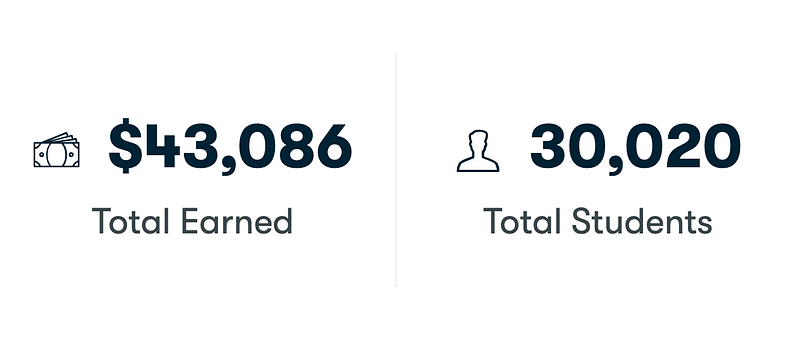
During this time I’ve earned a total of $43,086 from Skillshare. The cool part is this is 100% passive income. This means the work I’ve done in the past continues to generate revenue month after month without me doing anything.
Since I’m pretty lazy, this is my favorite type of income.

I’ll explain how that works in more detail shortly.

In today’s world, many of us are looking to make some extra money time on the side, so creating short online classes using the skills and knowledge you already have makes sense.

I wish more people knew about the opportunities that are out there and believed it is possible for them as well to generate an extra income online.

That’s why I’m sharing this story with you.

You might be intimidated by the amount of classes I’ve created and think that you couldn’t possibly come up with ideas for 30 classes let alone 5.

Don’t worry.

I’m going to show you exactly how I did it by recording and sharing what I was already doing in my spare time. Then I’m going to show you how I turned those clips into short, quick classes on Skillshare.

I’m also going to show you the simple steps to create a class, how you’re getting paid and what to think of when creating your first class.

If you use my referral link at the bottom of this article, Skillshare will give you a 2 week free trial to Skillshare premium where you will be able to check out 1000s of classes including some of my own for free.

It’s a great opportunity to get an idea of just how simply these classes are structured.

Once you see my classes and how simple and straight to the point they are you’ll get some ideas on how you can take that format and apply it to whatever topic you’re passionate about and want to teach and share.

That’s what makes Skillshare different. The simpler and snappier the classes, the better.

I think that’s really going to help you out and hopefully motivate you to create a class if you’re even remotely interested in trying this out yourself. If you do, make sure you let me know! I’d love to check it out.

So you want to create a class but don’t know where to start. This is the fun part.

Think of it like this. Whatever you enjoy doing in your day-to-day life, whatever knowledge and skills you have, this is what you want to turn into an online class.

Think about what you’re good at and what you enjoy. If you don’t know what you’re good at, ask your friends and family.

Let me give you some examples.

You might be amazing with cats. Maybe you’re fostering kittens for a shelter and love everything about it. It has its challenges but it gives you a sense of fulfillment.

This is a perfect topic to make a short class on. Divide the class into 10 videos, each videos only has to be about 2–3 minutes long.

Walk people through how to foster kittens. One video can cover how to approach shelters and rescues to let them know you’re interested. Another can cover what products are needed to foster — kennels, heated blankets, bottles for feeding.

If you’re covering a topic you’re passionate about, coming up with 10 videos is easy. The reason it’s easy is because you’re doing it yourself. All you have to do is document all the details that goes into that activity and turn them into video clips.

Me personally, I love to sketch cars. I’ve done many classes on the subject and I never seem to run out of things to talk about. That’s the beauty of sharing what you love versus what you’re told to share.

Sketches from one of my classes teaching proportions for different types of vehicles.

You might be in the 20% of the working population that loves your job. Share it! Turn your knowledge into a class.

You only have to be one step ahead of the majority of the population in a subject in order to teach it.

Let’s talk about how Skillshare pays you.

On Skillshare you get paid between $0.05 and $.10 per minute watched. This means that if your students watched 10K minutes combined across all of your classes in a month, you’d earn between $500 and $1,000 that month

Teacher payments are awarded in direct proportion to the number of minutes watched by Premium students in their classes each month.

For example, if 5% of all video watch time on Skillshare happened in your classes, you would receive 5% of the royalty pool that month.

Teachers can also earn revenue by referring new users to the platform and you earn $10 for every Premium Member you refer.

I would say Skillshare is probably the easiest way to get started creating classes online. However this also comes with its setbacks.

The lower the barrier of entry, the lower the quality. That’s usually how it works. Skillshare has a pretty low barrier to entry and accepts most videos uploaded to the platform as classes.

This also gives you an opportunity to stand out by putting in extra effort in what you produce online. Make it your own, don’t try to copy anyone else. Share your knowledge with enthusiasm.

I hope this opened up your eyes to what Skillshare is and how you can use it yourself to generate an extra income.

Watch my video where I cover this in more detail below.

If you like to try out Skillshare premium for free for 2 weeks, use my referral link: https://www.skillshare.com/r/user/bembli

Entrepreneurship
Creators
Content Creation
Skillshare
Passive Income
Recommended from ReadMedium