
How I made $4,921.01 as a New Writer on Medium (The Secret)
Have you suffered enough? Time to find out
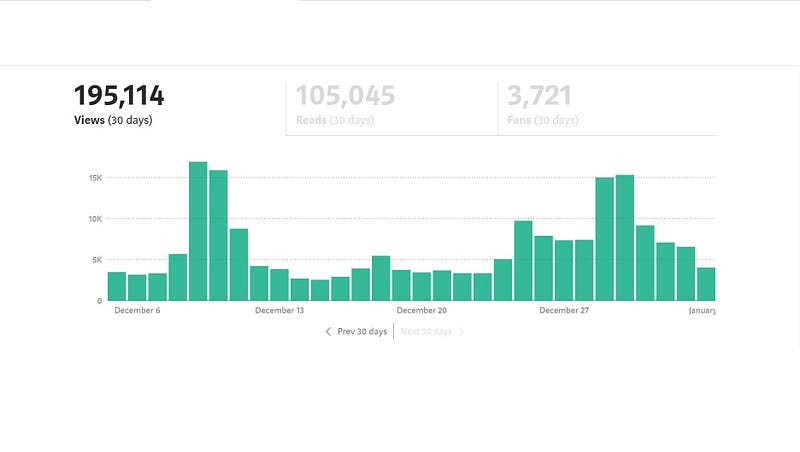
First and foremost:
This was by far my best month on Medium after starting last June. My stats for the first three months were so bad I never even looked at them. I’d tell friends my Medium earnings afford me one maybe two McDonald’s coffees by month’s end. Knowing this, I had one goal in mind: write like mad.
It finally paid off in spades.
Before I tell you what I found out last month, here are the basics you definitely need to know to make it big:
- Clean formatting: Analyze the best writers on Medium to get an idea (e.g. Ayodeji Awosika, Tim Denning). Just make sure your articles are clean or you will lose readers.
- Great Headlines: As someone once commented on one of my articles, write something that is a “scroll stopper” (Use a high-quality analyzer tool)
- Unique Photos: I cringe when I see the same photo twice on Medium. Your photos should be just as personal as your writing (Invest In Canva Pro so you can make a graphic as I made here)
- Publish Only In Publications: Bigger audiences and better chances of being seen
- Don’t waste the reader's time: Edit to the bone. Trim all the fat of your story. And after that, edit some more
You all know this, hopefully. So, here are some little-known important things I discovered in my most productive month.
1. Write in a Niche (Or at least start discovering one)
In December I narrowed down my writing to fitness, cryptocurrency/personal finance, and philosophy. It was the best move I made on Medium.
I was able to write about my passions without stretching myself too thin.
This doesn’t mean you need to limit yourself, but when push comes to shove, someone should be able to describe your work in one sentence like these guys:
- Stephen King: Horror novelist and weirdo
- Bruce Lee: Martial-artist and philosopher
- Zack Snyder: Emo who makes terrible movies
If I died tomorrow, I want people to look at my writing and be able to piece together who I was. No wills needed. They can light my body on fire and cast it into the ocean. I’m confident my work will explain everything because I focused on the topics most important to me.
*And if you don’t have a niche yet, keep writing more so that you find it.
2. Have You Suffered Enough? (It Matters)
One of the most important books I read recently was author Lee Gutkind’s “You Can’t Make This Stuff Up: The Complete Guide to Writing Creative Nonfiction.”
In it, Gutkind explains that a writer is only as interesting as his life; he titled this specific passage “How much have you suffered — or experienced?”
“Most young people haven’t experienced enough to have something significant to say about life, especially to readers who are older than they are,” says Gutkind. “I’m not contending here that young people can’t write with power and beauty or that they haven’t suffered. But it’s often better to join the Peace Corps, take a job driving a taxi, or interact with a different culture before studying on a master’s degree level.”
“It doesn’t mean you’re giving up the dream of being a writer; rather you’re living the creative nonfiction life, which means that you’re experiencing new worlds.”
I took that advice to heart last year:
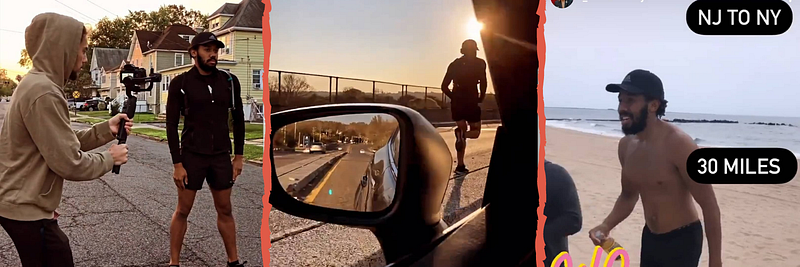
- I ran 30 miles straight and became an ultramarathoner
- Joined the army for six months before COVID forced me out
- Became a writer at USA Today Network
- Began my stand up comedy career
3. Fake it Until You Fake It Some More
A friend of mine recently landed a social media job with “Million Dollar Listings” host Ryan Serhant.
My friend’s only 23-years-old working with the best professionals in the social media/real estate business. After the first week he told me something that seared into my brain:
“These people I work for aren’t any different than us; they just work a lot harder. They’re faking until they make it.”
I took the latter part of that statement further: “Everyone is faking it until they fake it some more.”
Professionals are just better — a lot better — at faking it. They nurtured their gifts by making sacrifices every day. They worked harder than everyone else; kept at it longer than everyone else; and above all, never gave up.
I think about this quote a lot:
“I am not a writer. I’ve been fooling myself and other people.” — John Steinback
4. Write Yourself a $10 Million Dollar Check
- Lebron James is simply a gifted basketball player that relied on his genetics.
- Stephen King was born to write; he came into the world pen in hand, ready to give us “Carrie.”
These are some of the toxic comparisons many people make throughout the day. Other times we compare ourselves to our own network of people (e.g. why does she get more likes/claps than me).
You need to stop making comparisons like a defeatist.
I’m very competitive, so I try to compare myself to people far better than me. I break down these so-called “geniuses” and try to learn what they do that I could also implement.
I want to be able to have conversations with Neil Degrasse Tyson, run with Navy Seal David Goggins and write with other top professionals. After running 30 miles this year, I know anything is possible.
Treat yourself like you already made it:
In 1985, Jim Carrey wrote himself a $10 million check for “acting services rendered”, dating it 10 years in the future, and kept it in his wallet. Today he’s worth $150 million.
5. Stephen King’s Pen Isn’t Magic
There’s an old writers joke:
Whenever Stephen King does a speaking engagement someone will always ask him, “what kind of pen do you write with?” or “Do you use a laptop or a typewriter?” and so on.
I’ve heard others dub this the “Stephen King’s pen” question.
The secret is: Write every single day. That doesn’t mean publishing every day, just writing once before you go to bed at night. Even a few words are enough. King himself used to lie and tell others he takes breaks for the Fourth of July and Christmas. In reality, he takes no days off.
Stephen King’s pen is just a pen. It’s only magic when he grabs it. When I grab it it’s no more useful than a fork. The only way to become a master like him is through practice. The keys on your laptop should feel like home; you should be at your desk more than your bed.
Writing is no joke. Get serious and go to work. Only then will it pay.
This is all I’ve got in six months of writing on Medium. I hope you’re able to utilize this to become a better writer. I really do think Medium is going to blow up this decade and become the YouTube of blogging.
So improving your writing right now is an incredible investment. Best of luck to you all and looking forward to reading your work in 2021.


