
On Health
How I Lost 8kg in 7 Days With This Simple Fasting Protocol
On the path to ideal body — From 95 to 87 kg in less than one week

In December 2023, I was fat and tired.
My body was not healthy.
My mind was not happy.
My blood pressure was through the roof again.
In January 2024, I tried this simple water fast, and it changed everything.
Here is what happened.
Fasts are healthy but also dangerous
Let’s start with a little bit of theory.
Humans have been fasting for a long time.
Ancient fasting practices first emerged around 1,500 BC. They mainly started as religious tools, yet were soon leveraged for their numerous health benefits.
Some of the most notable health benefits include:
- Weight Loss: Fasting leads to calorie restriction, which results in weight loss
- Improved Metabolic Health: Several studies showed that fasting improves insulin sensitivity
- Autophagy: Fasting stimulates autophagy, a process where cells clean out damaged components. This could have positive anti-aging effects
- Mental Clarity: Improved focus and mental clarity during prolonged fasts mainly due to ketone body production
On the other hand, fasts come with many risks and you should be fully aware of them before ever trying a fast at home.
I tried to summarize the most important ones below (but please be aware there are many others, and the best thing to do is to gather all information by speaking with your doctor):
- Nutritional Deficiencies: Prolonged fasting can lead to deficiencies in essential nutrients
- Muscle Loss: Fasts can lead to muscle breakdown as the body uses muscle protein for energy
- Electrolyte Imbalance: Fasts can disrupt electrolyte balance, which is critical for heart and nerve function
- Psychological Impact: Fasting can exacerbate eating disorders or lead to an unhealthy relationship with food
- Other Risks: Dizziness, fatigue, headaches, and dehydration are some of the most common side effects
Now that we have a basic understanding of benefits and risks, let’s look into what fasts exist out there.
Fasts vary based on two drivers — Type (Water fast, Juice fast, Intermediate fast…) and Duration (24h, 72h, 7d….).
Nevertheless, they all try to achieve a similar goal: Give your body a break and allow it to clean and heal itself.
For this experiment, I decided to go with a 7-day water fast. This means that for 168 straight hours, I was consuming only water.
Luckily, I have done a couple of 72-hour fasts in the past and understood what I could expect during the first days.
I want to be 100% honest here — fasting is by no means easy, and to successfully push through, you will need to define a strong why. For me was to reduce my blood pressure (and hopefully lose some fat in the process).
Before we dive into day by day, I want to emphasize one more time that I am not a doctor and thus in no position to provide medical advice. Fasts carry risks, and you should consult a medical professional before ever trying one yourself.
Now that we are all on the same page, let’s dive right in.
Prepare well and suffer less
Weight Day 0: 94.8 kg
The healthier you eat upfront, the less hungry you will be during the fast.
You should eat (healthy) vegan food at least 1–2 weeks before starting the fast. I am usually a big meat eater. However, I have found this surprisingly enjoyable and tasty experience.
If you want to do a strict water-only fast, you should also eliminate coffee and tea during the two-week preparation period to avoid withdrawal symptoms during the fast. There are different schools of thought on this topic, but the consensus is that coffee and tea (without sugar) will not break your fast; therefore, you can continue drinking them during your fast if you have trouble stopping.
Two days before the start of the fast is when things get serious. In the last 48 hours you are only allowed to eat raw food:
- Two days before (48–24h): Raw vegetables and fruits
- One day before (24–0h): Raw vegetables (only)
You should aim to avoid dressings, sauces, or adding too much sugar in any way to reduce feeling hungry during the fast (I once did a 72-hour fast by eating pizza for my last meal, and I was “hangry” throughout the whole fast. Please be smarter!).
On a more positive note, here is a happy picture of me right at the start of the water fast.
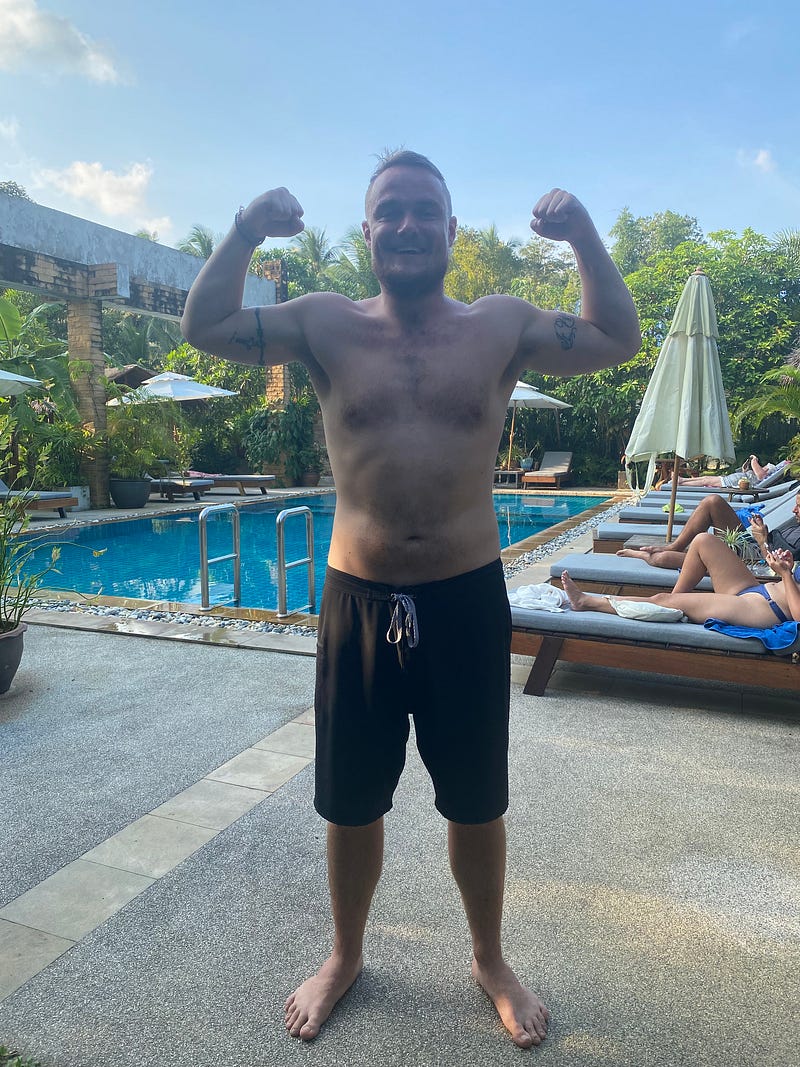
Honeymoon period
Weight Day 1: 92.7 kg Weight Day 2: 91.1 kg Weight Day 3: 89.7 kg
In the first three days, your body undergoes a massive transformation driven by extreme cleansing.
What happens to your body?
During the first 24 hours, your body uses all the glucose stored in the liver and muscles for energy. After 24 hours, glycogen stores start to deplete, forcing the body to transition to ketosis for energy (Livers start converting fats into ketones).
During day 3, your body enters full ketosis. Energy is mainly derived from ketones and fatty acids. During this time, you start experiencing a significant reduction in hunger and increased mental clarity.
How did I feel?
I honestly felt pretty great.
I was waking up full of energy to kick-start the day.
I have felt a bit more dehydrated than usual in the mornings. This happened because I was consuming much less water through food.
Surprisingly, I was not hungry for the majority of the day. However, I did experience random hunger spikes when I anxiously thought (only) about food for 5–10 minutes. During this time, I tried to relax, focus on deep breathing, and wait for the moment to pass.
Once you push through day 3, hunger disappears.
I also remained pretty active. I took a walk every hour and drove around Koh Phangan for 2–3 hours daily with my motorbike. I even did a 15-minute strength training on day 3.
During the first three days, I visited a sauna and cold plunge every day to allow my body to get rid of toxins. I was especially struggling with the sauna — my heart was racing like crazy.
I also did a cleansing enema to support the detox process. I will spare you the details. However, you would be surprised by the amount of waste in your body even after three days of not eating anything.
Although my days were full of energy, I became exhausted very early in the evening. This forced me to go to bed earlier and give my body a well-deserved rest.
The first 3 days were amazing.
Unfortunately, I cannot say the same for the day that came next.
Living hell
Weight Day 4: 88.6kg
From the moment I woke up, I knew it was going to be a shitty day.
What happens to your body?
After 72 hours, the autophagy process kicks in. Your body starts cleaning itself on a cellular level and recycles whatever is unnecessary.
Your growth hormone level increases by up to five times.
Many people also note emotional and psychological changes, such as processing strong emotional feelings.
How did I feel?
I felt like shit.
I was dealing with a “post-hunger feeling.”
You know the feeling when you are hungry for so long that you stop being hungry, yet you still feel a weird pain in your stomach?
My body felt tired, and my mind was blurry.
My state improved slightly after I drank a lot of water in the morning, but it never came close to the mood of the first three days.
The whole day, I felt restless. I was experiencing strong emotions of anger, anxiety, and sadness. I soon realized that I was also cleaning my emotional storage. It felt like both my body and my mind were testing me.
I decided to take an easy day. I have spent the day chilling by the pool and skipped both the cleaning enema and sauna.
I went to sleep early with an expectation of a better tomorrow.
Luckily, the Universe delivered.
Energy bomb
Weight Day 5: 87.1 kg Weight Day 6: 86.9 kg Weight Day 7: 86.5 kg
I don’t remember the last time I felt so light and full of energy.
What happens to your body?
Your body adapts to ketosis, relying heavily on ketones and fatty acids for energy.
Hunger diminishes further, and it’s almost not noticeable.
During these days, the risk of nutrient deficiencies increases significantly. It is essential to regularly check in with your body to understand how it feels. You also need to drink plenty of water to avoid dehydration risk.
Many people experience a heightened sense of accomplishment and pride during this period.
How did I feel?
Day 5 felt good.
I woke up tired and dehydrated in the morning.
I started my day by drinking 0.5L of water and went for a short walk. This cleared my mind, and I began to feel amazing.
I did not feel tired and walked around a lot during the day for some light exercise (and to burn additional calories).
The hunger disappeared entirely, but a weird feeling in my stomach remained.
Day 6 was the best one.
I felt productive and energized. I completed a large chunk of my work, conducted strength training, and went for a Thai Massage. After that, I drove around the island for 4–5 hours, bursting with energy.
On the last (7) days of fasting, I felt a bit tired.
I was struggling with muscle pain from a Thai massage I took the day before. The lady was small but strong. My body felt like I was recovering from a marathon.
Realistically, I could go for 1–2 more days of fasting, but knowing the end is near makes the last couple of hours much harder. The final 3–4 hours dragged very slowly, and I caught myself constantly checking the time. At this point, it became a mind rather than body battle.
After successfully completing 168 hours of water fasting, I was ready to break my fast in the right way.
Don’t fuck it up in the end
Congratulations, you have completed the most challenging part of the fast.
Now try not to fuck it up in the last few days.
Reefeding is at least as important (if not more) as a fast itself. It is during this process that most people will make or break it.
Your body is tired and clean. You should treat it like a queen. Avoid shitty junk food and allow your body to develop healthy bacteria in your gut slowly.
Your stomach is small, so be careful not to overstuff yourself.
You should ideally break the fast with either cucumber or papaya. They are both low on sugars and you will avoid shocking the body.
Eat mindfully! Take one piece, eat it, wait a bit to see how you feel, and then slowly eat more.
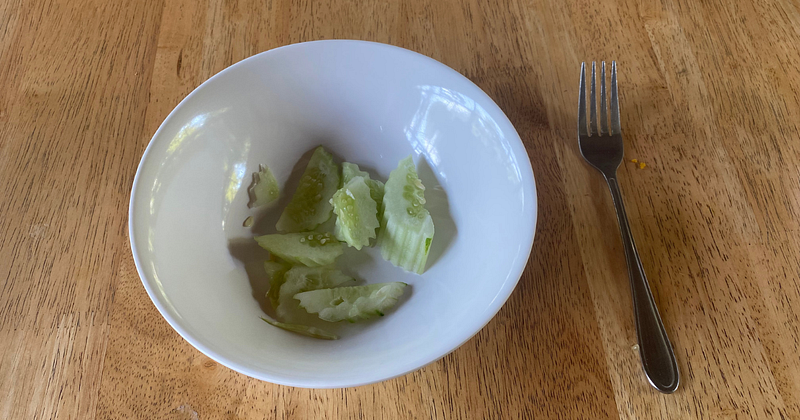
For the first 24 hours, eat only raw vegetables (and maybe some papaya). After 24 hours, you can introduce raw fruits (but please be careful not to overeat them due to their high sugar content).
After two strict days, you can introduce other (light) dishes. I love adding vegetable soups and curries to the mix.
Continue eating healthy for at least five more days (7 days total).
It is important to remember that the longer you eat healthy, the healthier your body will become, and the less you will crave bad foods in the future.
Now, when you are a fasting expert, let’s move to the most exciting part — the results.
The end result justified the means
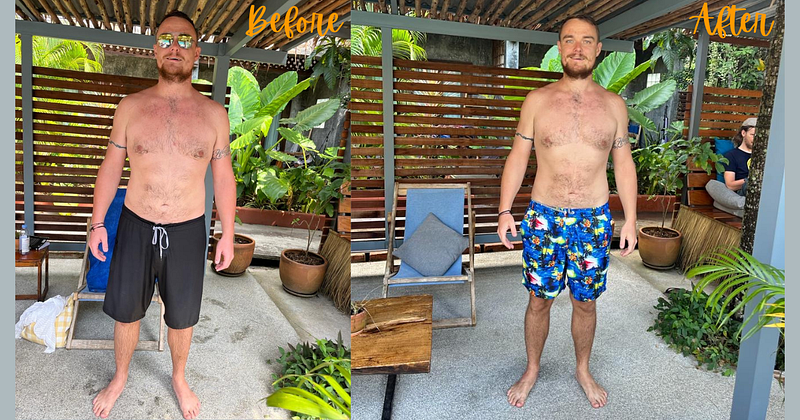
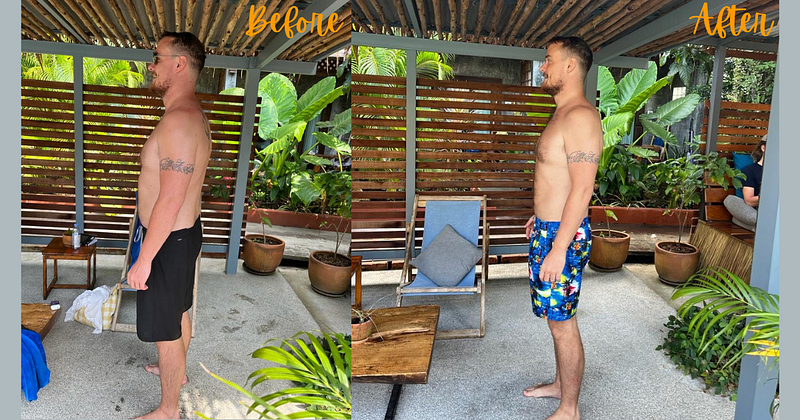
I am thrilled with the overall results.
First, I have cleaned both my body and my mind.
Second, I have prepared my mind to deal with all future challenges.
Third, I have lost an incredible 8kg. Although I realize a lot of lost weight is water and will return during refeeding, I still like the upgraded body shape that came with the fast.
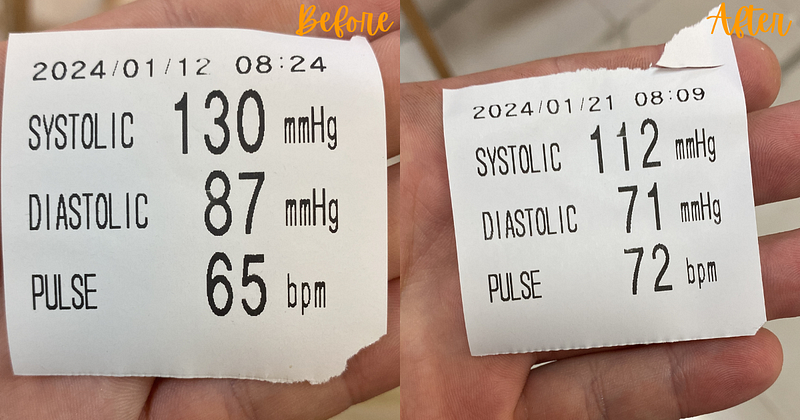
Fourth, my blood pressure readings improved dramatically.
I was struggling with high blood pressure for years, and I am incredibly grateful I managed to improve it without a need for medical drugs.
Keep in mind that the picture on the left is taken after 6 months of traveling. I ate 100% vegan food for around 2 weeks before the image on the left was taken.
While still working, my blood pressure was much higher (+150).
Last but not least, I improved my relationship with food and continue to eat healthy even after the fast is finished.
I feel refreshed and energized, ready to attack life with 200%.
All in all, the 7-day water fast was a big success.
Final thoughts
If I can do it, so can you.
You don’t need to start crazy.
Start slow.
First, try to do a 3-day fast and see how it goes.
Once you are ready for more, you will know it.
Before you do, however, please be smart and speak with your Doctor. We only have one health, and we should be fully responsible for it.
I wish you all a happy and healthy life :)
Disclaimer: I am not a medical professional, and the information shared here is based on my personal experiences and should not be taken as medical advice. Fasting, especially for extended periods, carries inherent health risks and can vary in impact from person to person. It is strongly recommended that you consult with a healthcare provider or a medical professional before embarking on any fasting regimen or making significant changes to your diet or lifestyle.
Click here to check out my Digital Dragon Newsletter where I share practical tips on personal growth and solo travel while traveling South East Asia :)


