
How I Listen to All the Women Inside Me….
I contain multitudes, and they are all me. I need to honor them.
Sawubona.
Medium writer D. Sylvester recently wrote a piece that got my attention:
It is a sad statement about too many of us that we aren’t familiar with the extraordinary writings of Black women. I am a raving fan of Toni Morrison, her prodigious intellect, terrifying insight and magnificent wisdom. I didn’t recognize the above quote from Nayyirah Waheed, a reclusive Black poet with 263,000 Instagram followers. I don’t do Instagram, which is perhaps one reason. But I was deeply moved by her words.
Sylvester’s piece speaks to the exhaustion that women- Black women- feel, in a world that at best doesn’t acknowledge their presence or value, or at worst, well, look. She says it far better than I can or ever could. And, it’s not my place to speak to it other than be inspired by her choice of words.
But this isn’t a piece about Black women, or women, but more, about a much larger concept of our parts. All the women inside us. And in all fairness, this touches all of us, for it speaks to those who live inside us as humans.
It’s a habit for us to think of ourselves as a single entity, one “I”. More truthfully we are made up of many, many discrete and incredibly diverse parts. Each of those “parts,” if you will, has its own distinct personality, ego needs, motivations and ways of being. This has nothing to do with multiple personalities.
It does, rather, have to do with understanding, accepting, acknowledging, valuing and learning from the myriad voices and entities which make up the mosaic of our extraordinary selves.
This is much more than just the roles we play, mother, daughter, lover, soccer player, grammy, cook, lawyer, janitor…that’s not what this speaks to. This is far deeper, which is why D. Sylvester’s words touched me.
This is of course only how I see it; it either makes sense to you or it doesn’t.
We are all multitudes, in more ways than one.
Before you call me a lugnut (you’d be correct, however…), kindly consider:
Let’s say your grands are coming over for the afternoon. A pair of three-year-old twins. Just before they arrive, you and your partner get into a nasty, rip-roaring argument. You’re flinging insults, and nearly coming to blows.Your faces are bright red, your blood pressures are off the charts.
Just about the time you’re about to take the end table to your partner’s head, the front door opens and the twin tots come barreling into the living room.
Grammy! Grampy!
INSTANTLY you both drop the combative part that’s out. Become sweetness and light.
You nuts? Schizo?
Nope. You’re normal.
Your behavior is in response to present circumstances. Those circumstances require a different PART of you to show up.
Again, each of those parts has its essential and important role. Each is legit, even those parts which have a terrible habit of embarrassing the hell out of us. Those are the parts we deny most vehemently. Not without good reason.
To wit:
Early on Saturday morning, pounding on your front door wakes you up. You’re in a hangover haze, stumble to the door. Your best friend shoves in, livid. He says, loudly,
“You have some apologies to make.”
“HUH?’
“You were a ripe asshole last night. You cost me my fiance. You pissed off an entire bar full of my friends. You were unbelievably rude.”
“But I’m a nice guy!!! I’m not like that! I would NEVER do that!”
Your friend whips out his iPhone. There you are, on video, being said ripe asshole to the fiance. Offending an entire bar full of people. Big. As. Day.
Yeah. You ARE that guy. At least a part of you is.
Selective memory doesn’t cut it. Denial doesn’t make truth disappear, dude. Nor is alcohol an excuse for Dr. Jekyll and Mr. Hyde.
I would imagine that most of us want badly to believe we are good people. I’m sure Jared the Pedophile from Subway REALLY believes he is such a nice guy. That is how powerful denial can be.

In a very real sense, women/people of color, those who are old or disabled, veterans, immigrants, those in “protected” classes all feel the need to manufacture cardboard cutout parts which live up to a given expectation which help others feel more at ease about their Other-ness. That is part of what I understand D. Sylvester to be saying. In the same way, we women and men as rape victims do the same thing. We shut up, deny our pain, question our sanity and sit on our stories. Cardboard cutout people. Those parts become us, perhaps protect us, apologize for us but in the truest sense are not authentically us.
That, however, is another article, and deserves a deeper consideration.
This is a way of understanding why we can show up in such radically different ways when we want so badly to believe we are consistently only one way in the world.

You and I embody every “person” or part we ever were. Abused child and the fat kid in school or the awkward teenager. The dependent single mom and the confident college grad just starting out. Those parts never leave us. That’s one reason why even very late in life, there are hurts that still hurt, and we can react the very same way to a certain trigger as though we still wore our thirteen-year-old skin suit. Or the terrified four-year-old whose parents hurt each other, and her.
Want an absolutely perfect example?
Shae’s description of hearing her father bark at her own daughter dragged out a part that was still six years old inside her. This is precisely what I mean. I wish in every way to validate her story. She speaks to those parts in us which not only deserve a voice, but which had hopes and dreams that were never mourned. That is why, when those parts show up, it can sometimes bring us to our emotional knees. Shae’s father is precisely like my own. Her story spoke to the six-year-old part that still lives inside me.
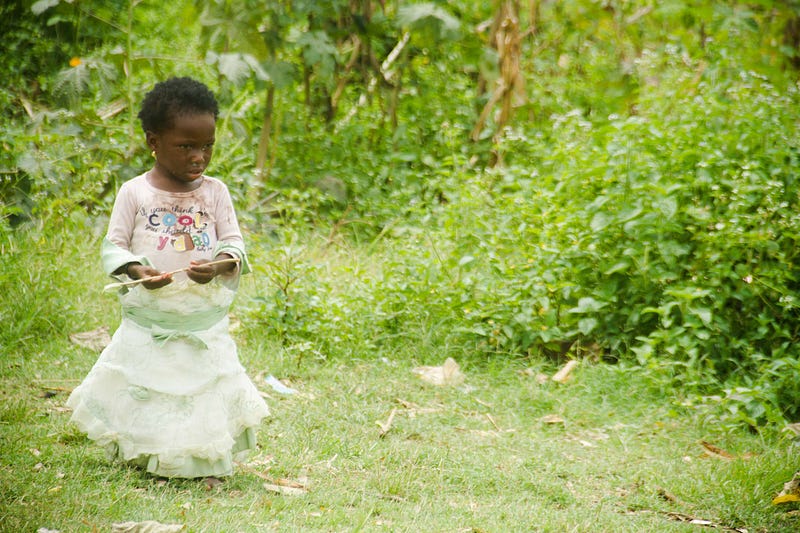
We don’t outgrow those parts. They are part of the rich and deep mosaic of who we are.
I have a cousin who is 75. When we talk, she still speaks with great pain about her experiences with her abusive mother. She doesn’t have just one inner child. She’s got a whole damned kindergarten, as do many.
We can grow new parts. Parts borne of pain and experience, which allow us to better manage the menagerie that lives inside us. Not easy. Do-able. Stay with me here.
Don’t think this is you? “I’m not like that.” ”I don’t do that.” “I’m not a (jerk/asshole/bitch/angry bastard).” “I would NEVER…”
Really?
Let’s talk.
Thanksgiving, for example.
The idea of course is that it’s all about happiness and joy and family togetherness and giving thanks. However, for far too many of us, it’s almost always a cringe-worthy exercise in being reduced to a toddler within minutes after walking in the door. Our families know where our buttons are because, after all, they installed them.
We enter the world loaded with our parents’ collective bloatware. And society’s for that matter.
You and I can end up responding to the early stimuli that our family members are effectively programmed to use with us. No matter how badly we don’t want to respond like our twelve-year-old selves, we do. Or, maybe you’re the parent who is causing your kid to curl into an emotional fetal position, without realizing that that you’re allowing the bloatware from YOUR parents to do the shaming.
That is the power of our parts.
I’m almost 70 years old. I still see those parts rise out of the graves into which they were interred many decades ago. I still watch myself show up like an immature asshole in situations where I thought I would never, ever have to embarrass myself that way again. I swore I’d never be like my mom (famous last words).
Parts don’t die. They walk off Stage Left after showing up in the spotlight, doing their thing, and then they retreat. Kind of like a moray eel.
Until, of course, conditions call them back out on stage to grab the mic.
I hope you can see the humor in this. Because it is funny. Before you hurl your Hewlett Packard at me, kindly see as Exhibit #1: Every single movie ever made about cringe-worthy holiday visits with the family or school reunions.
They’re funny because they are about the parts we thought we left behind. Forever. They’re funny because they speak so perfectly to how much those facets of us inhabit us for a lifetime. They’re funny because, well, it’s what we do.

In some very, very important ways, we never change. Or put much more succinctly, those parts of us which were carved out of the unique circumstances of a time (early adolescent life, high school etc) all of which entail very powerful emotions like shame or guilt or embarrassment, as well as their opposites, are still alive and well. They will most definitely show up when the conditions return.
So what do you do if you can’t exorcise those parts? Even if you pull a Van Helsing and drive a stake through the heart of the fat, pimply 16-year-old you that stammered and cried in the toilets after vicious bullying? How on earth do you put that all to bed? Nail it in a coffin forever?
You don’t. As I said before, you grow new parts.
Learning to be comfortable with the reality that there are many, as opposed to a predictable, controllable single “I” is the beginning of learning to love the garden of the complex self.
Second is to develop emotional maturity. Take a breath, slow down, and watch our behavior. It’s not the whole of us. Just a part of us.
Just like with an errant child, you love the kid but not the bad behavior. The part is the bad behavior.
But please, let’s kindly also call this out: all those loving, kind, gentle appreciative parts? Are also just parts. As opposed to a magical “real you” who is good all the time. That’s the seductive fantasy: that despite plenty of proof to the contrary, we are really great guys. Nice people.
No. We are all of it. We only need to be placed in the right conditions to see who hangs out behind Stage Left.
So what can I do?
Let’s say that I march into a friend’s office, and I’m pissed. I’m sucking all the oxygen out of the room in my self-righteous fury. Not that this ever happens, mind you.
My friend looks at me calmly, hands on his lap, and asks, “You want to sit that part down so that we can talk, or are you going to let her keep screaming?”

What a terrific question.
Invariably, I release all the energy, calm down and come into the moment. Part walks off Stage Left. I get to think about her why. What was the need? Why did that part of me get so demanding, so loud?
That’s immensely powerful.
If I deny one of my parts, I try to invalidate a legitimate part of who I am.
The angry, self-righteous part of me doesn’t go away (it’s attached to a lifelong story about learned helplessness) but another, calmer part just grabbed the mic and the spotlight. For a moment, I am in the Present. It’s fleeting.
Two minutes later there’s a brand new part out. Utterly distracted, like a spring wind blew all my calm and awareness out the southern window.
Noisy back there behind Stage Left.
We are forever growing new parts. When we meet new people. Learn new skills. Suffer a loss. Find ourselves in different conditions. Life is forever carving brightly-colored tiles for us to add to the brilliant mosaic that is our existence. We leave none of it behind.
Think of our role as writers. Each of us dips a spoon into the experiences of our lives to inform our prose. We use those parts to speak their truth. For example, there is a part of me who was gang-raped at 23. When I write about that, she speaks. She is not all of me, but she is a part of me. She is an essential aspect of my mosaic. I don’t want to leave her behind. In fact, I can’t. Thank god, because that part helped sculpt who I am today. She still does.
She is no less powerful today than thirty four-years ago. But I don’t allow her to manage my entire life. She’s just a part.
Our new Conditions are both calling out and building new parts. Parts that cope better, parts that don’t. To that I offer a piece by one of my favorite writers Kris Gage:
From Kris’ article:
5. One or both of you will realize this isn’t who you want for the “hard times” in life
…because going through a difficult, trying time makes one or both of you realize that this isn’t the person you want for tough times.
Hard times pull out our parts. Big Time.
Ever travel with a new flame? Have a problem? It’s a party of parts, over passports and missed planes and hot days and broken down Jeeps. Victim parts, entitled parts, brat parts, asshole parts, you name it. And sometimes, uber responsible parts grow, show up, help out, show patience. For examples, see Sean Kernan’s writing about how travel is a great way to find out about a potential partner. Part party.
The first move towards true spiritual development is being able to step outside yourself in the moment and coolly watch what you do. Without disgust or fear or judgment. Just see.
That’s what nascent emotional maturity looks like. To have a good laugh, a good cry. To learn to stop denying those parts of us that we don’t much like, which are inconvenient to our glowing self-image or remind us of our parents.
Like it or not, Skeezix, that’s also you.
Those parts are in all of us. All legitimate. The best of us simply learn to grow better, stronger ones. The greatest of us learn to embrace, love, learn from and value every single part, for they are teachers. They humble us. For their parts humble them, but do not frighten them.
We are the sum of our parts, past present and future. On rare occasion, a thoughtful, sober one of mine pipes up. I sincerely hope that’s the part who wrote this article.