avatarKensu Fetsani

Free AI web copilot to create summaries, insights and extended knowledge, download it at here

4655

Abstract

t see your image or read your catchy sub. So make your title a good one. Not too long. Not too short. No clickbait. As much as we hate to admit it, titles that explain plainly what the article is about, perform much better than those with a more creative flair. Maybe if we get big enough, that will change.</p><p id="fdea"><b>Subtitle</b>. This is the place to give the reader an additional bit of information on the scope and focus of your article. A place to editorialize why you think this is important or to explain further what you’re trying to say.</p><p id="08cc"><b>Featured Image</b>. We discuss photography more below, but your featured image should be a high-quality image placed directly after the header (Kicker, Title, Sub).</p><p id="b743"><b>Body</b>. Medium has given us a fair number of formatting tools, but we suggest you use them sparingly. We’ve all seen articles where it looks like the author was trying to show off every tool available. They look like a cross between an internet recipe and an either-grader’s book report. They’re unreadable. The purpose of the tools is to make your article easier to read, not harder. Don’t get enamored with over-formatting your story.</p><p id="54c9"><i>Subheads</i> should be used to break up sections, and page breaks (three little dots) should be used to break up long sections.</p><p id="2bc6"><i>Callouts</i> are great when used judiciously (one or two), but they shouldn’t replace the actual text of the article. If it’s part of your article, it should be <i>in</i> the article.</p><p id="f594">Unless you have a good reason, we don’t like to see <i>bullets</i> or <i>numbered</i> lists. This isn’t Buzzfeed.</p><h2 id="ce4e">Photography</h2><p id="18f7">We can’t tell you how seriously we take aesthetics regarding messaging. Many writers don’t seem to share our visual requirements, but we firmly believe when articles are well presented, they are more readily consumed. This is decades of branding experience talking.</p><p id="2c2d"><b>Black and White (NEW)</b>. We have decided to go fully black and white from now on, for several reasons. One, it helps to provide some cohesion between disparate imagery. Two, it’s an homage to the newspaper days of old. We want Rome to look and feel different.</p><p id="3148"><b>Cover Image</b>. This is basically the only image we care about. If your article is more pictures than words, then this isn’t the right place for your piece. We’re all here to read what you have to say, not look at pictures. The cover image appears on the publication’s home page and affects how the entire operation is judged, so we can’t have one shitty image ruin the bunch.</p><p id="62bd"><b>Quality</b>. This might sound subjective, and part of it is, but your image should be of the highest quality. If you’re not a photographer, it probably shouldn’t be one of your own. With rare exceptions, it should never include large type and shouldn’t be overly busy. Choose simple, dynamic, evocative images that help illustrate the story you’re trying to tell. Think conceptually, not literally.</p><p id="3c19">Images must be at least 1280x720 and preferably 1920x1080 or larger. We prefer a 16:9 or even 2:1 aspect ratio, but will settle for landscape (horizontal). Portrait (vertical) or square are unusable as feature images and will not be accepted. This all has more to do with how it looks on the front page of the magazine as opposed to how it looks in your individual story. Your article is a reflection on the entire publication, so make them good.</p><p id="697f"><b>Copyright</b>. We don’t really care what you think you know about <i>Fair Use</i>, but it doesn’t exist in this context. This is a commercial enterprise and is only loosely defined as editorial. Legacy publications have licensing deals with groups such as AP and Reuters. They don’t just grab images off the web. The rule of thumb is this: If you don’t own it, someone else does, and you can’t use it without permission. Any photography you use to illustrate your story must be royalty-free or licensed to you and sourced with the proper credit. No exceptions. Medium has built-in access to <a href="https://unsplash.com/"><b>Unsplash</b></a>. Start there.</p><h2 id="d3e9">Style</h2><p id="dd82">We don’t get too pointy about things like <b>AP Style</b>, but we’re still pretty traditional when it comes to journalistic prose. It’s best to keep paragraphs relatively short, but not too short. There seems to be a fine line between the never-ending paragraph and the writer who appears to be writing in iambic pentameter. Too long, and it feels tedious. Too short, and it feels jumpy. St

Options

rive for a bit of flow.</p><p id="fdce">Be professional. Don’t introduce yourself. Don’t acknowledge that you’re writing this for Medium or Rome. Present your ideas concisely and clearly.</p><p id="4bce">We don’t subscribe to the notion that we all need to dumb our writing down for sixth graders to read. We don’t think sixth graders will be that big of a problem for us. We assume our readers are well-educated, high-information voters who are passionate about politics. That doesn’t mean it should read like stereo instructions, but this isn’t <b>School House Rock,</b> either. Make it interesting. Challenge people.</p><h2 id="9f27">Bookends</h2><p id="4aa6">The two most important parts of your article are the beginning and the end. You could argue this is getting into personal style, but we would argue that we’re talking about the basics of a quality article. If your opening sentence doesn’t grab the reader, they’re gone. If the rest of your opening paragraph doesn’t follow, it won’t go much better. Your introduction should introduce the reader to the premise of your article. The rest of the article should be spent providing examples proving your case and further explaining your theory.</p><p id="7227">Finally, you need an ending. There’s nothing worse than reading a good article that ends like the author was suddenly taken hostage. Think as much about your ending as you do your opening. Your opening encouraged the reader to read it, but the ending will decide if they remember it.</p><h2 id="11b4">Proofing</h2><p id="d272">We all make inadvertent errors when writing, and it’s easy to miss our own mistakes. We suggest using <a href="https://www.grammarly.com/"><b>Grammarly</b></a> or some other proofreading software, to at least catch your obvious mistakes. We don’t want to be your proofreader. We barely want to be your editor. We want to be your publisher. We expect you to do the work of making your writing as error-free as possible.</p><h2 id="3d8b">Sourcing</h2><p id="08cd">If you’re quoting another author, article, or study, you must provide links to your sources. In Medium, you can do this by using the ^ symbol, sometimes called a carrot. Press shift+6 and then the number of the footnote, such as this.¹ Once the superscript appears, you can highlight it and provide the URL in the space provided. Find more info <a href="https://readmedium.com/citations-and-footnotes-on-medium-3713cc665722">here</a>.</p><h2 id="2c9c">Politics</h2><p id="eaba">This is a publication dedicated to politics. Not memoir, travel, or blueberry muffin recipes, although if that’s your bag, you should check out our sister publication <a href="https://medium.com/ellemeno"><b>Ellemeno</b></a>. Here we are writing about government, political parties, elections, and the relative insanity of trying to govern people. Think of it as a publication dedicated to cat herding.</p><p id="bf31">We are not a partisan publication exactly, but it’s fair to say we lean hard left. If you have a balanced, well-thought-out piece making a case for something that flies in the face of progressive politics, by all means, submit it. But it must be factual and not some cockamamie conspiracy theory.</p><p id="e721">We reserve the right not to publish any article for any reason, but we’d prefer to keep our own ideology out of it. If it’s well-written and equitable, no matter how critical, then it’s fair game.</p><p id="3e8b">As a general rule, we think you should write about what you know. Unless you have a really solid handle on the political landscape of a country you don’t live in, you should probably avoid it. If you’re going to be critical, you’d better be accurate.</p><h2 id="3cbc">Becoming A Contributing Writer</h2><p id="d29e">If you’d <i>still</i> like to be added as a contributing writer, send a link to an unpublished draft you’d like us to publish to <a href="mailto:[email protected]">[email protected]</a>. If we think it’s a good fit, we’ll add you as a writer. We want to find the best writers and this isn’t for everyone.</p><div id="408a" class="link-block"> <a href="https://medium.com/rome-magazine"> <div> <div> <h2>Rome Magazine</h2> <div><h3>A political magazine dedicated to the intersection of truth and reality.</h3></div> <div><p>medium.com</p></div> </div> <div> <div style="background-image: url(https://miro.readmedium.com/v2/resize:fit:320/1*TPFRdkXgnPhhxHgmE-L_7w.png)"></div> </div> </div> </a> </div></article></body>

How I Learned To Accept My Brokenness As Life Credentials.

Let’s sit down and have a heart-to-heart.
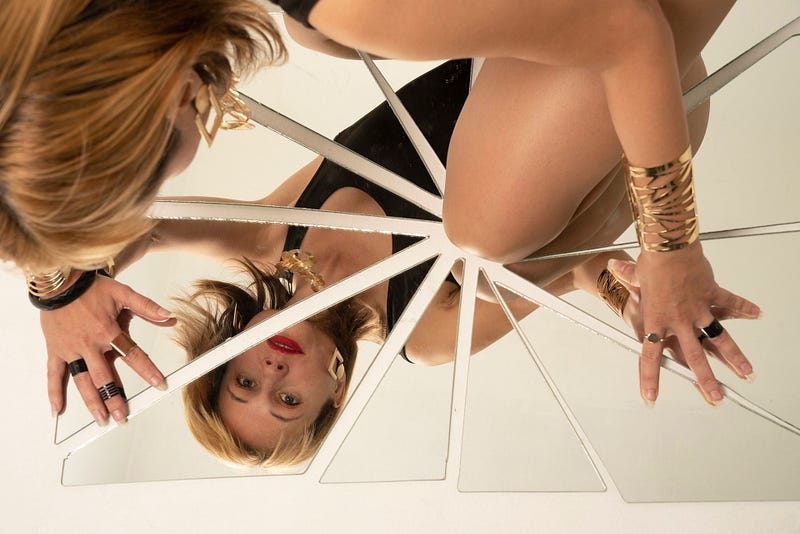
Woman Looking Into A Broken Mirror — by Victoria_ Watercolor — Pixabay UK

As an acutely shy boy and adult child, I struggle with all kinds of relationships, especially meeting strangers.

After a few decades of drugs, crime, custody, cult membership, promiscuity, and turbulent relationships; five years ago a marital breakdown turned me inwards for intense introspection.

In the early stages, loneliness reared its ugly head, but I soon began to love my own company.

However, socialising was never my forte, and having lost interest in TV and other media some twenty years ago. I still don’t own a TV, and know very little about the usual small talk, or light conversations that furnish the dinner table.

Thus, my intellectual mind, often bugs out about me not being sociable and fitting in with the Jones’s.

It reached a climax this Christmas.

When the same negative chatter arose, concerning my general reluctance to socialise and partake in quiz games, or converse on topics such as sports, celebrities, and movies; I questioned the wisdom that deems the ups and downs of life as precise.

For over the last five years of deep introspection and cutting-edge meditation. I’ve been endowed with an acute understanding of the human journey.

So should I really be concerned about my introversive self? Or should I be celebrating the beauty in the brokenness that allowed storage space for rare jewels?

Redeem Your Jewels From The Human Scrap-Yard.

The whole deliberation reminded me of the movie — ‘Beauty in the Broken’ — which takes us beyond the human plague of judgement, to gather diamonds from the brokenness of human beings.

A psychiatrist falls in love with a woman who is homeless, dirty, and collecting garbage from trash cans. She’s not a patient, but when he administered therapy, his colleague reminded him of the intellectual code.

Compliance with the code meant ending the relationship, which betrayed the merging of two yearning hearts; thus, the love-struck doctor returned to his intelligent heart space and embraced the moment.

So when I weighed my brokenness against my favourite conversation — the human journey, and all its shades, especially warts: the shy and unsociable me didn’t seem so heavy.

After a fierce deliberation and much resistance, I sided with the intelligent heart-space, who instructed: accept who you are dude, it’s all for a good reason, life is precise.

The human scrapyard is full of deep-set and bezel-rounded diamonds; as well as precious pearls formed through layers of adversity and misery.

It’s here, wise managers, trainers, producers, and directors, carry out a multitude of auditions to recruit uncut talent. Yet, the human scrapyard is shunned and ridiculed by intellectuals who, although blessed with two beautiful sides of life, have labeled one as bad.

Sadly, some intellectual millionaires murder their families and commit suicide to avoid being thrown on the scrap heap of financial ruin. While those who are dragged into the scrapyard by life, come out the other side triumphantly.

When an interviewer asked Mike Tyson, what did it feel like to lose $180 million, he replied, ‘relieved.’ Yes, he was thrown on the scrap heap with pain and heartache; where he learned the invaluable difference between one’s intellectual head-space and intelligent heart-space; and is now wealthy again.

If The Path Has Heart Follow It.

It’s been a long walk on a short path toward my heart-space, and I’m still not home. But what had once seemed unreachable is now in good reach.

Thus, I embarked upon the task of integrating this apparently broken part of me, I’d resisted for decades.

Resistance from the intellectual mind — which passes judgement upon anything that moves —plus that which doesn’t. Creates emotional pain by obstructing the flow of intelligent energy passing through my body, impartially.

Judgement makes a futile attempt to separate that which cannot be separated. While the delusional mind disintegrates the integrated, in order to render it evil or bad. Hence, the greatest evil of all, could well be the hypocritical judgement of the brokenness in human beings.

Don’t get me wrong, intellect is a great tool, but like a sharp knife in the hand of a child, we dissect ourselves and those around us. Self-judgement is the deepest of cuts. For once we judge ourselves we judge all and sundry.

Especially broken and uncut diamonds in the ruff; seeking a place to lay their weary head; meanwhile self-medicating by any means necessary. Thus, further judgement by hypocritical voices, whose noses tilt too high to smell the same fertile manure nourishing every human being.

Whose addiction to caffeine, nicotine, or that daily glass of wine. Is too ‘minor’ to recognise their inherent place in the human race of compulsive behaviour. So on goes the perpetual impetus behind the shame and pain scattered throughout our human scrap yards.

Yes, surely there exist some individuals the public must be protected from, definitely. But most people, especially those in authority, don’t understand the human journey. For example, what makes a human being, a human doing?

Or how the accomplishments of great artists, such as Robbie Williams, are driven by the same stinking manure which had him addicted to cocaine and alcohol.

For it’s always the ‘good’ who label the ‘bad’. Yet, convicted prisoners save the life of dying prison officers, and prevent female officers from being raped. While qualified doctors are convicted of killing their patients, or making false diagnosis’ to rob their patients of hard-earned cash.

Of course, this is not the majority, but neither are all people who take drugs and commit crimes, bad. The solution is to understand the human journey. Understand what it means to be free from moral and mental pollution — immaculate.

Understand why holistic wellness is dependent upon full acceptance of the human journey; and each inevitable moment is ram packed with riches, regardless of which way it goes. The reward is well worth unlearning our conditioning, and diving deep into the intelligent heart space; to come again from a humanitarian perspective.

In the movie, Beauty in the Broken, the doctor was blessed with a quote, attributed to Carlos Casteneda: — ‘if the path has heart follow it.’

For a path to have heart, it must come from the essence of a human being and not just one’s intellectual mind. Of course, intellect is employed but carefully guided by the hand of greater intelligence; to prevent it from leading us down a short and narrow path.

For the space we really see from is long and wide. Yet, as Krishna Murti said, ‘we analyse trivial matters deeply and fundamental matters shallow.’

Acceptance Gives Value.

Having been judged by parents, teachers, police, prison, and probation officers; the courts, social workers, girlfriends, spouse, siblings, friends and foes.

None of them cut as deep as my own self-judgement.

But when I check in on my heart-space. I see the bright luster of pearls made from layers of adversity and misery.

Yet, only through acceptance have decades of madness, mayhem, and confusion, converted to invaluable life credentials. As one’s brokenness is priceless when integrated.

Thus, the task at hand is to continue observing the judgement of my intellectual mind, while embracing the intelligent heart-space.

So ask yourself, does the path have heart? If so — follow it.

Thank you for reading.

Kensu Fetsani.

Psychology
Holistic Health
Equality
Rehabilitation
Care
Recommended from ReadMedium