How I Launched a Startup while Caring for my Toddler and Living a Year on the Road — Part I: The Personal Journey
How to live your best life and do your best work
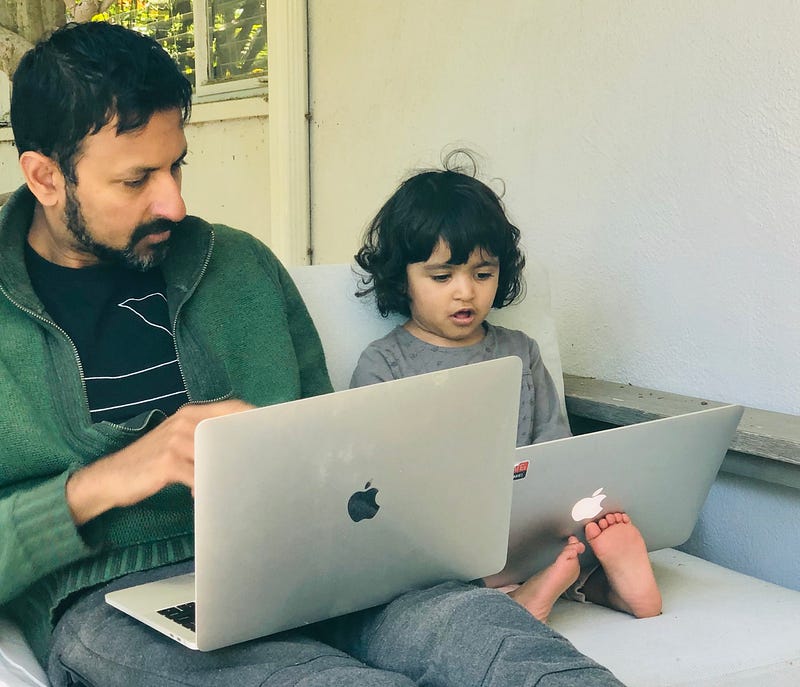
2020 was many things to many people. For me, it was the year I tended to my itch to get off the corporate treadmill for a hot minute. Thinking about the opportunity cost of time away from a silicon valley job was distressing. But my wife’s abundance mindset even in the face of neither of us working (in a pandemic, no less) was crucial in letting us go off script — letting circumstances dictate outcomes and seizing the opportunity to live out a year like no other.
So we put our stuff in storage, and my master packer wife packed the essentials: clothing for all four seasons, things we’d need the major holidays and festivals (Halloween, Diwali, Christmas), equipment for both terrestrial and aquatic activities (ski, swim), and hobby gear (guitar, uke, electric piano, clarinet). We hit the road in September 2020 seeking adventure. It’s now almost July, 2021, and after visiting 16 states and 8 national parks we’re currently holed up in the “world’s aquarium,” Loreto, Mexico. Our son has had piano lessons in most of these states via zoom.
Our skeletal plan was thus:
1. We would ensure that every stop had reliable internet so wife in her new job could work and my son could attend school.
2. I’d engage with our toddler daughter — it was my first break since her birth!
3. We’d travel in our trusty SUV, seeing the sights, visiting friends and family (with testing and quarantine procedures), and staying in new places.
Personally, I hoped to ponder the internal machinery that had me ticking. I wanted to dive into the clear water, hear all the noise cut out abruptly and listen amidst the deep rumblings for a bass track to build a natural and enjoyable rhythm around.
I was seeking balance: taking in and giving back; passionately doing what was easy and getting intimate with things unfamiliar; drawing from what was scarce to give the world more of what it needed; summoning decades of experience to tinker like a child again.
The Year Long Journey Begins
We left Menlo Park on a 106F day, with wildfire season just heating up.
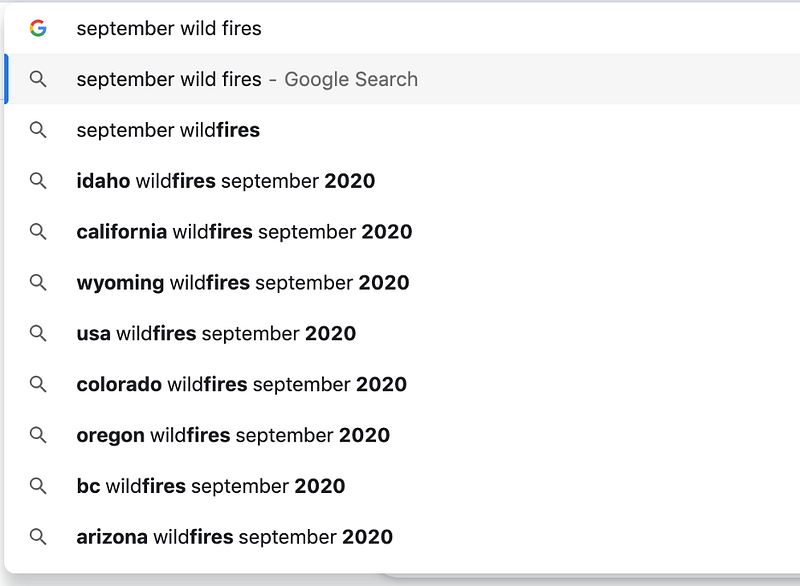
I also remember hearing about land hurricanes (derichos: only 79 have been recorded since 1877, but 6 were witnessed in 2020). Earth had its first 100F+ day above the arctic circle. The hits were coming at an accelerating rate. Tech journalists sounded convincingly clairvoyant:

I found myself wondering what would become of future generations , with their health and their home — Earth — compromised by events well before their time? Could this be prevented? Could we live each day more sustainably, so the cumulative effects of our actions resulted in a better tomorrow for future generations?
The solutionist in me awoke, because the math added up to a resounding YES, if enough of us engaged. I was excited to start probing the broad space of climate action, sustainability and the ecological impact of everyday actions from the perspective of a perturbed inhabitant of planet Earth.
Home Is Where the…Wifi Is, It’s Also Your Launchpad
Fortify the fortress of your mind, where anything that enters is trapped into completion.
We all have the tendency to lose ourselves in shiny, new exciting things. To limit the impact of this on our family dynamics, I practiced these three habits: (1) time-boxing; (2) being interrupt driven; and (3) being kind to yourself (because there will be times when you feel like you’re shitty at everything — husband, dad, son, friend, boss, founder, worker, human).
First, a little personal context. By the time our first-born was three and a half, he was in day care and preschool during the day while both of us parents were working stressful tech jobs. In the evening, we’d make up for the guilt and try to outdo each other as parents by reading to him and teaching him new things until he knew a hundred national flags, many countries and cities on a world map, how to write his name and do some basic math. In 2020, the situation with our toddler was at the opposite end. She had only been to school for a short 2 months before COVID shut it down, and she was spending all her time with a stay-at-home parent. The burden of guilt was far less, and as a result we did less as parents. She could also only ever get half of our total available time, because we were naturally inclined to invest more where we already had more invested. Time will tell how this period ends up shaping her.
Short stints in several places meant getting creative around a bare bones schedule. Caretakers of toddlers and young kids are probably cringing at the thought of this, I know. But I’m a believer in the continuum concept and that kids will adapt to whatever schedule and activities their parents/adult caregivers are engaged in.
Loosely, though, here’s the schedule we roughly followed:
1. Leave the house between 9–10 PT, after my son and wife got on zoom (we had to get creative when we were in other time zones)
2. Return home and prepare lunch by 11:30–12;
3. Quiet time, including scheduled screen time (thanks to this, I now know a song about all dwarf planets)
4. An Outschool lesson for 30min every day (however, this ended up being more work for the adult than the toddler, and we ended up canceling)
5. Leave the house again around 4pm, and return before 5:30p to start dinner prep
6. In bed by 8:30pm
Time-boxing:
My definition of time-boxing is that before you load up context and start doing something, you already know how much time you’re going to spend on it, and you NEED to stick to it! Here’s what this entails:
1. Your todo list needs to not only include a priority for your tasks, but also a “time to completion” field (your best guess is fine, and you’ll get better over time), which will be instrumental in choosing your next task
2. You will eventually need to break down bigger tasks into more manageable ones, because you’re very soon going to be left with only big rocks!
3. When you’ve starved an item on your list long enough and the deadline is staring you in the face, you’ll get better at blocking off time on your calendar and setting expectations ahead of time, making plans with people to ensure you get the dedicated time you need — which is nearly impossible with a toddler. In my case, I’d choose which night I’d burn the midnight oil, and reduce my ambitions for the following day.
Interrupt driven:
My definition of being interrupt driven is that at any point something may come up that will require you to pause your current task. Here’s how to prepare for this:
1. Always offload context (a.k.a., hit Ctrl+S on the work you’re doing). Quickly jot down what you were just doing, why you were doing it, and what you were going to do next.
2. I’ve found that when I “reload” the context of a paused task, I sometimes conclude that the notes I made about why I was doing it or what I was going to do next didn’t make sense any more. So this is a valuable re-prioritization tool as well!
Being kind to yourself:
I haven’t found a single metric that predicts when you’re going to encounter days when you wish you could just lay in bed. There are contributing factors, of course: the lethal combination of sleep deprivation, leftover adrenaline, parental guilt, deteriorating physical health, eating habits, and other things. These are not things that are fully out of your control. But it’s also important not to blame yourself in the moment and make matters worse — after all, on a good day, you’re still likely feeling one or more of these symptoms anyway. When I’m faced with a day like this, I:
1. Try to call a friend with whom I can comfortably and safely engage in some self-deprecating behavior and we can have a laugh
2. Try not to make any big decisions or have emotional conversations because I know my machinery is compromised
3. Cuddle extra hard with my family and feel all the judgment melt away
4. Make a plan to get the wheels that left the rails back on the track, so I limit how long I wallow in this state in the future
Get comfortable operating at ~60–70% of your peak efficiency. You will get better over time, but you will start off much worse! Sharp todo list habits can make it easier to get stuff done when free time pops up. But offloading context when interrupted has proven to be much more valuable — think of it like hitting “Save” before the computer dies. All this is designed to let you be present in the moment without guilt, even when you’ve got a lot to do — this is learned behavior. When the family turns on a movie, but you had anticipated working for 3 hours, don’t die inside. Instead, relent with joy because you have the tools and processes you need to keep things under control.
Other things I did:
1. Give up caffeine — I’ve found that caffeine gets me “too much in the zone” which is normally great, but makes it harder to shake off what I’m doing and negotiate what’s staring me in the face next.
2. Exercising everyday — I became that guy you see working out at kids playgrounds. I found that pull ups, push ups and crunches were possible no matter which playground I was at. The time and strength constraints I hit naturally were 35 pull ups, 100 push ups, 105 crunches of different types in 7 rapid sets (< 12 min of workout time, interspersed with play time with my kid)
So that’s how I personally set myself up for success. In my next post I explore the process I followed to develop conviction, validate my concept and to build and launch my product.
Spoiler: The startup I ended up building is called Earthly, do check it out and join us in being part of the solution to reclaim our planet!


