
How I Have Been Inspired by Japanese Culture
Some interesting facets of Japanese life
I have always admired the Japanese people.In my life, I have met some educated Japanese at conferences and I found their research papers very informative and inspiring.
There are several lessons in life that I have learned from them. .
Every culture has some special concepts that inspire us. There are 4 terms that I particularly have been influenced and inspired by the Japanese people that I have met.
🌹Ikigai
Every time I met them I learned some new concepts. The first term I learned was Ikigai. Then I read the book on Ikigai.
The term Ikigai teaches you that If you have a purpose in your life and if you have community engagement and work jointly. you live a long and happy life and it is proved through the proof of people living long and happy lives in a town called Okinawa.
Okinawa is one of the world’s Blue Zones, areas renowned for long life. The islands of Okinawa are one of the world’s “Blue Zones.”This is an area where people have a life expectancy that is much higher than the global average.
I planned my retirement in a way that I should be very busy and have no time to brood and get into depression. Currently, I do social work being on the governing board of a charitable Eye Institute that does free cataract surgeries for the poor.
I also look after the green environment where I live being in the Resdent’s Welfare Association and give my free service to maintain the park and garden.
I am a mentor and advisor with an online educational platform for children. Ikigai thus influenced my life and I an happy because I did not have a free moment ever.
The next term that I was influenced by was Kintsugi
🌹Kintsugi
I went to an exhibition and I bought a beautiful Chinese flower vase. It was not only outstanding to look at but also very expensive. I collected all the pieces and tried to join the pieces. It was quite a poor attempt as the vase did not look good. You could make out that it was broken.
A lot of my friends told me that it was a loss but I should plan to throw it away. I almost threw it away but at that time there was an international conference and some Japanese were attending it. One of them presented me with a beautiful porcelain decorative plate,
I just mentioned that I had bought a beautiful Chinese vase but it had fallen down and broken.
The Japanese person attending the conference wanted to see the piece When I showed it to him he told me that it could be repaired according to the Japanese technique called Kintsugi.
Kintsugi involves meticulous craftsmanship and patience. The broken pieces of pottery are carefully reassembled using a special lacquer mixed with precious metals.
Then, the cracks and seams are filled and smoothed, creating a seamless surface. Finally, the powdered gold, silver, or platinum is applied along the lines of fracture, creating shimmering veins that highlight the repaired areas.
I was not only surprised but also delighted when my piece was brought back to its original look. This is the finest craftsmanship I have ever seen. This is a real art and I find now that many museum pieces are recovered and preserved with this technique.
🌹Omiyari
Omiyari is based on mutual respect and understanding of people. It is deeply rooted in Japanese culture, specially directed towards hospitality and customer service.
It provides the idea of heartfelt care, consideration, and attention to detail in serving others. The term “omiyari” means “kindness” or “consideration” and its significance goes beyond mere politeness.
Omiyari is a concept deeply rooted in Japanese culture, particularly in the context of hospitality and customer service. It embodies the idea of heartfelt care, consideration, and attention to detail in serving others. The term “omiyari” itself translates to “kindness” or “consideration” in English, but its significance goes beyond mere politeness.
In Japanese society, the needs and desires of others,should be anticipated often before they are even expressed. It reflects a genuine desire to give comfort and well-being to guests,and strangers.
It emphasizes empathy, compassion, and thoughtfulness in interactions amongst friends, family, colleagues, or strangers.
This feeling of care and empathy is the focus in the lives of Japanese. I was touched to the core of my heart when our Japanese guests were so caring for others and it could be seen that it was not a put on act but genuine concern for other people.
He presented me with a beautiful Japanese plate with blossoms and said that it is our culture to give the best to our hosts and this is our good quality porcelain.
🌹Oubaitori
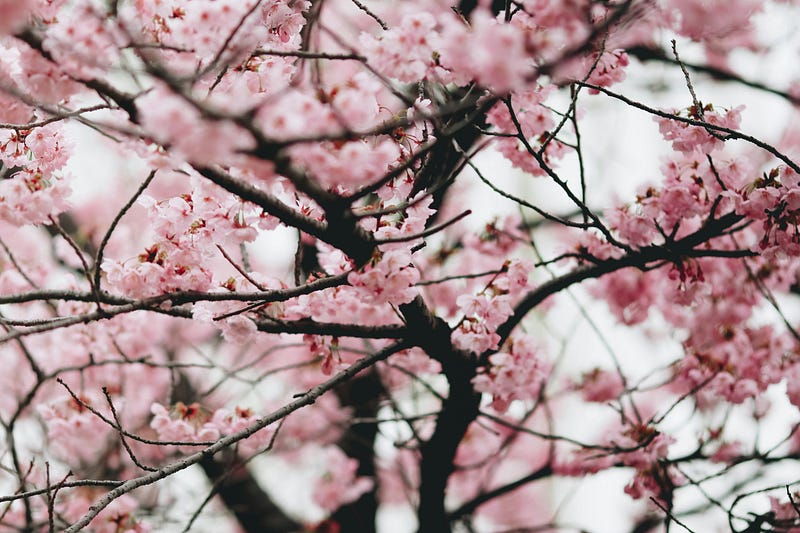
The term Oubaitori means that just like flowers people also take time to bloom. Each person is unique. Some bloom early and some are late. When people flower late in life they are often better than the others.
I have seen many students of mine in management who are quite dull in class but when I meet them after a few years they are completely changed. They are fast, racy, developed and doing well in their career.
The time taken to flower may differ and we should not be judgemental about it.
Giving enough time to people will change over time. We should our effort to maintain and help out with our relationships and not discard people without giving them a chance.
The Oubaitori plays a crucial role in establishing the ambiance and rhythm of the flow in a person’s life. He inspires others by creating a desire and inspiring them..They add depth and texture to the scenes enacted by the people and society at large.
It is compared to flowers, particularly to a fulfilling life based on four trees that blossom in spring in Japan: Cherry, Plum, Peach, and Apricot.
To wrap up
All the four concepts that I learned have a meaning in life. It is centered on human beings and their commitment to life and living. It is ultimately to achieve caring, empathy, confidence, and happiness amongst people.
To recapitulate, Ikigai or contentment through working together as a community. Kitsungi can be applied to relationships of people that should not continue to be broken or tarnished but trbuilt by mending any scars.
Omiyari is a concept of caring for people and showing hospitality, contentment, empathy, and finally Oubaitori which looks forward to making late bloomers accept and go ahead in life.
©Dr. Preeti Singh, 2024.
To get my stories in your inbox, you may subscribe to my content here. You may connect with me on Facebook, Instagram, Linkedin, or via email: [email protected]